

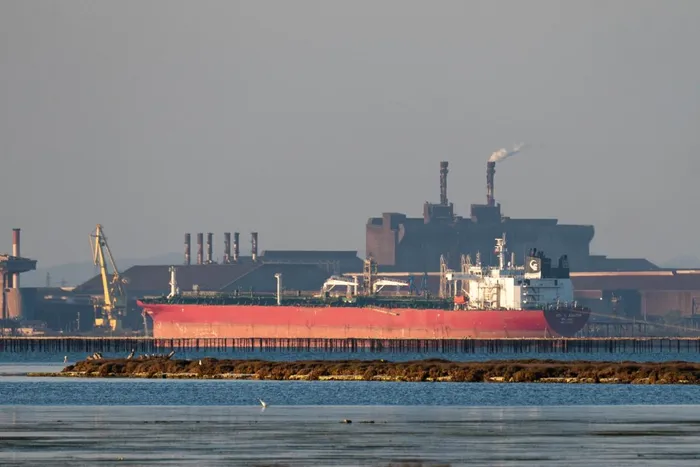
Attacks on energy infrastructure and shipping disruptions in the region have resulted in what analysts describe as the largest oil supply shock on record, cutting global supply by an estimated 10 million barrels per da
Image: AFP
Global oil prices are expected to remain elevated well into 2026, with forecasts pointing to an average of $86 per barrel, as geopolitical tensions in the Middle East continue to disrupt supply and rattle commodity markets worldwide.
According to the World Bank Group’s latest Commodity Markets Outlook, released on Tuesday, the projected price marks a sharp increase from the $69 per barrel average recorded in 2025, underscoring the scale of the current energy shock.
The surge is being driven by a combination of conflict-related supply disruptions and heightened uncertainty, which have combined to push energy prices to their highest levels since the 2022 crisis triggered by Russia’s invasion of Ukraine.
At the center of the turmoil is the Strait of Hormuz, a critical global oil chokepoint through which roughly 35% of the world’s seaborne crude oil passes.
Attacks on energy infrastructure and shipping disruptions in the region have resulted in what analysts describe as the largest oil supply shock on record, cutting global supply by an estimated 10 million barrels per day.
Although prices have eased slightly from their recent peaks, Brent crude remained more than 50% higher in mid-April compared to the start of the year.
The World Bank’s baseline forecast assumes that the most severe disruptions will subside by May and that shipping flows through the Strait of Hormuz will gradually return to normal by late 2026. Even under these relatively optimistic assumptions, oil prices are expected to stay significantly elevated.
The implications of an $86 average oil price extend far beyond energy markets. Higher oil prices are feeding into broader commodity inflation, contributing to a projected 16% rise in overall commodity prices in 2026. Energy costs are also pushing up the price of fertilizers and industrial inputs, creating ripple effects across agriculture, manufacturing, and transportation sectors.
World Bank chief economist Indermit Gill warned that the global economy is being hit in successive waves. Rising energy costs are expected to translate into higher food prices and, ultimately, broader inflation.
Gill said that this, in turn, could lead to higher interest rates and increased borrowing costs, particularly for developing economies already grappling with heavy debt burdens.
“The poorest people, who spend the highest share of their income on food and fuels, will be hit the hardest, as will developing economies already struggling under heavy debt burdens,” Gill said. “All of this is a reminder of a stark truth: war is development in reverse.”
Indeed, the report suggests that the consequences of sustained high oil prices could be severe for global development.
Inflation in developing economies is now projected to average 5.1% in 2026, up from 4.7% last year and significantly higher than earlier forecasts. Economic growth is also expected to slow, with developing economies projected to expand by 3.6%, a downward revision of 0.4 percentage point since January.
The outlook could worsen if the conflict intensifies or persists longer than anticipated.
In a more severe scenario, where damage to critical oil and gas infrastructure is greater and supply recovery is delayed, the World Bank said Brent crude prices could average as much as $115 per barrel in 2026.
The bank said a 10% increase in oil prices driven by geopolitical shocks can lead to natural gas prices rising by up to 7% and fertilizer prices by more than 5%, typically within a year.
This interconnectedness is raising concerns about food security, particularly as fertilizer prices are already projected to climb by 31% in 2026.
“The succession of shocks over the decade has sharply reduced the fiscal space available to respond to the current historic energy supply crisis,” said Ayhan Kose, the World Bank’s deputy chief economist and director of the Prospects Group.
“Governments must resist the temptation of broad, untargeted fiscal support measures that could distort markets and erode fiscal buffers. Instead, they should focus on rapid, temporary support targeted to the most vulnerable households.”
The World Bank urged targeted support measures rather than broad subsidies, warning that poorly designed interventions could strain public finances further.
BUSINESS REPORT