

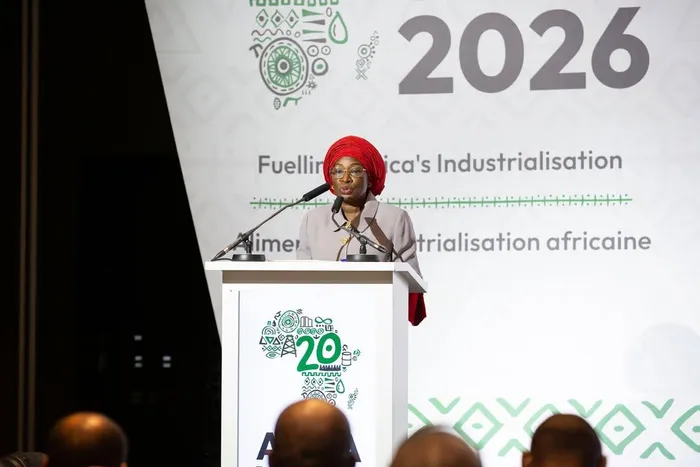
ARDA President Marie-Joséphine Sidibé highlighted the organisation’s founding vision of unity, investment and a shared continental voice, and stressed the urgency of strengthening Africa’s energy sovereignty amid global uncertainty.
Image: Supplied
Energy security and industrialisation emerged as dominant themes at the 20th annual conference of the African Refiners and Distributors Association (ARDA), with industry leaders warning that Africa must prioritise economic development over a rapid energy transition in an increasingly volatile global market.
As geopolitical disruptions — including supply shocks linked to strategic chokepoints like the Strait of Hormuz — continue to expose vulnerabilities, the conference underscored a clear consensus: Africa must take control of its energy destiny.
From strengthening refining capacity to building integrated supply chains under frameworks like the African Continental Free Trade Area, stakeholders agreed that energy security will remain central to unlocking the continent’s industrial and economic potential.
Speaking at the gathering last week, ARDA executive secretary Anibor Kragha highlighted how geopolitical tensions are reshaping global energy markets, making energy security more fragile than ever.
He argued that Africa must focus on strengthening its industrial base while diversifying energy sources to withstand external shocks.
“Africa’s material strategies rely heavily on maximising natural resources such as oil and gas to fill the immediate energy gap,” Kragha said, stressing the need for continuous monitoring of supply chains.
He called for significant near-term investments across the downstream sector — including refining, storage, and distribution — to address persistent energy deficits and support industrial growth.
The conference, themed “Fuelling Africa’s Industrialisation,” brought together dozens of high-level speakers and industry stakeholders, reflecting growing urgency around the continent’s energy future.
ARDA President Marie-Joséphine Sidibé used her opening address to mark the association’s 20-year journey, while also issuing a call to action.
“Africa can no longer afford to be a passive observer,” Sidibé said. “We must anticipate, invest, and secure our energy future while strengthening our sovereignty.”
Despite holding roughly 30% of global oil reserves and 40% of natural gas reserves, Africa continues to grapple with a weak industrial base.
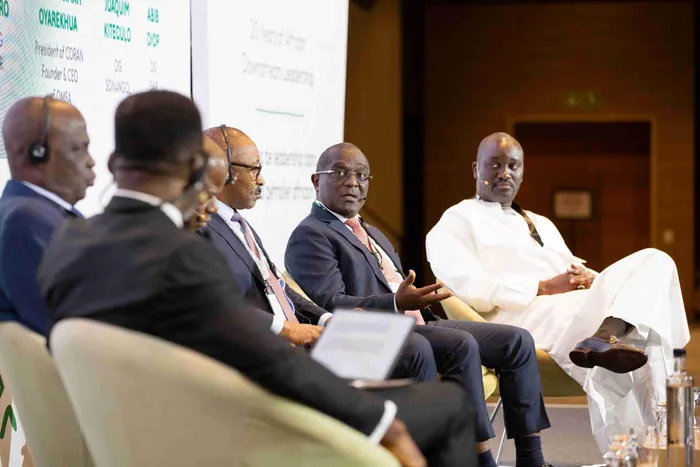
Discussions focused on securing the funding needed to realise the projects that Africa’s downstream sector urgently requires. CEOs, bankers and consultants came together to share advice, insights and new approaches to creating the enabling environment needed to unlock investment for major projects across the continent — and to make it happen quickly.
Image: Supplied
Delegates repeatedly pointed to the long-standing paradox of exporting raw materials while importing refined products at higher costs — a cycle seen as undermining economic development.
This concern was echoed by former Nigerian President, Olusegun Obasanjo, who criticised the continent’s reliance on exporting crude oil without adding value. He argued that refining resources locally would not only improve economic returns but also create jobs and strengthen domestic industries.
“For too long, we have shipped crude oil across the oceans, only to import refined products at exorbitant prices,” Obasanjo said. “This is not just bad economics; it is bad for development and political economy.”
A key outcome of the conference was the signing of a Memorandum of Understanding between ARDA and the African Petroleum Producers Organization (APPO).
The agreement, signed by APPO secretary general, Farid Ghazali, Sidibé, and Kragha, outlines collaboration in infrastructure development, regulatory frameworks, and technical and financial support.
Ghazali emphasised that Africa’s resources should primarily benefit its own economies, while Kragha described the agreement as a step toward turning dialogue into tangible action.
“We need to move from words and debate to implementation,” he said.
Beyond infrastructure, investment in human capital was also identified as critical. Industry leaders warned that without the right skills base, Africa would struggle to meet its long-term energy and industrial ambitions.
Executives such as Michael Obaseki of Glencore stressed the need to build a workforce capable of driving the sector into the next decades.
Another recurring theme was scepticism around the pace of energy transition.
Many delegates argued that Africa lacks the infrastructure required for a rapid shift to renewable energy and must instead adopt a balanced approach that includes oil, gas, and cleaner alternatives. Expanding access to liquefied petroleum gas (LPG) was highlighted as a practical step toward reducing energy poverty while supporting development.
Calls were also made for governments to create more investor-friendly environments through regulatory reform and targeted subsidies. Speakers stressed that de-risking African markets is essential to unlocking capital flows needed for large-scale energy projects.
NJ Ayuk, chairman of the African Energy Chamber, delivered one of the most emphatic statements at the conference, defending Africa’s right to continue producing oil.
“Never are we going to apologise for producing the energy that Africans need,” he said, reinforcing a sentiment widely shared among participants.
Similarly, Tope Shonubi, co-founder and executive director of SAHARA Group called for greater transparency and accountability to improve investor confidence and position Africa as a credible global partner.
BUSINESS REPORT