

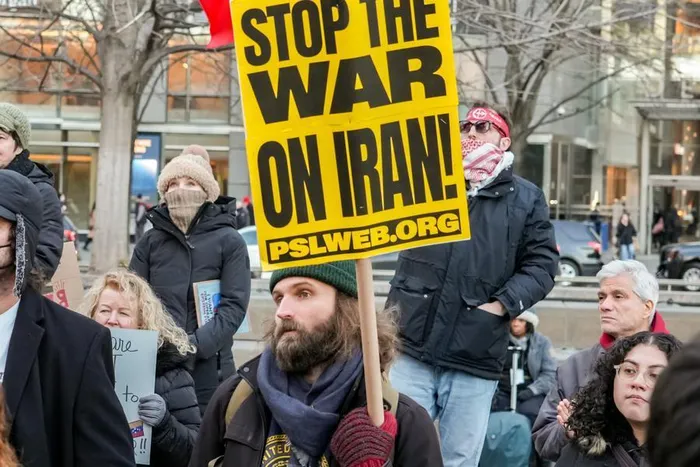
Economists warned that rising global energy prices linked to instability in the Middle East could dampen economic activity for the remainder of the year.
Image: XINHUA
South Africa’s economy delivered a stronger-than-expected performance in the first quarter of 2026, prompting economists to welcome the latest growth figures while cautioning that escalating tensions in the Middle East could undermine momentum in the months ahead.
Data released by Statistics South Africa on Tuesday showed that gross domestic product (GDP) expanded by 0.5% in the first quarter of 2026, up from 0.4% growth recorded in the final quarter of 2025.
This growth print comes on the back of unprecedented fuel price hikes as a result of the surge in the Brent crude oil price after Iran closed the Strait of Hormuz chokepoint, over which roughly 20% of the world's global petroleum and liquefied natural gas normally passes through, in response to attacks by the United States.
The outcome exceeded most economists’ expectations and marked a sixth consecutive quarter of economic expansion, providing further evidence that South Africa’s gradual recovery remains intact despite persistent structural challenges.
Prof Raymond Parsons a North West University Business School economist said the latest data showed that the recovery that began in 2025 had carried into the new year.
“While still low by emerging market standards, the South African economy continued to move modestly in the right direction earlier in the year,” he said.
“But gross fixed capital formation, as the key to sustained job-rich growth, remains the Achilles heel of South Africa’s economic performance. Fixed capital investment needs to be a much higher percentage of GDP than it is at present.”
According to Parsons, total fixed investment needs to rise from about 14% of GDP to closer to 20% if the Government of National Unity's target of achieving 3.5% economic growth by 2030 is to be realised.
However, he warned that rising global energy prices linked to instability in the Middle East could dampen economic activity for the remainder of the year.
“The continued uncertainty surrounding the Middle East conflict and its inevitable consequences - for growth, inflation, interest rates and business confidence - will weigh on domestic economic activity for the rest of the year.”
Maarten Ackerman, chief economist at Citadel, described the GDP outcome as encouraging but cautioned that it reflected economic conditions before recent geopolitical tensions intensified.
“It is important to recognise that this is largely a pre-geopolitical conflict number, supported by the continuation of favourable tailwinds from 2025, including strong commodity prices and another solid contribution from agriculture,” he said.
He said agriculture was the standout performer, growing by 3.9%, while the finance sector continued to provide steady support to overall economic activity.
Economists at the Nedbank Group Economic Unit also said the outcome exceeded expectations, driven largely by stronger-than-anticipated agricultural production and export performance.
Looking ahead, Nedbank expects household spending to remain the main driver of growth, supported by real income gains and relatively low borrowing costs. However, they warned that the ongoing conflict in the Middle East could raise business costs and weaken confidence.
“External conditions are likely to be a drag on growth, with export volumes pressured by softer global growth and continued competition from Chinese producers in key export markets,” they said.
“Lower US tariffs and the extension of Agoa to year-end should provide some relief, but are unlikely to fully offset these headwinds. However, we expect imports to outpace exports.”
FNB and WesBank senior economist Thanda Sithole said the first-quarter result presents a slight upside risk to the bank's 2026 growth forecast of 1%. Nevertheless, Sithole cautioned that economic conditions had deteriorated significantly since the first quarter.
“The risk remains that the second quarter growth outcome may be materially weaker than today’s result, given the deterioration in operating conditions relative to the first quarter,” she said.
Independent economist Dr Bonke Dumisa described the latest GDP figures as positive news for the country, noting that South Africa has now recorded six consecutive quarters of economic growth.
“We have had six consecutive quarters of economic growth and it is also most likely the reason the three credit rating agencies have upgraded South Africa's ratings,” he said.
“There is some concern that Middle East tensions that started on 28 February could impact second quarter GDP as petrol and inflation went up in April, but the news is positive for now.”
BUSINESS REPORT