

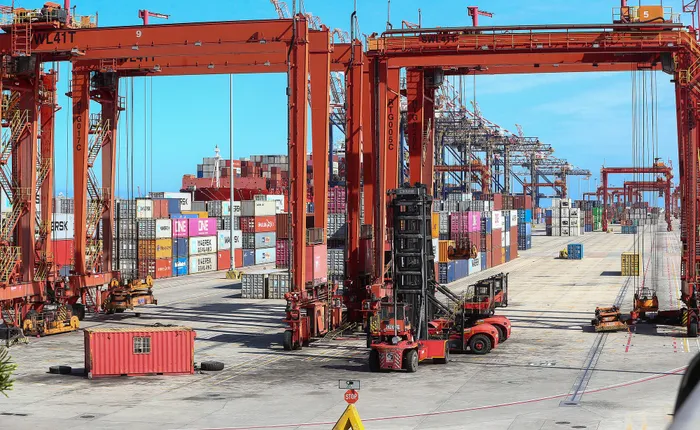
S&P highlighted progress under the second phase of Operation Vulindlela, which focuses on reforms in electricity, transport, water, housing, local government, and digital transformation.
Image: Leon Lestrade/Independent Newspapers
South Africa has received another vote of confidence from international credit rating agency S&P Global Ratings, which has affirmed the country’s long-term foreign currency sovereign credit rating at BB and its local currency rating at BB+, while maintaining a positive outlook.
The decision, announced on Friday, comes just a week after fellow ratings agency Moody's revised South Africa’s outlook from stable to positive, signalling growing confidence among global investors in the country’s fiscal management and reform agenda.
This affirmation comes after S&P upgraded South Africa’s ratings in November 2025 with a positive outlook, which was the first upgrade in more than 16 years by any of the major global rating agencies.
The latest affirmation marks another milestone in South Africa’s efforts to rebuild investor confidence after years of weak growth, rising debt and governance challenges. It also strengthens hopes that sustained reforms and fiscal discipline could pave the way for further rating upgrades in the coming years.
S&P on Friday said South Africa’s improving fiscal trajectory, continued primary budget surpluses and accelerating structural reforms underpin its decision to keep the country on a positive outlook despite heightened global uncertainty stemming from the Middle East conflict and elevated energy prices.
The agency expects South Africa’s economy to grow by 1.2% in 2026 before averaging 1.7% between 2027 and 2029 as reforms in key sectors, particularly electricity and logistics, begin to support economic activity.
S&P noted that government revenue exceeded expectations during the 2025/26 fiscal year, allowing the State to post its third consecutive primary surplus while maintaining expenditure discipline.
“Given improving tax collection as well as expenditure constraint, we expect fiscal consolidation will continue through fiscal 2029, leading to a fall in general government debt as a percentage of GDP,” the agency said.
The ratings agency forecasts government debt, which it estimates peaked at 79% of GDP in fiscal 2025, will decline gradually to 78% by 2029 as fiscal consolidation continues.
South Africa’s positive outlook reflects the possibility of further improvements in fiscal performance and debt stabilisation if the coalition government maintains its reform momentum and global energy price pressures ease.
S&P highlighted progress under the second phase of Operation Vulindlela, which focuses on reforms in electricity, transport, water, housing, local government, and digital transformation.
The agency pointed to major improvements in the electricity sector, noting that no load shedding had been reported in the past year and that State-owned power utility Eskom recorded its first profit in eight years during 2025.
While reforms at freight and logistics utility Transnet are progressing, S&P cautioned that the company continues to post losses and remains reliant on government guarantees.
National Treasury welcomed the ratings decision, describing it as recognition of the progress made in restoring the country’s public finances and implementing structural reforms.
“The affirmation from S&P that government is on track to deliver on its commitment to reduce the debt-to-GDP ratio over the medium term reflects the progress we have made towards restoring the health of South Africa’s public finances, and our ability to continue to do so despite geopolitical upheavals,” said National Treasury Director-General, Duncan Pieterse.
Pieterse said the positive outlooks from both S&P and Moody’s demonstrated that South Africa had the potential to accelerate economic growth and reduce public debt more rapidly.
“Two of the major rating agencies, S&P and Moody’s, now have South Africa on a positive outlook, which is an encouraging signal that we have the potential to lift our economic growth rate higher and reduce our public debt faster. We are determined to do so,” he said.
Despite the positive assessment, S&P warned that the country faces significant headwinds from higher global oil prices following disruptions linked to the Middle East conflict. The agency has raised its inflation forecast for 2026 to 4.5% and expects the South African Reserve Bank to implement additional interest rate increases to contain inflationary pressures.
Nevertheless, S&P said South Africa’s deep financial markets, independent institutions and improving reform record continue to support its credit profile.
BUSINESS REPORT