

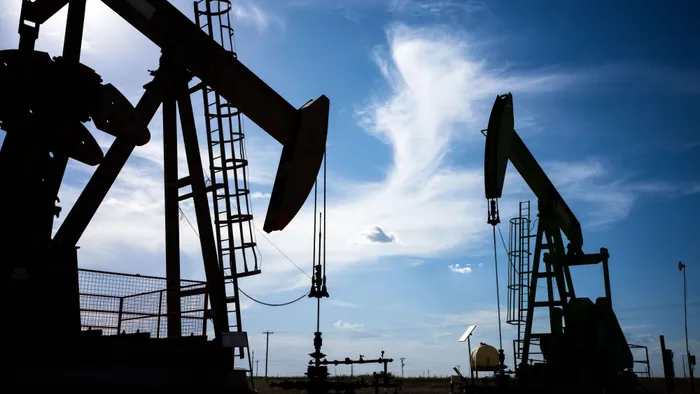
The escalating conflict in the Middle East has pushed oil prices sharply higher, with Brent crude trading around $96 a barrel, well above levels seen before the conflict intensified.
Image: File / AFP
The rand has received a significant boost from Fitch Ratings’ decision to upgrade the country’s sovereign credit rating, but escalating tensions in the Middle East continue to cloud the outlook for the local currency.
The ratings agency on Friday upgraded South Africa’s long-term foreign and local currency credit ratings to BB from BB- on Friday, marking its first upgrade of the country in almost 21 years and signalling growing confidence in South Africa’s fiscal management and reform programme.
The announcement initially sparked a rally in the rand, with the currency strengthening to around R16.22 against the US dollar as investors welcomed the improved credit outlook, before it traded at R16.52 against the greenback on Monday afternoon.
However, the gains proved short-lived as renewed conflict between Israel and Iran reignited global risk aversion, pushing investors towards traditional safe-haven assets and placing renewed pressure on emerging market currencies, including the rand.
Investec chief economist Annabel Bishop on Monday said the upgrade represented a major endorsement of South Africa’s fiscal progress.
“Fitch’s upgrade to BB from BB- comes as the agency notes South Africa’s prudent fiscal management and measure of fiscal consolidation in the face of poor economic conditions and external shocks,” Bishop said.
She noted that Fitch highlighted South Africa’s debt-to-GDP ratio as being substantially lower than levels anticipated when the agency downgraded the country in 2020. The ratings agency also pointed to sustained primary budget surpluses, improved revenue collection and structural reforms in the energy and logistics sectors as supporting factors.
The improved credit rating has strengthened investor confidence in South African assets and helped underpin the rand at a time when many emerging market currencies remain under pressure.
Bishop said the local currency also benefited from expectations that the South African Reserve Bank could raise interest rates again later this year, increasing the attractiveness of rand-denominated investments.
“The rand continues to run volatile this year, albeit at lower extremes than in past risk-off periods,” she said.
Despite the positive impact of the upgrade, global developments remain the dominant driver of market sentiment.
The escalating conflict in the Middle East has pushed oil prices sharply higher, with Brent crude trading around $96 a barrel, well above levels seen before the conflict intensified.
Higher oil prices present a particular challenge for South Africa because the country remains heavily dependent on imported fuel. Rising energy costs increase the import bill, place pressure on the current account and can weigh on the rand.
Wichard Cilliers, head of market risk at TreasuryONE, said the currency began the week under pressure as investors focused on growing geopolitical risks.
“The rand has opened the week on the back foot, trading at R16.60 to the dollar,” Cilliers said.
“Three forces are piling pressure on the local currency at the same time: the stronger greenback, rising oil prices, which push up South Africa’s import bill, and growing unease over the Israel-Iran conflict.”
With little on the domestic economic calendar to provide immediate support, he warned that the rand remains vulnerable to further volatility in global markets.
Financial markets are increasingly pricing in a prolonged period of elevated oil prices as concerns persist over shipping routes through the Strait of Hormuz, one of the world’s most important energy corridors.
Even so, analysts believe South Africa retains several important buffers against external shocks.
Bishop noted that despite higher oil prices, fuel price over-recoveries continue to point towards fuel price cuts in July, which could help keep inflation contained. Lower inflation would support consumer spending and potentially provide additional support for the rand.
Fitch also expressed confidence that the fiscal impact of the Middle East conflict remains manageable. The ratings agency said stronger corporate tax collections and mineral royalty revenues, supported by elevated commodity prices, should help offset the temporary reduction in fuel levy revenues.
While South Africa remains below investment-grade status, the Fitch upgrade represents another important step in reversing more than a decade of ratings downgrades. The country now sits two notches below investment grade with all three major ratings agencies acknowledging improvements in fiscal management and economic reforms.
BUSINESS REPORT