

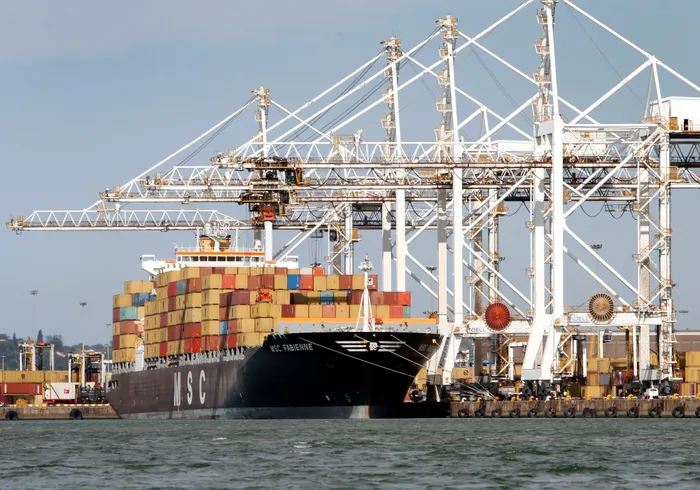
South Africa’s Gross Domestic Product (GDP) increased by 0.5% in the first quarter of 2026, as indicated by Stats SA on Wednesday.
Image: Shelley Kjonstad/Independent Media
South Africa’s economy grew by 0.5% in the first quarter of 2026, marking a second consecutive quarter of expansion and signalling gradual resilience despite continued weakness in key sectors such as manufacturing.
Data released by Statistics South Africa (StatsSA) on Wednesday showed that gross domestic product (GDP) increased by 0.5% between January and March, following growth of 0.4% in the final quarter of 2025.
This marked the sixth straight quarter of expansion and the strongest performance since the second quarter of 2025, as nine of the 10 industries registered growth.
The latest figures suggest that while South Africa’s economic recovery remains modest, growth is being supported by resilient service sectors, stronger agricultural output and a positive trade balance. However, ongoing weakness in manufacturing continues to pose a challenge to broader economic expansion.
The country’s finance, real estate and business services sector emerged as the largest contributor to economic growth, expanding by 0.9% and adding 0.2 percentage points to overall GDP growth.
According to StatsSA, stronger activity in financial intermediation and related services underpinned the sector’s performance.
The agriculture, forestry and fishing industry also delivered a solid performance, growing by 3.9% and contributing 0.1 percentage points to GDP growth. The increase was largely driven by higher production of field crops and horticultural products, highlighting the sector’s continued importance in supporting economic activity.
Consumer-facing industries also posted gains during the quarter. The trade, catering and accommodation sector expanded by 0.7%, contributing 0.1 percentage points to growth, with wholesale trade, motor trade, food and beverages, and accommodation services all reporting increased activity.
Similarly, the transport, storage and communication industry grew by 0.7%, supported by stronger performance in land and air transport, as well as transport support services.
However, not all sectors shared in the positive momentum. Manufacturing, one of the economy’s key productive sectors, contracted by 0.8%, subtracting 0.1 percentage points from overall growth.
“Five of the 10 manufacturing divisions reported negative growth rates,” said StatsSA.
“The largest negative contributions were reported for the petroleum, chemical products, rubber and plastic products; basic iron and steel, non-ferrous metal products, metal products, and machinery; and wood and wood products, paper, publishing, and printing divisions.”
On the expenditure side of the economy, real GDP also increased by 0.5%, improving from the 0.3% growth recorded in the fourth quarter of 2025.
Household final consumption expenditure (HFCE), a key indicator of consumer spending, rose by a modest 0.1% and contributed 0.1 percentage points to total growth. Consumers spent more on durable, semi-durable and non-durable goods during the quarter.
The strongest gains in household spending were recorded in transport, which increased by 0.8%, and housing, water, electricity, gas and other fuels, which grew by 0.9%. Both categories contributed positively to overall consumption growth.
However, spending on restaurants and hotels, food and non-alcoholic beverages, alcoholic beverages and tobacco, as well as a category classified as “other”, weighed on household expenditure during the quarter.
Government spending also supported economic growth. Final consumption expenditure by general government increased by 0.6%, contributing 0.1 percentage points to GDP growth. The increase was driven mainly by higher spending on goods and services and compensation of employees.
A significant boost came from South Africa’s trade performance, with net exports contributing 0.9 percentage points to GDP growth.
Exports of goods and services rose by 0.5%, supported by increased trade in mineral products, vegetable products, and prepared foodstuffs, beverages and tobacco.
At the same time, imports declined by 2.6%, reflecting lower demand for products such as precious metals and stones, mineral products, machinery and electrical equipment, textiles, and animal and vegetable fats and oils.
BUSINESS REPORT