

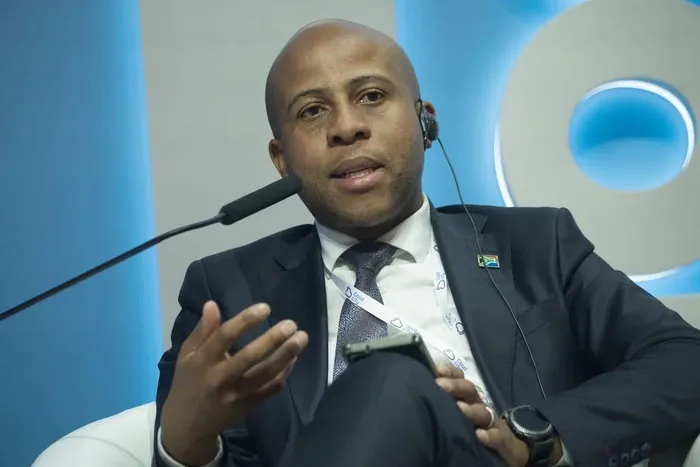
Advocate Mtho Xulu, chairperson of the Trade and Investment Working Group of the South African chapter of the BRICS Business Council, said the consultations were intended to move discussions beyond theory and toward practical implementation.
Image: Supplied
The South African chapter of the BRICS Business Council (SABBC) has launched a new drive aimed at strengthening the country’s trade and investment ties within the expanding BRICS+ bloc.
This comes as business leaders and policymakers seek ways to reduce trade barriers, improve payment systems and boost industrial growth.
The initiative was unveiled during the first in a series of structured consultative dialogues on global trade and finance hosted by the SABBC in a private session Johannesburg on Wednesday.
The gathering brought together business executives, economists, trade finance specialists and sector experts to discuss practical strategies for increasing South Africa’s participation in BRICS+ trade and investment opportunities ahead of the country’s planned BRICS chairship in 2028.
The discussions, convened by the SABBC’s Financial Services Working Group and Trade and Investment Working Group, focused on how South Africa can position itself more competitively within the rapidly growing economic bloc.
According to the SABBC, South Africa’s trade with BRICS nations reached $62 billion in 2025, consisting of exports worth $23.2bn and imports of $38bn. However, the council noted that the country’s exports remain heavily concentrated in primary commodities, which account for around 85% of export value.
Advocate Mtho Xulu, chairperson of the Trade and Investment Working Group of the South African chapter of the BRICS Business Council, said the consultations were intended to move discussions beyond theory and toward practical implementation.
“This consultative dialogue is designed to move from diagnosis to delivery, to help South African businesses understand the shifts underway in global trade and finance, and to build the partnerships and instruments that enable them to compete and grow internationally,” Xulu said.
The BRICS bloc, which expanded in 2024 to include additional member states, now accounts for nearly 40% of global GDP and more than half of the world’s population. Intra-BRICS trade exceeded $1 trillion in 2025, underlining the growing economic significance of the grouping.
One of the key themes during the dialogue was the future of trade finance and cross-border payments. Participants explored ways to improve access to finance for South African companies, particularly small and medium enterprises seeking to trade with BRICS+ countries.
Discussions also examined alternative payment systems and the possibility of using local currency settlements to reduce transaction costs and improve efficiency. Among the proposals discussed were BRICS Pay, interoperable central bank digital currencies and India’s proposed Special Rupee Vostro Account.
Panelists stressed that such mechanisms are not intended to replace existing global systems such as SWIFT, but rather to create additional options that could improve resilience and reduce costs for businesses.
A panel comprising an independent consultant, the director of Truevine and the CEO of Access Bank argued that real-time interoperable payment systems between African and BRICS countries could significantly improve the speed, transparency and affordability of cross-border transactions.
“This is not a replacement of SWIFT but more of an alternative payment underpinned by a coordinated approach between all the key players within the payment ecosystem,” it said.
The council said there was broad agreement that closer coordination between governments, financial institutions and businesses would be necessary to ensure companies have better access to trade finance and support mechanisms.
Investment cooperation also featured prominently during the discussions, with participants highlighting opportunities for joint ventures between South African firms and BRICS+ partners.
The SABBC pointed to previous cooperation between a Chinese development finance institution and a South African counterpart in the electric vehicle sector as an example of the type of partnership model it hopes to expand in future.
Delegates also discussed the importance of beneficiation and industrialisation in shifting South Africa’s export profile away from raw commodities toward higher-value manufactured products.
The New Development Bank, established by BRICS nations, was identified as a potentially important source of development finance to support infrastructure and industrial projects.
The council said future consultations would focus on identifying South Africa’s vulnerabilities within the changing global trade environment, mapping opportunities linked to the country’s 2028 BRICS presidency and developing a list of policy and regulatory reforms needed to improve competitiveness.
The SABBC said the process would ultimately seek to provide government and business with a practical framework for strengthening South Africa’s role within BRICS+ trade and investment networks as global economic dynamics continue to shift.
BUSINESS REPORT