

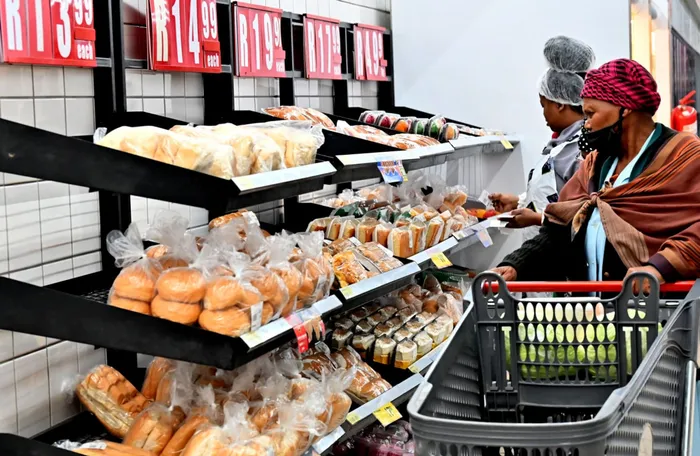
The Food and Agricultural Organisation of the United Nations (FAO) Food Price Index (FFPI) for May released on Friday remained stable at 130.8 points in May 2026, down 0.2 points (0.2 percent) from its revised April level.
Image: Ayanda Ndamane/African News Agency (ANA)
Global food prices remained largely unchanged in May, with declines in vegetable oil and dairy prices offsetting increases in cereals and sugar, according to the latest Food Price Index released by the Food and Agriculture Organization (FAO).
The FAO Food Price Index (FFPI), which tracks monthly changes in international prices of a basket of food commodities, averaged 130.8 points in May 2026, down marginally by 0.2 points, or 0.2%, from April.
Despite the slight monthly decline, the index was 2.9% higher than a year ago, although it remained 18.4% below the record peak reached in March 2022.
The FAO said gains in cereal and sugar prices were largely balanced by lower vegetable oil and dairy prices, while meat prices remained broadly stable.
The FAO Cereal Price Index rose to 114.3 points in May, increasing by 2.6% from April and nearly 5% compared with the same month last year.
Wheat prices climbed for a fourth consecutive month, supported by concerns over smaller harvests in major exporting countries, including the United States, where winter wheat crop conditions are among the weakest seen in decades. Rising fuel and fertiliser costs also contributed to higher grain prices.
In contrast, the FAO Vegetable Oil Price Index declined by 4.6% to 185 points, recording its first monthly drop this year. The decline was driven mainly by lower palm and soybean oil prices, which outweighed gains in rapeseed and sunflower oil prices.
Palm oil prices softened after five months of increases amid expectations of weaker global demand and uncertainty in crude oil markets.
The FAO Meat Price Index remained virtually unchanged at 130.5 points. Higher prices for beef, sheep meat and poultry were offset by weaker pig meat prices. Strong import demand from China continued to support international beef prices.
Meanwhile, the FAO Dairy Price Index slipped by 0.5% to 119.2 points and remained significantly lower than a year ago. The organisation attributed the decline to falling butter prices in Europe and Oceania, where improved milkfat supplies and stronger competition among exporters weighed on market prices.
Sugar was the standout performer in May. The FAO Sugar Price Index jumped 7.5% to 95.1 points, its highest level since October 2025. Concerns over tightening global supplies supported prices, particularly after data from Brazil's key sugar-producing regions indicated that more sugarcane could be diverted to ethanol production rather than sugar manufacturing.
However, strong sugarcane crushing activity during the latter half of April helped increase sugar output and limited further price gains.
Commenting on the data, Wandile Sihlobo, chief economist at the Agricultural Business Chamber of South Africa, said the slight easing in global food prices was encouraging after several months of upward pressure linked to geopolitical tensions and weather concerns.
“The vegetable oils and dairy products were the key drivers of the easing in global food prices. While the monthly easing is welcome, the Index remains 3% higher than a year ago,” he said.
Sihlobo added that although the recent war in the Middle East has placed significant pressure on agriculture and raised concerns about global food prices, the situation is very different from the challenges posed by the Russia-Ukraine war.
“The data released on Friday show a slight easing in global food prices, reflecting ample supplies in the world market.”
Sihlobo concluded that the risks for the seasons ahead remain due to both higher input costs and a likely drought in some parts of the world.
“The farmers’ planting decisions and the harvests of the 2027-28 season will shape the coming year’s global food prices.”
BUSINESS REPORT