

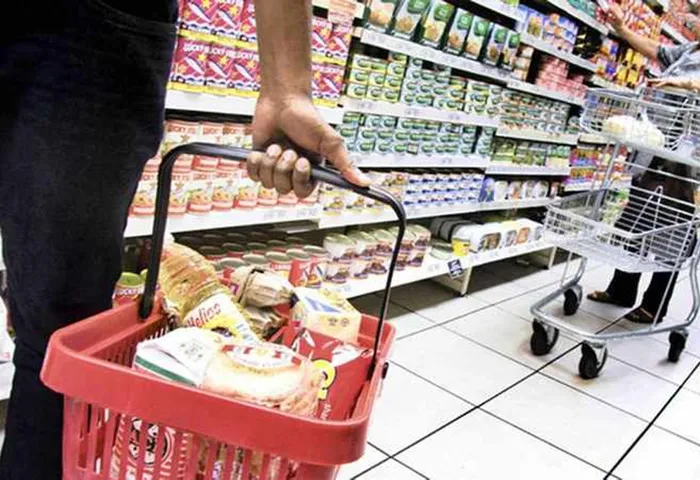
The latest Household Affordability Index for May released on Wednesday by the Pietermaritzburg Economic Justice and Dignity Group (PMBEJD) indicated an increase in food prices. Civil society has raised concern following the increase in inflation to 4% that further food price increases could be on the cards.
Image: File
Civil society organisations have raised alarm over rising food prices and mounting cost-of-living pressures after the latest Household Affordability Index showed further increases in the price of basic food items across South Africa.
The May Household Affordability Index, released by the Pietermaritzburg Economic Justice and Dignity Group (PMBEJD) on Wednesday, found that the average Household Food Basket increased to R5 479.26 in May.
The basket, which tracks the prices of 44 basic food items across 52 supermarkets and 36 butcheries nationwide, increased by R27.17 or 0.5% month-on-month. Year-on-year, the basket rose by R12.67.
According to PMBEJD director Mervyn Abrahams, more than half of the foods tracked recorded price increases during the month.
“Foods in the basket which increased in price in May 2026 by 5% or more include onions, tomatoes, carrots, butternut, and cabbage,” Abrahams said.
He noted that food items recording increases of 5% or more included onions, tomatoes, carrots, butternut and cabbage, while apples and oranges were among the few products that registered notable declines.
Abrahams added that food baskets in Johannesburg, Cape Town, Pietermaritzburg, Mtubatuba and Mthatha all showed significant increases during May, while Durban and Springbok experienced decreases.
The latest increase comes as Statistics South Africa’s consumer price index for April showed headline inflation accelerating to 4%, raising fears that further food price hikes may lie ahead.
Abrahams said inflation for lower-income households remained slightly lower, with expenditure quintiles one to three recording inflation rates of between 2.6% and 2.8%. However, food and non-alcoholic beverages inflation rose by 0.7% month-on-month and 2.9% year-on-year.
Civil society groups warned that even modest increases in food prices have devastating consequences for poor households already struggling to survive on social grants and low wages.
Siyanda Baduza, a researcher with the Basic Income Project at the Institute for Economic Justice (IEJ), said the recent increase of R20 in the Child Support Grant had effectively already been wiped out by rising food costs.
“A R27.17 increase in the cost of a standard food basket is enough to erode this gain in just a single month. This is deeply concerning. Meanwhile, the Social Relief of Distress grant has seen no increase since May 2024,” he said.
Baduza added that these rising prices are a direct result of the ongoing war in the Middle East, which has already driven fuel costs to exorbitant heights - a trend that is likely to continue.
“The government’s only response has been to temporarily pause the fuel levy. Because this measure went into effect back in April, it is clearly no longer enough to cushion the poor. Ultimately, this escalating cost-of-living crisis risks pushing millions of people into hunger.”
Aliya Chikte, project officer at the Alternative Information and Development Centre (AIDC), said rising electricity and transport costs were placing additional strain on workers and low-income households.
“After meeting these essential expenses, workers are left with very little to afford a nutritious food basket, deepening household food insecurity,” Chikte said.
“This is particularly alarming when viewed alongside the Stats SA General Household Survey, which found that the proportion of households with limited access to food rose from 19.5% in 2019 to 24.7% in 2025.”
Evashnee Naidu, KwaZulu-Natal regional manager of Black Sash, said the organisation feared the situation could deteriorate further in coming months as fuel prices continue to rise and temporary tax relief measures fall away.
“The increase in fuel prices has an automatic impact on all other services beyond just transportation of people and includes that of goods and food items,” she said.
Naidu added that these increases are transferred onto the end user, which disproportionately affects the poorest of the poor in our country.
“South Africans have already been struggling and this latest global instability pushes people further into the margins of what they can and cannot afford.”
BUSINESS REPORT