

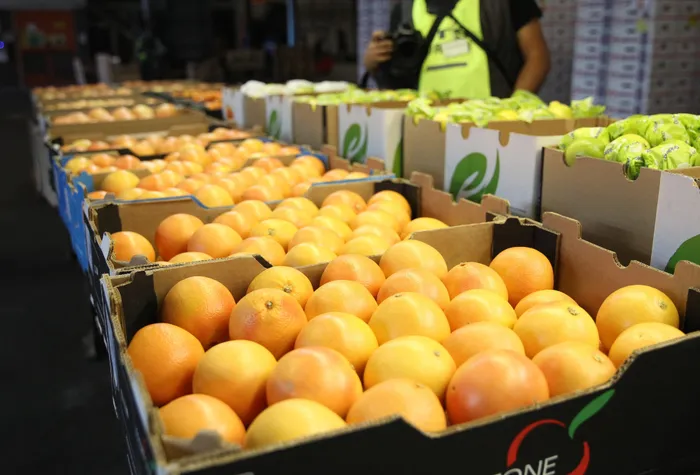
Citrus Growers Association of Southern Africa (CGA) have raised alarm bells after reporting on Thursday that recent severe weather initial assessments indicate a decrease of at least 5% in expected export estimates from flood-damaged areas in the Eastern Cape and Western Cape.
Image: Doctor Ngcobo / Independent Newspapers
South Africa's citrus industry is facing mounting losses after recent floods in the Eastern and Western Cape damaged orchards, disrupted harvesting operations and forced growers to revise export expectations downward at a critical stage of the export season.
The Citrus Growers Association of Southern Africa (CGA) on Thursday warned that initial assessments indicate export volumes from flood-affected areas could decline by at least 5%, although the full extent of the damage is still being determined.
The industry body said some growers remain unable to access their orchards due to damaged roads and infrastructure, meaning current estimates are likely to rise as more comprehensive assessments are completed.
The most severe damage occurred in the Kouga Municipality in the Eastern Cape, particularly around the Gamtoos Valley and Patensie, one of South Africa's most important citrus-producing regions.
Dr. Boitshoko Ntshabele, CEO of the CGA said producers are grappling not only with immediate crop losses but also with longer-term damage to farm infrastructure and production capacity.
“While it remains too early to exactly quantify the cost of the floods, it is clear that orchards, farm structures and road infrastructure have been affected, mostly around Patensie in the Eastern Cape,”
“What had been shaping up as a strong season is now requiring a high degree of adaptability from producers and exporters alike.”
In the Western Cape, heavy rainfall also affected citrus-growing areas including Citrusdal and parts of the Boland. However, the damage appears less severe than initially feared.
The CGA said that although water levels in Citrusdal exceeded those experienced during the floods of 2023 and 2024, infrastructure improvements and river management projects implemented by the provincial government over the past two years helped reduce the overall impact.
Key transport routes remained operational, allowing fruit movement to continue.
The association has renewed calls for additional disaster relief and recovery assistance from provincial and national government authorities, echoing similar requests made by other agricultural organisations, including the South African Table Grape Industry.
Agricultural experts say the export season remains viable despite the losses.
Dranca Neo Phalatse, postgraduate coordinator at the faculty of natural and agricultural sciences at the University of Pretoria, said the decline in export volumes was concerning but did not yet pose a significant threat to the broader industry.
“However, based on the information released by the CGA, it does not appear that the overall citrus export season is under severe threat at this stage,” Phalatse said.
“The industry remains operational, and the majority of orchards outside the flood-affected areas are still expected to produce high-quality fruit for export markets.”
Phalatse added that efforts should focus on supporting recovery in the affected areas, restoring damaged infrastructure, and ensuring efficient transport and logistics. In addition, she said production from unaffected regions can help offset some of the losses.
While the situation warrants close monitoring, the citrus industry has demonstrated resilience in responding to adverse weather events in the past.
Bennie Van Zyl, TLU SA general manager, said the citrus industry faces unique challenges because producers have only one opportunity each year to generate income from their crop.
“The big problem is that this is a once-in-a-year opportunity to market produce and if lost there will be no income until next year. The other problem is the damage in infrastructure as well as in the orchards,” he said.
“To replace the trees puts you in a position that for a few years the farmer will be without an income. This year cash flow will be one of the biggest challenges and the loss of income can have a big impact on the situation.”
BUSINESS REPORT