

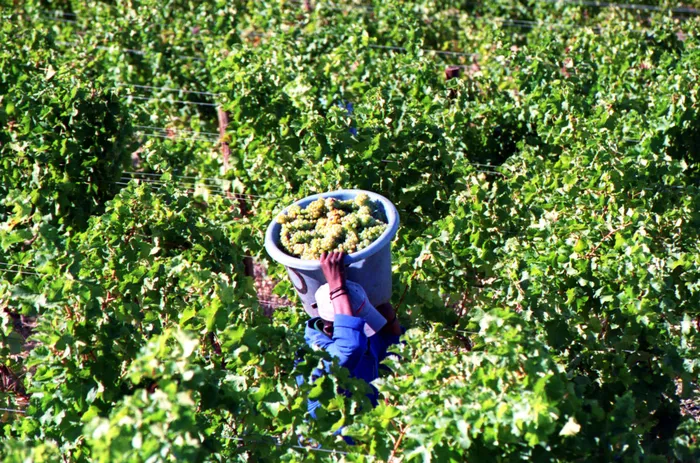
Products leading the export market included grapes, apples and pears, maize, wine, apricots, cherries, peaches, sugar, wool, fruit juices, nuts, dates, avocados, pineapples, guavas, mangos, and soybeans.
Image: Denzil Maregele/Independent Newspapers
South Africa’s agricultural exports recorded a strong start to 2026, increasing by 11% in the first quarter compared to the same period last year, according to new data released by the Agricultural Business Chamber of South Africa (Agbiz).
Agbiz chief economist Wandile Sihlobo said the sector generated exports worth $3.7 billion (about R60 billion) during the first quarter, despite ongoing pressure from global trade uncertainty and domestic logistical challenges.
Products leading the export market included grapes, apples and pears, maize, wine, apricots, cherries, peaches, sugar, wool, fruit juices, nuts, dates, avocados, pineapples, guavas, mangos, and soybeans.
Sihlobo noted that while port efficiency has improved following previous disruptions, operational challenges remain at the Port of Cape Town. Delays at the port stretched from late 2025 into early 2026, coinciding with the peak export season for the table grape industry.
Sihlobo said that from a regional perspective, the African continent accounted for the lion’s share of agricultural exports in the first quarter of 2026, at 44% of the total value.
“The products leading the export list in the African continent were maize, apples and pears, soybean, sugar, fruit juices, soybean oil, sunflower oil, and wine, amongst others,” he said.
Sihlobo added that grapes, apricots, cherries, peaches, plums, wine, apples and pears, dates, figs, pineapples, avocados, guavas, mangos, fruit juices, sugar, nuts, and citrus juices were amongst the primary agricultural products South Africa exported to the European Union in the first quarter of 2026.
Bennie Van Zyl, TLU SA general manager, welcomed the positive export figures but warned that infrastructure problems continue to affect farmers.
“The reality is that in practice we still have problems with our railways, we still have some problems with our harbours, we still have infrastructure problems. And so there's a lot of challenges that our farmers experience,” he said.
Minister of Agriculture John Steenhuisen also praised the sector’s performance, describing it as proof of the resilience and competitiveness of South African agriculture despite difficult global and domestic conditions.
“This strong performance reflects the resilience and competitiveness of South African agriculture despite an uncertain global trade environment and persistent domestic logistical constraints,” said Steenhuisen.
According to government data, the growth was driven by strong export performances across a range of products, including grapes, apples, pears, maize, wine, apricots, cherries, peaches, sugar, wool, fruit juices, nuts, avocados, pineapples, guavas, mangos, and soya beans.
Steenhuisen said agriculture remains one of the country’s most important drivers of economic growth, rural development, and job creation.
He added that even greater growth could be achieved through improved infrastructure, stronger logistics, increased investment certainty, expanded market access, and broader land ownership and financing opportunities.
Dranca Neo Phalatse, postgraduate coordinator at the faculty of natural and agricultural sciences at the University of Pretoria, said the export growth was highly significant for the sector and the broader economy.
“Export growth supports economic development, creates employment opportunities, strengthens rural livelihoods, and generates valuable foreign exchange earnings. It also reflects the competitiveness and resilience of South African agriculture in international markets,” Phalatse said.
“Increased exports can improve producer incomes, stimulate investment along agricultural value chains, and encourage expansion in production and processing activities.”
Phalatse added that strong export performance sends a positive signal to investors and demonstrates that agriculture remains an important contributor to economic growth and food system development.
“There is reason for cautious optimism regarding further growth during 2026. Continued expansion of export markets, particularly in Asia and other emerging destinations, presents important opportunities for South African producers. Recent market access developments and stronger international demand may support further growth.”
Phalatse also said that future performance will also depend on several factors, including logistics efficiency, port operations, biosecurity management, climate conditions, global economic trends, and trade policies.
BUSINESS REPORT