

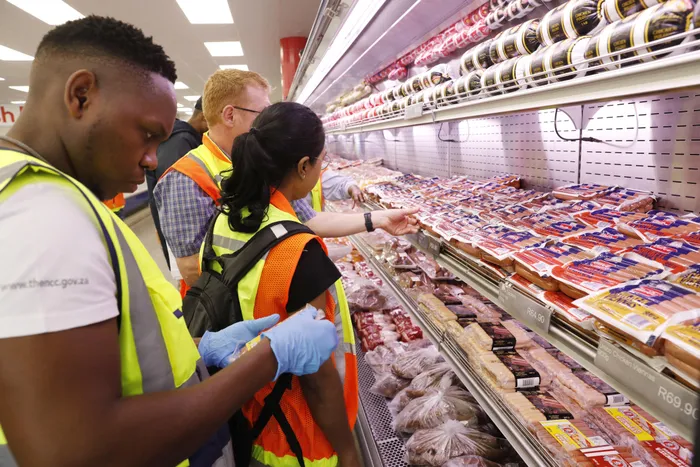
The study found that graduates often experienced a significant disconnect between what they learnt in higher education and the demands of the workplace.
Image: Doctor Ngcobo/ Independent Newspapers
South Africa's retail sector, one of the country's largest employers and a key source of jobs for young people, faces a growing leadership skills gap that could undermine business performance and limit career opportunities for graduates.
This is according to new research from the University of Johannesburg (UJ) released on Monday.
The study found that while retail contributes 11.5% to South Africa's gross domestic product (GDP), generates more than R1.1 trillion in annual sales and employs one in every five working South Africans, many graduates entering the sector are ill-prepared for the realities of leadership in increasingly complex retail environments.
The findings are contained in the research article and the doctoral thesis of Dr Mariette Frazer, a senior lecturer in the Department of Marketing Management at UJ's College of Business and Economics.
Frazer said graduates often experienced a significant disconnect between what they learnt in higher education and the demands of the workplace.
"The reality is that the actual work itself is not being related to [young retail staff], or they’re just not prepared. So, it’s a huge shock to their system when they come in here," an HR specialist interviewed for the research said.
The study found that South Africa's diverse workforce presents unique leadership challenges that are often overlooked in traditional retail education.
Professor Emeritus Magda (Lia) Hewitt from the UJ Department of Industrial Psychology and People Management in the College of Business and Economics, said leadership development must be tailored to the country's social and cultural realities rather than relying on generic international models.
"One of the greatest mistakes we can make is to assume that retail leadership is universal. South African retail operates within a unique social and cultural context," Hewitt said.
The research found that young managers frequently struggle to supervise older employees in workplaces where age traditionally commands respect. Others face the challenge of managing teams with varying levels of digital literacy as retailers increasingly adopt new technologies.
Researchers also highlighted that retail managers in some communities are expected to engage traditional or community leaders before opening new stores, a reality that receives little attention in many leadership programmes.
The report said the rapid growth of e-commerce and digital retail platforms was adding further pressure on leadership capabilities.
Although online shopping has transformed customer expectations, Frazer believes physical stores will remain central to retail operations.
"In my view, online will never replace the physical store. But it will substantially change the way a retailer operates," she said.
She pointed to hybrid retail models such as Checkers Sixty60, where online order pickers work alongside in-store shoppers, creating operational challenges that require skilled leadership to manage customer experience and workplace efficiency.
The research found that retailers are spending heavily to bridge the skills gap, with companies investing between R60 000 and R100 000 to train each graduate entering their organisations.
Despite these investments, Frazer said two emerging challenges require urgent attention: the growing influence of artificial intelligence (AI) and the need to strengthen graduates' self-leadership, emotional intelligence and resilience.
"The retail workplace is already being reshaped by AI-assisted service, self-checkout ecosystems and data-driven merchandising," she said.
However, she argued that emotional intelligence and leadership skills cannot be developed as quickly as new technology can be introduced.
"You cannot fast-track emotional maturity in leadership the way you can fast-track a retail software rollout."
Frazer said South Africa could not afford a slow response because retail remains one of the country's most important pathways into employment.
"Retail is one of the largest employers of young people in this country, and it's one of the few sectors where a graduate, or even a non-graduate, can start on the floor and rise into leadership within a few years. That pipeline is exactly what youth unemployment needs," she said.
The researchers called for closer collaboration between higher education institutions and retailers to redesign retail curricula.
They recommend greater use of role-playing, simulations and real-world case studies to prepare students for difficult workplace conversations, managing culturally diverse teams and introducing new technologies.
The study also highlighted the potential for AI-powered chatbots to provide students with practical leadership coaching by simulating difficult customer interactions, conflict resolution and operational challenges.
Frazer said retailers should play a more active role in developing these learning tools to ensure graduates are equipped with the practical leadership skills needed in a rapidly evolving retail sector.
BUSINESS REPORT