

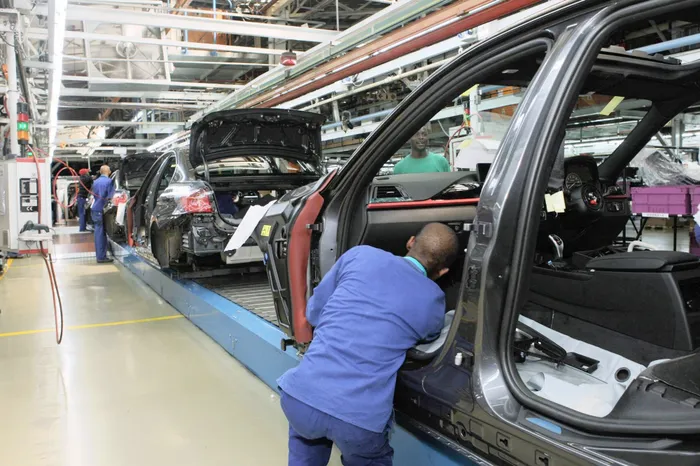
The South African Automotive Masterplan (SAAM) 2035 is under review because at this rate, it will highly unlikely achieve its target to grow local manufacturing content to 60%.
Image: Simphiwe Mbokazi/African News Agency (ANA)
The National Association of Automotive Component and Allied Manufacturers (NAACAM) says the government must compel international automotive manufacturers to increase local content in South African-built vehicles to 60%.
The South African Automotive Masterplan (SAAM) 2035 is currently under review because, at this rate, it will highly unlikely achieve its target to grow local manufacturing content to 60%, creating 224 000 jobs.
NAACAM CEO Renai Moothilal, in an interview with MISA (Motor Industry Staff Association) spokesperson Phakamile Hlubi-Majola, said he believes localisation is the most powerful lever for growing the domestic economy, creating jobs, and developing local skills because component manufacturing carries the deepest employment in the automotive value chain.
Moothilal pointed to Brazil, Thailand, and Turkey, where governments set binding terms for original equipment manufacturers (OEMs). In those markets, meeting state-set localisation requirements is not optional, but a condition to being allowed to sell vehicles there.
“We should not be apologetic about it. Localisation is effectively ensuring that you get significant value added from the OEMs. The localisation global norm is 60%. In South Africa, we have been stuck at 40%, and we deserve more. OEMs in South Africa get a lot of support from the state and working class. We feel we should be militant. 60% is a target in the Masterplan.”
According to Moothilal, the target only exists on paper and lacks the political will to ensure that it is achieved.
MISA, the majority trade union in the retail motor industry, representing 79 000 members, supports NAACAM’s view. Creating sustainable decent jobs is at the heart of the Masterplan, the union said.
“With OEMs producing locally receiving substantial incentives from the government, it is not unreasonable to ask they commit to creating real manufacturing jobs,” says MISA’s CEO: Operations, Martlé Keyter said in a statement.
Maureen Phiri, director at Oxyon People Solutions, said earlier this year that Chinese car brands are leading in Electric Vehicles (EVs) worldwide and these brands are here to stay in South Africa, but the opportunity lies in encouraging them to use existing plants, local skilled workers, and local suppliers.
This will shift from importing cars to producing them locally, aligning with goals for green industry growth.
She said South Africa’s location gives access to Southern African markets without duties under the African Continental Free Trade Area. Trade deals also open doors to Europe and beyond. With a solid supply chain, it could become a base for EV production if policies support it.
South Africa’s production costs are however higher than those in China. Recent tax breaks for EV and hydrogen vehicle investments are a good start, especially for new equipment. But more is needed, said Phiri.
“We need rebates for companies that hire locally and follow content rules. Additionally, there should be funding to update plants and assist suppliers in transitioning to EV parts. Without a plan to reduce costs, investments will go to other countries,” Phiri said in a statement.
Visit:www.businessreport.co.za