

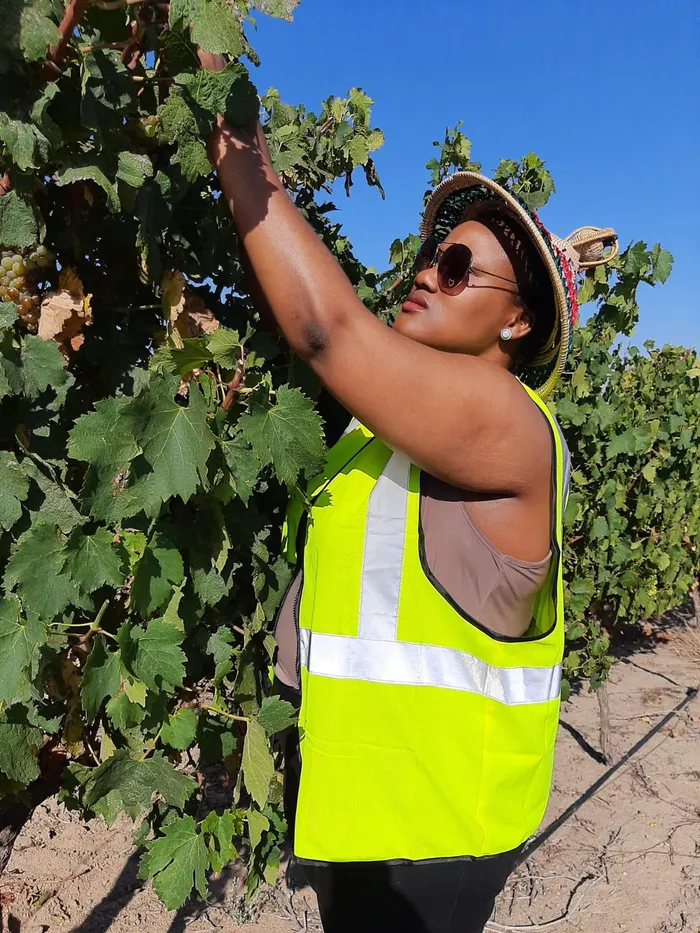
Mmatlali Lucia Motloung, Founder & Group CEO, LucMo Wines.
Image: Supplied
SOUTHERN Africa’s wine industry is one of the region’s most celebrated economic and cultural success stories. Yet behind its global accolades lies an uncomfortable truth: While women are central to the industry’s success, they remain largely excluded from its ownership, leadership, and wealth creation.
That imbalance is not only unjust — it is bad economics, especially for a region that urgently needs broader participation, stronger household incomes, and more inclusive engines of growth.
South Africa produces more than 960 million litres of wine annually, contributing between R55 billion and R60bn to the economy and supporting more than 270 000 jobs across agriculture, logistics, tourism, hospitality, exports, and retail. Across the broader Southern African region, the industry drives trade, jobs, and rural development.
Despite this immense value, women — particularly Black women — remain significantly under-represented in the boardrooms, ownership structures, and decision-making spaces that determine the industry’s future.
Across Southern Africa, women are central to the informal and formal economies: They run small businesses, sustain agricultural production, anchor families, and drive community resilience. When women are excluded from ownership in high-value industries such as wine, the region loses more than representation; it loses productivity, innovation, tax revenue, job creation, and the full economic power of half its population.
As the founder of LucMo Wines, a Black woman-owned wine brand based in Johannesburg with Afrocentric luxury wine dining experiences in Midrand and Muldisdrift, I have witnessed both the challenges and opportunities firsthand. Women’s participation in wine is not new. What remains rare is women’s ownership of wine businesses, vineyards, brands, and distribution networks.
That distinction matters.
Visit almost any vineyard or winery in Southern Africa and you will find women throughout the value chain. Women cultivate vines, manage harvests, oversee quality control, and contribute significantly to production.
Yet ownership remains concentrated elsewhere.
Ownership determines who controls resources, influences production decisions, benefits from exports, and builds generational wealth. Without greater ownership, women remain confined to the lower-value segments of the wine economy, regardless of how much they contribute to its success.
This is not a question of ability. Women have repeatedly demonstrated their capability as entrepreneurs, innovators, and business leaders.
The issue is access. Access to land. Access to finance. Access to distribution channels. Access to markets.
These are structural barriers that continue to limit women’s advancement within an industry that depends heavily on their labour and expertise.
Expanding women’s ownership in the wine sector is not an act of charity or corporate goodwill. It is a sound economic investment — and part of the broader work of growing Southern Africa’s economies from the ground up.
Research consistently shows that women entrepreneurs are more likely to reinvest earnings into their families, communities and businesses. Women-led enterprises often place greater emphasis on sustainability, long-term value creation, and inclusive growth.
Women’s economic participation has a multiplier effect. When women earn more, own more, and lead more, income circulates through households, education, local suppliers, and community enterprises. In rural and agricultural economies, this can mean stronger food security, more stable livelihoods, and new opportunities for young people who might otherwise be excluded from formal economic pathways.
They also bring fresh perspectives to branding, consumer engagement, product innovation, and market development — precisely the qualities needed for a globally competitive industry.
Imagine the impact if even 10% more women became vineyard owners, wine producers, or brand founders. The result would be new businesses, expanded export opportunities, greater innovation and broader economic participation.
The benefits would extend far beyond the wine sector itself.
For Southern Africa, this is the deeper opportunity: Women’s leadership in wine can become a model for how the region unlocks growth across agriculture, tourism, manufacturing, exports, and creative industries.
The question is not whether women can contribute to economic growth. They already do. The question is whether our industries are willing to let women own, scale, and shape that growth.
When I founded LucMo Wines in 2019, my vision was larger than producing exceptional wine.
I wanted to tell African stories through wine — stories of heritage, resilience, identity and ambition.
For too long, wine has been marketed primarily through a European lens. African producers have often been viewed only as suppliers rather than storytellers and brand builders. LucMo Wines seeks to challenge that narrative by placing African identity and excellence at the centre of the consumer experience.
Our mission rests on three pillars: reclaiming African storytelling in wine, creating pathways for women entrepreneurs, and building a globally competitive African wine brand.
Our journey demonstrates what becomes possible when women are given the opportunity to lead.
It should not be viewed as the exception. It should become the norm.
Southern Africa is actively pursuing inclusive economic growth, gender equality, and meaningful transformation. The wine industry cannot remain on the sidelines of that conversation.
If the sector is serious about inclusion, it must support practical measures that remove barriers to women’s participation as owners and leaders.
That means expanding access to financing for women entrepreneurs, accelerating land reform initiatives, strengthening procurement opportunities for women-led suppliers, creating mentorship networks, and providing greater visibility for women-owned brands in local and international markets.
Transformation cannot happen through rhetoric alone. It requires deliberate action.
Women have always helped sustain Southern Africa’s wine industry. Now they must be empowered to help shape it.
The next chapter of the region’s wine story should include women not only as workers, but as founders, investors, exporters and industry leaders.
Because when women own more of the industry they help build, the benefits ripple through communities, economies and future generations.
The future of Southern African wine will be stronger, more innovative, and more inclusive when women are given a seat at the table — and ownership of what’s on it.
* Mmatlali Lucia Motloung, Founder & Group CEO, LucMo Wines. Motloung will be a guest speaker at the upcoming Women’s Month thought leadership event, on August 8 in Eswatini and August 22 in Johannesburg, on the role of women in growing Southern Africa’s economies, curated by The African Storyteller.
** The views expressed here do not reflect those of the Sunday Independent, IOL, or Independent Media.