

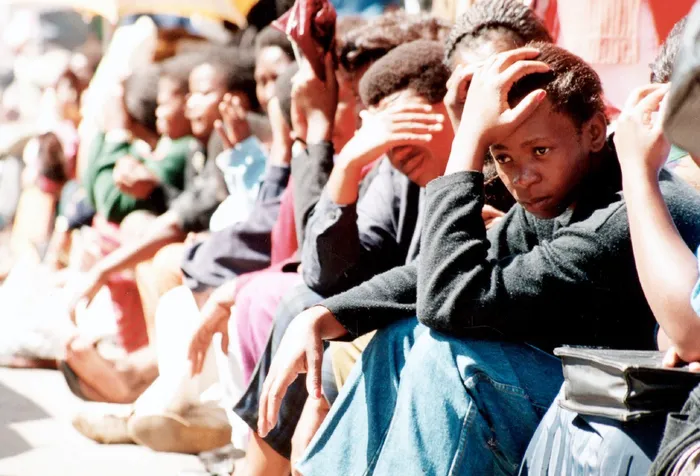
Stats SA’s Q1 2026 data is sobering. National unemployment rose to 32.7%. Among young people aged 15 to 24, unemployment reached 60.9%. Using the broader youth measure of 15 to 34, more than four in 10 young people were not in employment, education or training, argues the writer.
Image: File
Thembi Chagonda
South Africa cannot discuss illegal employment, economic reform and social stability without confronting the uncomfortable truth at the centre of it all: millions of young South Africans still have no credible pathway into work.
This is the real test of Youth Month.
Every June, South Africa honours the courage and contribution of young people. But for a young person sitting at home without work, training, income or a realistic next step, commemoration is not enough. The question is much more practical: where do I go next, and who is prepared to open the first door?
Government has declared 2026 the Year of Putting Young South Africans to Work. The Minister of Employment and Labour has announced a youth-focused job creation drive, including 200,000 opportunities, workplace-integrated learning and digital skills training. President Cyril Ramaphosa has also recognised the role of the Youth Employment Service (YES) and committed to regulatory changes to make it easier for businesses to participate.
These commitments matter. But South Africa’s problem is no longer a shortage of statements. It is a shortage of working pathways.
The numbers tell a difficult story
Stats SA’s Q1 2026 data is sobering. National unemployment rose to 32.7%. Among young people aged 15 to 24, unemployment reached 60.9%. Using the broader youth measure of 15 to 34, more than four in 10 young people were not in employment, education or training.
These are not just labour-market statistics. They represent young people delaying adulthood, postponing independence, depending on households that are already stretched, and losing confidence that effort will be rewarded.
They also point to a deeper social risk. No economy can build stability, productivity or inclusive growth while so many young people remain outside the systems that prepare them for work.
Enforcement alone will not create jobs
This discussion is happening at the same time as South Africa is confronting difficult questions around illegal employment, undocumented workers and social tension in communities.
Lawful enforcement matters. Employers who exploit undocumented workers, avoid minimum standards or use informality to undercut compliant businesses must be held accountable. They harm vulnerable workers and they also harm compliant employers who are trying to create decent work.
But enforcement alone will not create jobs.
When legal routes into work are too narrow, costly, slow or disconnected from real employer demand, informal alternatives grow. This affects South Africans and foreign nationals alike. It creates resentment, exploitation and instability.
The better answer is not a blame cycle. It is a pathway system.
That means demand-led training, employer partnerships, workplace-integrated learning, apprenticeships, internships, learnerships and first work experiences linked to real business needs. It also means making it easier for employers, especially small and medium-sized businesses, to participate without being buried in complexity.
South Africa already knows what works
South Africa does not need to start from scratch. Some of the architecture is already in place.
The Youth Employment Service (YES) has created more than 228,000 12-month work experiences since inception, supported by more than 2,000 corporate sponsors, with billions of rand paid into the economy through youth salaries.
The programme works because it is practical. It gives young people a first meaningful work experience while giving employers access to emerging talent. For many businesses, it also creates a bridge between transformation, skills development, enterprise development andreal operational value.
But YES cannot carry the entire youth employment challenge on its own.
TVET colleges, Sector Education and Training Authorities, public employment programmes, small business development structures and corporate supply chains all have a role to play. The problem is that these systems too often operate next to each other instead of as one connected route from learning to earning.
A young person may complete training but struggle to access workplace placement. Another may get short-term exposure but no route into further employment. Others may have entrepreneurial potential but no connection to procurement opportunities, mentorship or finance.
South Africa does not only need more programmes. It needs better handovers between programmes. It needs fewer dead ends.
Youth Month needs practical commitments
Youth Month should be more than a commemoration. It should be a commitment. Five shifts would make an immediate difference.
YES should be formalised as a work-integrated learning partner for TVET colleges, so that more young people can move from training into the workplace exposure needed to turn qualifications into employability.
Youth employment commitments must also be protected in B-BBEE reforms. Transformation funding should add to youth employment, not replace existing commitments that are already creating work experience opportunities.
The Employment Tax Incentive threshold should be reviewed, as inflation has reduced its value, especially in labour-intensive sectors where the cost of absorbing inexperienced young people remains a barrier.
South Africa also needs to connect training, work experience and entrepreneurship. A young person should be able to move from TVET training into YES work experience, and from there into employment, self-employment, supplier development or market access.
Finally, Youth Month needs measurable progress. If government has committed to 200,000 opportunities and 10,000 young people in digital skills training, progress should be reported quarterly by sector and province.
Youth Month must be earned
Youth unemployment will not be solved by annual speeches. It will not be solved by enforcement alone. It will not be solved by blaming one group of vulnerable workers for the exclusion of another.
It will be solved when government, business, labour and the skills system make a measurable commitment to pathways from learning to earning.
That commitment must be practical enough for employers to implement, visible enough for the public to track and meaningful enough for young people to believe in.
South Africa cannot afford another Youth Month marked by speeches while millions of young people remain exactly where they were before: outside the economy, outside training and outside hope.
Youth Month must be earned, not declared.

Thembi Chagonda is Joint CEO of Global Business Solutions and a Commissioner on the Employment Equity Commission representing business.
Image: Supplied
* Thembi Chagonda is Joint CEO of Global Business Solutions and a Commissioner on the Employment Equity Commission representing business.
** The views expressed do not necessarily reflect the views of IOL or Independent Media.
BUSINESS REPORT