

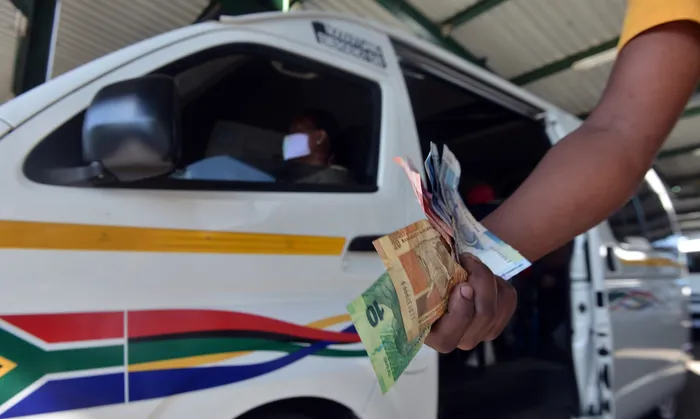
HIGHER FARES Commuters are struggling to keep up with the increases.
Image: Oupa Mokoena/African News Agency(ANA)
Many young South Africans, receiving a job interview invitation should be a moment of celebration. It is a sign that after countless applications and weeks or months of searching, an opportunity may finally be within reach. However, for thousands of unemployed youth, securing an interview is only half the battle. The cost of getting there can be a barrier that stands between them and employment.
According to Statistics South Africa, the unemployment rate among people aged 15 to 34 stands at 45.8%, with approximately 4.7 million young South Africans actively seeking work but remaining unemployed. While a lack of jobs remains the most visible challenge, experts say many young people also face hidden obstacles that make it difficult to access employment opportunities.
Among these is the rising cost of transport.
“Research shows that the cost of job hunting can reach R1,500 a month, meaning that many jobseekers face a stark choice between being able to afford their necessities and investing in their search for a new job,” said Nolundi Matomane, Talent Acquisition Manager at Pnet.
The challenge is particularly acute for young people living in townships, informal settlements and low-income communities, many of which are located far from major economic centres.
“Transport costs may account for more than half of the costs of looking for employment, with costs rising sharply recently due to ongoing fuel increases. Too many young people need to resort to borrowing money from family, friends or even loan sharks, simply to afford a return trip to an interview,” Matomane explained.
For many jobseekers, the journey itself can be exhausting. The decline of South Africa's rail network and limited public transport options often mean candidates must rely on multiple taxis, buses or other forms of transport to reach interview venues.
“What's more, a lack of reliable transport links and the near collapse of rail services means that many people need to use multiple modes of transport to reach an interview. Getting to the interview could involve two to four hours travelling each way, leaving those jobseekers lucky enough to secure an interview in the first place exhausted and disillusioned,” said Matomane.
The financial and emotional strain can eventually lead some young people to stop searching for work altogether. This contributes to the country's growing number of discouraged work seekers—individuals who want employment but have become disheartened by the challenges associated with finding it.
“As such, transportation in South Africa is a structural barrier that traps individuals in poverty by blocking them from economic opportunities,” said Matomane.
While government and private sector initiatives are attempting to address the issue, many believe more can be done. Programmes such as the Western Cape Government's Getting YOU to Work initiative have helped young people travel to interviews without facing additional financial pressure.
This Youth Month, Pnet has launched a campaign aimed at easing the burden on jobseekers. The recruitment platform is offering Uber ride vouchers to qualifying candidates who secure interviews through the platform.
“Landing a job interview is a real achievement. We want to make sure it counts. If a young South African has done the hard work of building a profile, applying for a role and landing an interview, the cost of getting there should not stand between them and that opportunity,” said Matomane.
The company is also encouraging employers to reconsider recruitment practices that may unintentionally create barriers for candidates.
Could initial interviews be conducted telephonically or virtually? Could businesses provide transport assistance where possible? According to Pnet, these are some of the practical interventions that could help ensure talented young South Africans are not excluded from opportunities because of circumstances beyond their control.
As South Africa marks Youth Month, the conversation around unemployment continues to evolve. While creating jobs remains critical, experts argue that equal attention must be given to removing the barriers that prevent young people from accessing existing opportunities.
For many unemployed youth, the challenge is not a lack of ambition or willingness to work. Sometimes, it is simply the cost of getting to the interview.
IOL