

50th anniversary of the June 16, 1976 Soweto uprisings.
Image: IOL
Youth across South Africa are rallying for change as the 2026 Local Government Elections approach, highlighting issues of unemployment, education, and systemic inequality that have left them feeling trapped.
With pressing issues such as high unemployment, inaccessible education, and economic disparities starkly affecting their futures, the youth are determined to redefine the narrative that has kept them confined in a broken system.
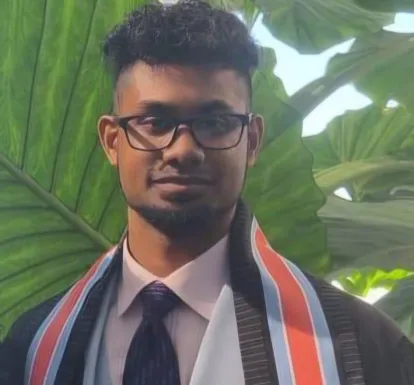
Riley Owen Singh
Image: Supplied
Riley Owen Singh, 22, of Durban, said a challenge affecting the youth currently, was having inherited a “broken system”.
“It is a system that ensures housing remains out of reach and employment is hard to come by. If we are lucky enough to get a job, we are overworked while being underpaid and treated as disposable economic assets, rather than human beings who have unconditional rights to housing and education.”
Singh said historically, it had always been the youth that mobilised for radical change in society.
He said that was what the youth of South Africa needed to start doing now to see change.
“The first step is refusing to accept the status quo which is not benefiting us, and then to organise amongst ourselves to make our demands heard by our political leaders.
“Furthermore, our government must stop with toothless rhetoric, and actually allocate resources and state-intervention in addressing these concerns. Whether it is funding our public education institutions so that people have access to tertiary education or having a government jobs programme that pays people a livable wage. All of this involves material change and that is something the government should focus on,” he added.
Singh, a journalist, said he did not believe there would be much-change following the Local Government Election.
“The political system does not benefit the majority of South Africans, it only benefits a privileged, connected few. I think we need to start organising and seeing politics outside of our established electoral system. That is where actual grassroots, community-driven mobilisation can occur.”
Singh added that he had not yet decided if he would vote.
“However, I believe that the youth make up a very important voting bloc. South Africa has quite a large youth population, so political parties will definitely be trying to court our vote.”
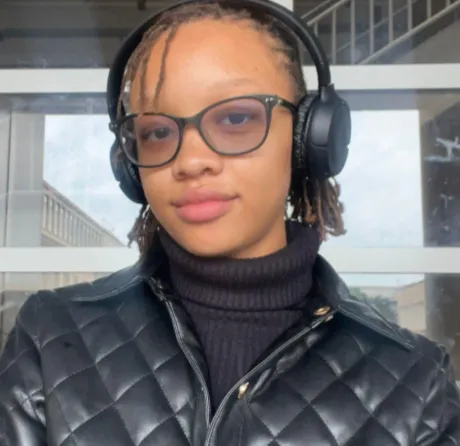
Caitlyn Paddy
Image: Supplied
Caitlyn Paddy, 21, of Johannesburg, said after more than 30 years into democracy, South Africa's youth found themselves trapped not by a single crisis, but by a constellation of interconnected failures.
“These failures - economic, cultural, and institutional, have been systematically misunderstood as separate problems rather than symptoms of the same structural malaise.”
Paddy said the youth unemployment statistics are stark.
“Unemployment among those aged 15-34 sits at 45.8%, while 45% of young people languish outside employment, education, and training entirely. Yet numbers alone obscure what is truly at stake. The crisis is not merely material deprivation; it is the foreclosure of imagination itself. A generation told repeatedly that no experience means no job, and no job means no future.”
Paddy, a media director and second-year humanities student at the University of the Witwatersrand, said the Local Government Election presented a moment of possibility, not inevitability.
“A mobilised youth vote can shift outcomes at ward level. But one election cannot dissolve structural unemployment or generations of accumulated inequality.
“Genuine transformation demands that young South Africans organise not only as voters but as cultural and political agents capable of imagining and building alternatives to the systems that have failed them. The state has proven incapable of delivering on its promises to the youth; the next question is whether young people themselves will seize the agency to demand and construct something better,” she said.

Thandeka Tshabalala
Image: Supplied
Thandeka Tshabalala, 18, of Durban, said one of the issues faced by youth was gender affirmative healthcare access within the LGBTQIA community.
“I believe the youth need to be on the ground doing activist work for policy reform surrounding more access to healthcare which assists in affirming and supporting alternative gender expression. We also need to organise and promote ‘Pride’ more loudly and more often in demonstrations and focus groups amongst ourselves.
“Also, the youth are integral in setting the atmosphere of our political climate at any given time. South African youth are also known to be rambunctious and effective in driving social change through our many passionate voices.
“I believe that the government needs to interact directly with youth representatives, chosen by the youth, and aim to make active tangible change rather than just spread awareness and host conversation,” she said.
Tshabalala, a first years LLB student at the University of KwaZulu-Natal, said she believes that progress is possible following the Local Government Election.
“There can be progress if we recognise the net positive for society in helping our children and youth. However, issues such as unemployment, inequality, service delivery, health and education access for all should be a priority.”

Lexi Thomas
Image: Supplied
Lexi Thomas, 21, of Durban, said critical issues faced by youth were economic and psychological.
“We are coming of age in a post-Covid world which prevented many of us from getting the early experience compared to the previous generations. This leaves us behind; we are older with less experience in an already unforgiving economy.
“In addition, unemployment is a great issue as Artificial Intelligence is already reducing the need for many entry level jobs.
“Psychologically, we are in the middle of a mental health crisis which is affecting most people in my generation. Most people I know are anxious or depressed. I have noticed more and more people turning to substance abuse to cope, mostly because it gives relief,” he said.
Thomas said the youth however, can provide new perspectives and lead the charge into new areas such as with humanitarian causes and policy ideas.
The second-year Bachelor of Arts student at Emeris, said he believed the Local Government Election holds a lot of potential.
“ Local government has more power than what most people realise, and successful operations that take place on the local level provide a precedent for national governments to implement similar strategies with a wider reach. I also believe that parties that align themselves as taking a stand on issues like access to health services, education, unemployment and inequality stand the biggest chance of creating real change, and gaining real support from the general public.
“I will definitely be voting, and would be encouraging my friends to vote. I think the youth have a lot of new and radical ideas that bring a lot of potential. As more and more of us reach the age in which we can vote, our generation will have a greater impact on elections than ever before,” he said.