

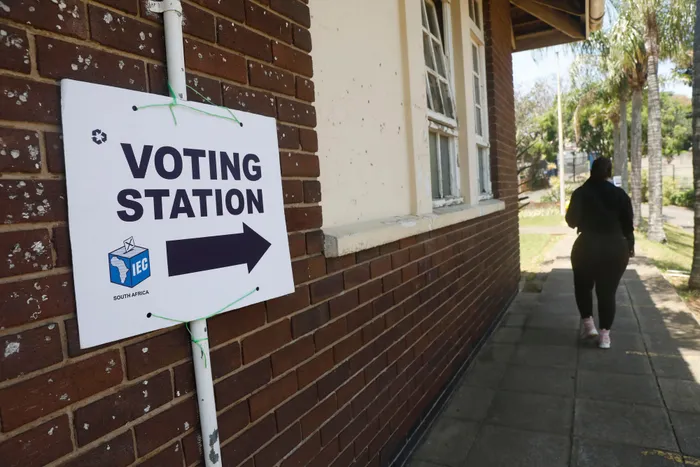
Elections remain the most powerful constitutional instrument available to citizens to hold public representatives accountable.
Image: Doctor Ngcobo | Independent Newspapers
ON November 4, 2026, millions of South Africans will once again head to the polls to elect councillors who will govern municipalities for the next five years.
The election comes at a critical moment. Many municipalities are characterised by unstable coalition governments, deteriorating service delivery, financial distress and growing public frustration.
Yet elections remain the most powerful constitutional instrument available to citizens to hold public representatives accountable.
Former Zimbabwean President Robert Mugabe once remarked: “Forgive people, but never forget what they did to you, not because you hate them, but to serve as a reminder that you should be careful about trusting them again.”
While the quotation was made in a different context, it carries an important lesson for democratic participation. Elections are not about revenge or resentment; they are about memory, accountability and informed decision-making.
As South Africans prepare to cast their votes, they should remember not the promises made during election campaigns, but the performance demonstrated over the past five years.
Political parties and their representatives have had sufficient time to prove whether they deserve another opportunity to govern. The ballot paper should therefore become a report card on their performance rather than a blank cheque based on campaign slogans.
Every voter should ask a few simple but fundamental questions. Am I satisfied with the services delivered in my community? Has my councillor been visible and accessible? Were community concerns listened to and acted upon? Has the municipality improved roads, water provision, electricity supply, refuse removal and local economic opportunities? Has leadership demonstrated honesty, competence and accountability?
The answers to these questions matter far more than colourful posters, political rallies, or last-minute campaign promises.
Local government elections differ significantly from national and provincial elections. At municipal level, politics becomes personal. Citizens experience local government every day.
They drive on municipal roads, rely on municipal water systems, report electricity outages to municipalities and expect refuse to be collected regularly. When these services fail, communities feel the consequences immediately.
For this reason, local government elections are often less about political ideology and more about lived experience. Throughout my engagements with the media, I have consistently argued that municipal elections are fundamentally about what residents encounter daily.
A councillor who is absent from the community, ignores residents' concerns, or only appears during election campaigns should not expect automatic support simply because of the political party they represent.
Communities remember those who stood with them during difficult times. They remember leaders who attended community meetings, responded to service delivery complaints, assisted vulnerable families and remained visible even when there were no television cameras present. Equally, they remember those who disappeared after election day.
Across the world, local leaders have been voted out of office not because of grand ideological disagreements, but because they failed to respond to the practical needs of the communities they were elected to serve.
Democratic accountability begins at the local level, where citizens can directly assess whether elected representatives have honoured the trust placed in them. As campaigning intensifies in the coming months, voters should expect political parties to make ambitious promises.
Manifestos will be launched, community meetings will multiply and candidates will visit neighbourhoods they may not have entered for years. Such engagement is a welcome feature of democracy, but voters should not allow election-season enthusiasm to erase five years of lived experience.
A simple question deserves to be asked of every candidate seeking office: Where were you during the past five years?
If a candidate can demonstrate consistent service, community engagement, ethical leadership and tangible achievements, voters may well decide that another term is deserved.
If, however, the answer consists only of promises about what will happen after the election, citizens should exercise caution. Democracy rewards performance, not potential alone.
Voting is both a constitutional right and a civic responsibility. It should never be reduced to loyalty, emotion or habit. Every cross placed on a ballot paper carries consequences for service delivery, local development, financial governance and the quality of everyday life within communities.
South Africans should therefore resist the temptation to vote solely on historical allegiance or political identity. Instead, they should evaluate evidence, reflect on experience and make decisions that promote accountable local governance.
Elections are one of the few moments when ordinary citizens possess equal power regardless of wealth, social status or political influence. A single cross can reward good governance or reject poor performance.
As 4 November approaches, remember that your vote is more than a mark on a ballot paper. It is your voice, your judgement and your mechanism for holding leaders accountable. Do not forget what they did or failed to do for your community.
Forgiveness belongs to personal relationships. Elections belong to democratic accountability. When you enter the voting booth, let your cross reflect not empty promises, but proven performance.
* John Ntshaupe Molepo is an associate professor at Tshwane University of Technology and executive director at the South African Association of Public Administration and Management. He writes in his personal capacity.
** The views expressed here do not reflect those of the Sunday Independent, Independent Media, or IOL.