

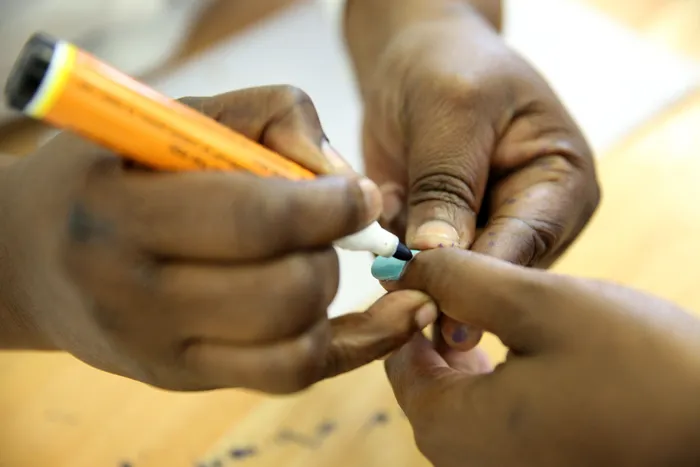
Political killings during the voter registration weekend have raised concerns over election-related violence ahead of November’s local polls, with analysts warning that such incidents are becoming increasingly frequent.
Image: Shelley Kjonstad/Independent Newspapers
Political killings during South Africa’s voter registration weekend have intensified concerns over election-related violence ahead of the November polls, with analysts warning that such incidents are becoming a recurring feature of local government elections.
The voter registration weekend, held on 20 and 21 June as part of preparations for the 4 November 2026 local government elections, was overshadowed by a series of deadly shootings targeting political figures across several provinces.
The Electoral Commission of South Africa (IEC) said the exercise formed part of broader efforts to expand voter access, after recording 2.9 million registrations over the weekend, increasing the national voters’ roll to about 28.5 million.
The IEC has also announced a second voter registration weekend scheduled for 1 and 2 August, aimed at giving eligible voters another opportunity to register or update their details ahead of the elections.
The commission said the additional registration period, alongside its zero-rated online registration portal, is intended to remove barriers to participation and strengthen electoral inclusion.
Among those killed were two uMkhonto weSizwe (MK) Party members shot dead in Bekkersdal on the West Rand, Democratic Alliance (DA) by-election candidate Sinovuyo Dyokwe in Cape Town, and African National Congress (ANC) ward councillor Sicelo Mleve in Gqeberha.
In eThekwini, ANC branch executive committee member Vukani Majozi was also killed outside his home.
Police have confirmed that investigations into the killings are underway, with Gauteng authorities pursuing suspects linked to the Bekkersdal incident.
Acting Police Minister Firoz Cachalia said the voter registration weekend had been marred by 12 serious criminal incidents nationally, warning that political violence has no place in South Africa’s constitutional democracy.
“We strongly condemn these acts of violence. Political violence has no place in our constitutional democracy.
”An attack on political representatives or supporters, regardless of party affiliation, is an attack on the democratic rights of all South Africans,” Cachalia said
Political analysts say the latest killings reflect a recurring pattern in South African politics, where violence intensifies during periods of heightened political competition, particularly during candidate selection and election build-up phases.
Political analyst Professor Theo Neethling, a research fellow in the Department of Political Studies and Governance at the University of the Free State, said political murders and election-related violence tend to increase during such periods, although the pattern is not uniform across the country and is concentrated in specific areas.
He said local government elections are more prone to violence than national elections because municipal office is closely linked to access to resources, procurement opportunities, patronage networks and local political influence.
Neethling said KwaZulu-Natal remains the province most affected by political killings, accounting for a disproportionate share of politically motivated murders since 1994, while Mpumalanga and parts of the Eastern Cape have also experienced incidents.
He warned that while political violence does not usually change election outcomes, it significantly undermines democratic legitimacy.
“It intimidates candidates and voters, discourages political participation, and weakens trust in democratic institutions,” he said.
UKZN political analyst Siyabonga Ntombela said political killings rob communities of ethical leadership and replace it with individuals who use political office for personal gain.
He said slow arrests and weak convictions continue to fuel political violence in South Africa.
“The slow apprehension and conviction of hitmen and their solicitors fuels political violence in South Africa,” Ntombela said.
Ntombela said local government politics has become particularly contested because it provides access to resources and economic opportunities.
“These elections are a vehicle for asset accumulation especially via illegal means,” he said.
He added that violence is increasingly being used to eliminate competition.
“These incidents are another form of ‘rigging’ elections, by eliminating competition and scaring off other participants,” he said.
UKZN political analyst Zakhele Ndlovu said political violence has shifted in recent years from inter-party conflict to intra-party assassinations linked to competition for positions.
He said the resurgence of killings is closely tied to local government election cycles and internal party battles.
Ndlovu said limited economic opportunities and unemployment contribute to politics being seen as a lucrative career path.
However, he warned that declining trust in institutions and weak policing are worsening the crisis.
“The police are incompetent and rotten to the core as the Madlanga commission has shown. It’s easy to commit murder and get away with it,” he said.
With the June voter registration weekend concluded and preparations now intensifying ahead of the November elections, analysts warn that the underlying drivers of political violence remain unresolved.
They say unless competition for local power, weak enforcement and internal party conflict are addressed, election-related violence is likely to remain a defining feature of South Africa’s municipal political landscape.
Meanwhile, IEC Chief Electoral Officer Sy Mamabolo said the commission remains part of the priority committee under the National Joint Operational and Intelligence Structure (NATJOINTS), which coordinates election security planning with law enforcement agencies. He said the commission would need to strengthen its operational plans going forward.
IOL Politics