

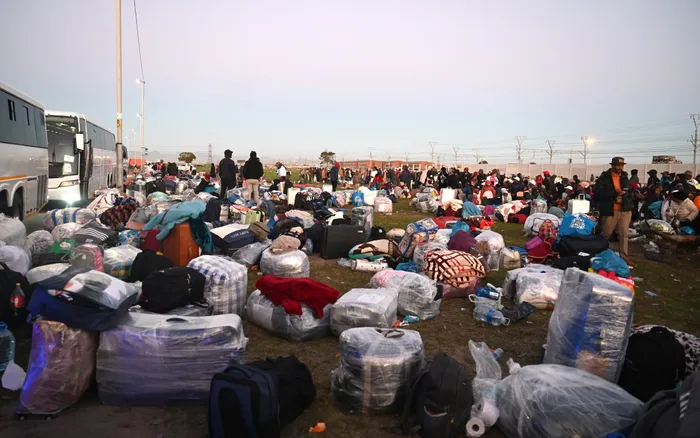
Earlier this month, thousands of undocumented Zimbabwean nationals were stranded in an open field near the Langa train station in Epping, Cape Town.
Image: Ayanda Ndamane / ANAStudio
Healthcare Workers Against Xenophobia and the Anglican Diocese of Cape Town have spoken out about the treatment of foreign migrants, with the church calling for a dialogue to identify the root causes of tensions.
The scrutiny over the treatment of migrants comes after the Inter-Ministerial Committee (IMC) on Migration announced that it was actively strengthening immigration enforcement while tightening border security and migration management systems.
Minister of Justice and Constitutional Development and IMC Chairperson Mmamoloko Kubayi announced on Sunday that 53,449 foreign nationals had been processed as of the close of business on July 11, 2026.
The Healthcare Workers Against Xenophobia said in a statement, supported by 30 local organisations, that the hyperfocus on the “30 June” deadline triggered a public health emergency.
“The unlawful deadline stood for weeks before the government intervened. It then processed people at a pace that outstripped its own capacity to provide shelter, food, water, sanitation, and continuity of healthcare.
“Removing them does not address the crisis, nor does it fulfil the government's constitutional obligations to those who were processed or to those who remain. The risk was foreseeable,” they said.
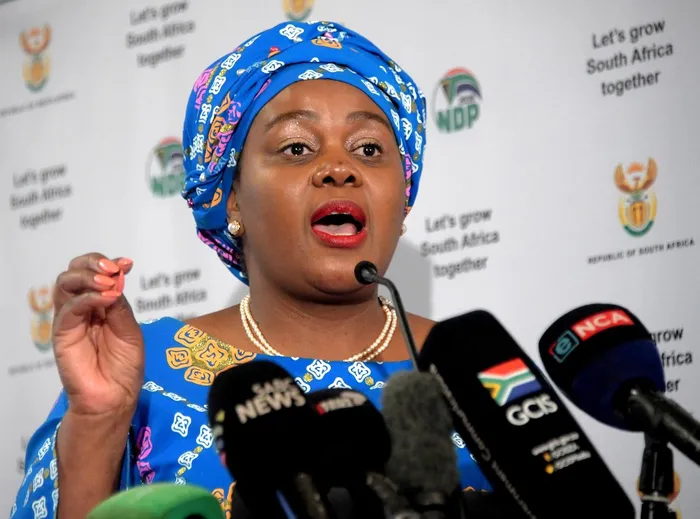
Minister of Justice and Constitutional Development and IMC Chairperson Mmamoloko Kubayi announced Sunday that exactly 53,449 foreign nationals had been processed as of the close of business on July 11.
Image: GCIS
“Presenting this outcome as a policy achievement is a failure of accountability and should be recognised as such. The health and psychological toll continues.”
They added that despite assurances that the centres are being managed in accordance with the law and the state's humanitarian obligations, “there is little evidence to support this”.
“Overcrowding and inadequate sanitation at Musina and other sites create conditions for disease transmission, while exposing infants, pregnant women, and older persons to increased risks of hypothermia and respiratory illness. The psychological impact of displacement, family separation, and violence is profound and enduring and is being absorbed by community health services already under strain.”
They are calling on the government to implement all lawful measures, consistent with South Africa's constitutional values and international human rights obligations, to protect those affected.
On Sunday, Kubayi said that while they noted concerns from various quarters regarding the humanitarian situation, “especially at the Musina Temporary Repatriation Centre, the IMC emphasises that the government’s approach is both firm and humane”.
“Emergency relief remains a civil mandate, and the State has an obligation relating to the right to life, access to healthcare, food, water and social security, and the protection of children.”
The Anglican Diocese of Cape Town has also spoken out against the “hate speech, vigilantism, violent attacks, and looting” being unleashed on foreign migrants.
In his address at the diocesan synod (an assembly organised to discuss pastoral issues), Archbishop Thabo Makgoba said that migrants are being scapegoated as a result of “justified anger” at South Africa's crisis of crime, unemployment, and failures in service delivery.
He has called for dialogue with both leaders of March and March, Operation Dudula-Western Cape, and others to identify the root causes of tensions and solutions to the current crisis.
The church said that many members of the diocese, who are from elsewhere in Africa, worship faithfully in their parishes.
Makgoba suggested that church communities should take action “to harness both the skills of migrants and the urgent clamour of our people for jobs to create win-win scenarios for both”.
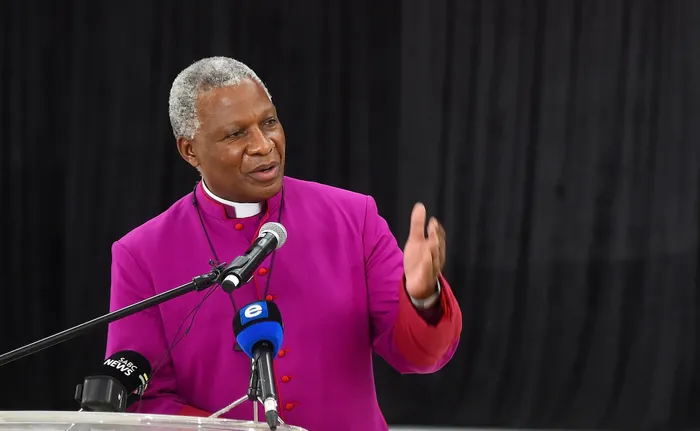
Archbishop Thabo Makgoba.
Image: Phando Jikelo / Independent Newspapers Archives
“The urgent questions we face are: what does justice look like for South Africans in poor communities who can’t find decent jobs, and who fear that migrants willing to work for low wages are stealing their opportunities?
“What does justice look like for migrants who are fleeing conflict zones in which their very lives are at risk, or whose governments are so corrupt that they have virtually collapsed their countries' economies? What would it look like to restore the dignity of migrants as those who, just like us, are made in the image of God?”
Acting Police Minister Firoz Cachalia said that South Africa needs to have a dialogue with other nations about immigration, adding that foreign nationals must be in the country legally.
He added that the current temperature is a two-way street. “There's a lot of misinformation and inflammatory rhetoric being directed at this government.
“We need to have a respectful conversation with our partners, with our sister countries on the African continent. About the terms of migration into what is a sovereign territory of South Africa,” Cachalia said.
“We have to be able to have that conversation. South Africa was the last country on our continent to achieve its independence. As a sovereign territory of the South African people, it commits to Pan-African unity.
“We have seen a lot of inflammatory rhetoric on social media… I would not exclude the political leadership of some countries, and I understand their concerns as well.
“We, in this country, supported all the African teams in the World Cup, and we’re not confused about our identity and where we stand on important matters concerning our mutual interest.”
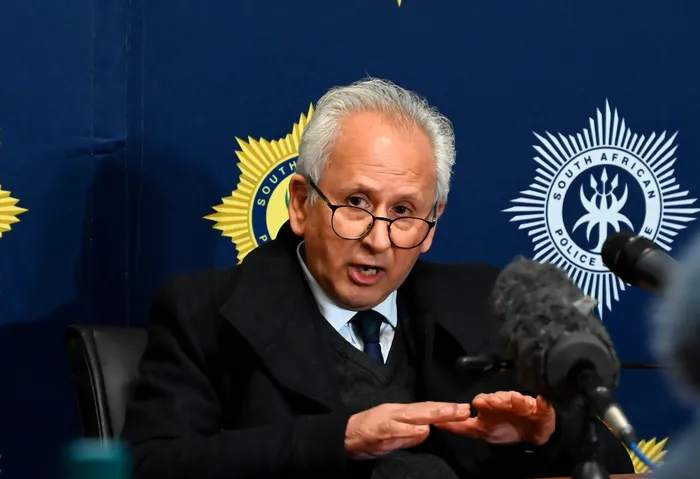
Acting Police Minister Professor Firoz Cachalia.
Image: Bheki Radebe / ANAStudio
Cachalia also defended the over R600 million spent on the police operation during the June 30 protests, asserting that the expenditure was essential to avert a recurrence of violent unrest.
He said the government's absolute priority was to ensure there was no repeat of the unrest experienced during previous violent protests.
Cachalia clarified that the South African Police Service (SAPS) budget inherently includes provisions for responding to emergencies and special operations.
“No new money was allocated. From the existing budget, we were able to respond,” he said.