

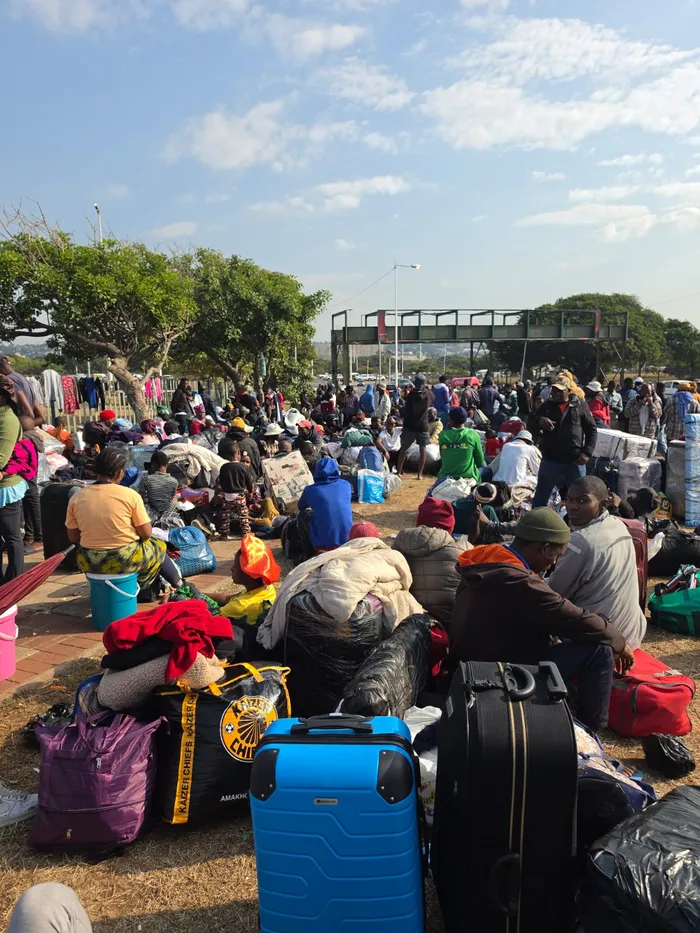
The Department of Home Affairs says the number of undocumented migrants processed for deportation and voluntary repatriation at the Temporary Repatriation Centre in Musina has climbed to between 47,000 and 50,000.
Image: Supplied
The number of migrants processed for deportation and repatriation at the Temporary Repatriation Centre in Musina, Limpopo, has risen to between 47,000 and 50,000, according to the provincial Department of Home Affairs.
Hundreds of migrants continue to arrive at the centre as authorities press ahead with deportations and voluntary repatriations through the Beitbridge Port of Entry.
The increase follows the closure of the Durban Repatriation Centre and comes amid growing calls by anti-migrant organisations for undocumented immigrants to leave South Africa.
Some foreign nationals have been deported or have voluntarily returned to countries including Mozambique and Malawi as tensions over illegal immigration continue to rise.
Speaking at the centre on Thursday, Limpopo Home Affairs manager Albert Matsaung said authorities were beginning to see the impact of the department's repatriation programme.
"You know that we started with massive numbers, but the figures have now scaled down. Yesterday, we managed to process 1,675 people and, by the end of business, everyone who was at the facility had been moved," he told the public broadcaster.
"But you must understand that this remains a moving target. As we process people, others continue to come forward and, wherever they are in the nine provinces, they are brought here."
Matsaung said that on Thursday morning there were between 1,500 and 2,000 migrants at the facility awaiting processing.
"Those are the individuals currently here who are going to be processed and repatriated to their countries of origin," he said.
He said the number of migrants processed by the department continued to increase.
"We are pleased with the journey we have travelled, from where we started to where we are today. Since we started in KwaZulu-Natal and continued at this repatriation centre, we are now moving between 47,000 and 50,000 people processed," Matsaung said.
"When we checked yesterday, we were at around 46,000 and, with the additions, we are moving closer to 50,000.
"What it means is that, statistically, we are now within the margin of 47,000 to 50,000 people processed. That also includes some of the people you are seeing here."
He said the operation had been successful because of the commitment shown by officials and support from other stakeholders.
"The officials have made a difference through their commitment. We are where we are because of the support from all government departments and civil society, working together and supporting where they are supposed to support," he said.
Matsaung also outlined the processes undocumented migrants undergo once they arrive at the repatriation centre.
"One of the things we have to do is make sure that the people we are repatriating are not criminals. That is where the South African Police Service comes in," he said.
"SAPS is based at the centre and uses biometric technology to verify whether the people we are processing have criminal records."
He said police had already identified individuals linked to serious crimes.
"As you may have noted from SAPS reports, they have identified people linked to cases of robbery, murder and rape through their systems," he said.
After the police verification process, migrants are processed by Home Affairs officials, who assist them in completing the necessary documentation and capturing their personal information.
"From there, fingerprints are taken. The biometric checks identify people already in the system, but we are also taking fingerprints as part of our digitisation process," Matsaung said.
"We are digitising our records, and the fingerprints taken here will be uploaded onto the Home Affairs system."
He said the digitised biometric records would help authorities identify individuals who return to South Africa after being deported.
"As and when some of these people who have been declared undesirable return, the system will be able to pick them up through their fingerprints.
"Biometrics is the way to go, and that is how we are enhancing technology to make our work easier and to ensure that we can identify people with ease through the biometric system," he said.
IOL News