

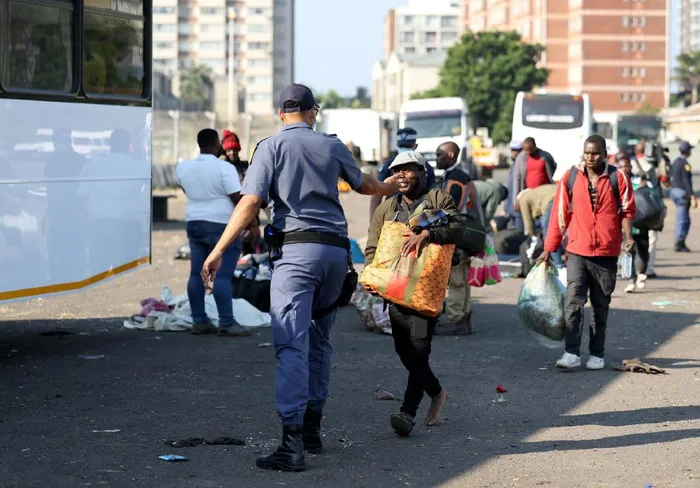
Rights, health and dignity at stake as government’s migration plan faces growing humanitarian concerns.
Image: SUPPLIED
South Africa's rapid processing of thousands of displaced migrants through the Musina Temporary Repatriation Processing Centre and the Beitbridge border post has not brought an end to the humanitarian crisis, according to Kopanang Africa Against Xenophobia (KAAX).
The organisation said the events that unfolded after the alleged unlawful June 30 "deadline" promoted by anti-migrant groups had created a public health emergency, with people forced to leave their homes amid violence or threats of violence.
However, the government has defended its migration management strategy, saying it is aimed at creating an orderly immigration system while protecting the rights and dignity of everyone living in South Africa.
Minister of Justice and Constitutional Development and Inter-Ministerial Committee (IMC) Chairperson Mmamoloko Kubayi briefed the media on progress in implementing President Cyril Ramaphosa's five-point migration management plan, first announced on June 7.
The strategy focuses on enforcing immigration laws, securing South Africa's borders, streamlining the immigration system, addressing policy gaps and strengthening cooperation with neighbouring countries.
Kubayi said the government's approach sought to balance public concerns about migration with constitutional obligations.
"In implementing this plan, we are striving to achieve orderly and regular migration that is mindful of and sensitive to the concerns raised by our people, while observing the human rights and dignity of all people in our country, irrespective of their citizenship or immigration status."
KAAX argued that the government's response should not be measured by the speed at which people are processed or removed, but by whether their constitutional rights, dignity and access to healthcare are protected throughout the process.
"The government's speed of removal is not evidence that this crisis has been addressed. A durable response must instead be judged by whether people's rights, health and dignity — including the constitutional right to healthcare regardless of documentation status — are protected throughout this process."
The organisation said many people processed through Musina were documented migrants who had lived in South Africa for years and that removing them would not address the wider issues behind the crisis.
KAAX said the state had a responsibility to ensure that people affected by displacement were provided with adequate shelter, food, water, sanitation and uninterrupted healthcare.
"The people processed through Musina, many of whom are documented and have lived in South Africa for years, were never the cause of this crisis. Removing them does not address the crisis, nor does it fulfil the government's constitutional obligations to those who were processed or to those who remain."
Pastor and activist Nigel Branken said the situation had moved beyond migration management and raised serious concerns about the treatment of vulnerable communities.
He said the actions of vigilante groups, combined with alleged failures to prevent intimidation and forced displacement, required urgent attention.
"What we are witnessing looks increasingly like a campaign of ethnic cleansing being driven by vigilante groups, while the state risks becoming complicit by failing to stop unlawful raids, intimidation and forced displacement, and by conducting mass deportation and repatriation operations in the same climate of xenophobic hostility."
According to government figures presented at the IMC briefing, 53,449 foreign nationals had been processed for deportation or repatriation by July 11, with around 80% reportedly Malawian nationals.
The government also said more than 20,000 people had passed through the Musina processing centre, with as many as 4,850 people moved in a single day.
Kubayi said unlawful actions by members of the public targeting suspected undocumented migrants would not be tolerated.
"No individual or group has the authority to take the law into their own hands or to intimidate, threaten or unlawfully remove any person from any community."
She said reports of groups conducting searches of homes and businesses suspected of housing undocumented migrants were concerning.
"Media reports, both domestically and internationally, indicate that there are still groups of protesters conducting searches of homes and businesses suspected of housing undocumented immigrants. This is illegal, and members of the community who are part of these activities are warned to refrain from such conduct."
KAAX said the health risks linked to the processing centres were foreseeable, pointing to the cholera outbreak associated with similar conditions at the Musina site in 2008.
The organisation said overcrowding and inadequate sanitation could increase the risk of disease transmission, particularly among vulnerable groups such as infants, pregnant women and older people.
The organisation said displaced people had also experienced interruptions to critical medical treatment, including antiretroviral therapy (ART), tuberculosis treatment, antenatal care and chronic disease management.
"People forced to leave mid-treatment have lost access to ART, TB treatment, antenatal care and chronic disease management, with consequences that will outlast the processing centres themselves."
KAAX said the consequences of displacement extended beyond physical illness, with many people experiencing trauma linked to violence, family separation and uncertainty about their futures.
"The psychological impact of displacement, family separation and violence is profound and enduring, and is being absorbed by community health services already under strain."
Branken said the government's response to alleged intimidation and forced removals had raised questions about accountability.
He said authorities had acknowledged that door-to-door raids, private identity checks and vigilante removals were unlawful, but argued that the response to reports of police failing to intervene had not gone far enough.
"The same government acknowledged that door-to-door raids, private identity checks and vigilante removals are illegal, but its response to reports of police standing by while people were intimidated and chased from their homes was to speak of 'restraint'. That is not restraint. It is abandonment."
Kubayi said law enforcement authorities would act against people who continued carrying out unlawful searches and identity checks.
"Our law enforcement authorities will not hesitate to act against those who continue to conduct these unlawful searches and identity checks."
KAAX said the threat facing migrants had not passed, warning that fear and insecurity continued to affect access to healthcare.
IOL