

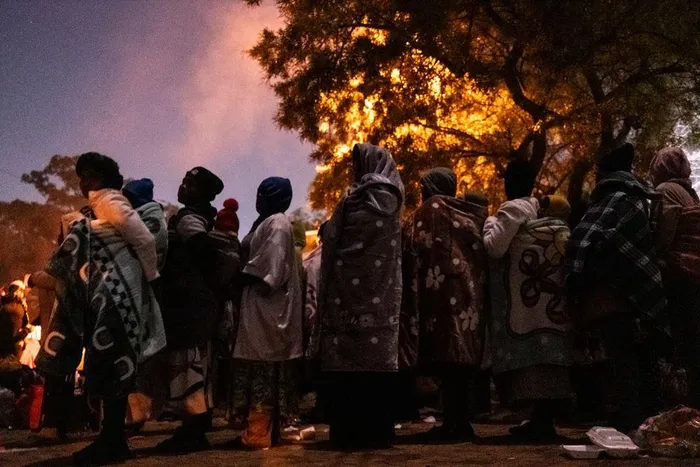
'It's escalating into a humanitarian crisis': MSF on alleged anti-migrant violence in South Africa
Image: TADEU ANDRE / MSF
A woman who had recently given birth was still recovering from a Caesarean section when she allegedly fled xenophobic violence, leaving her without the medical care she desperately needed.
Another woman, living with a diagnosed mental health condition, allegedly went without her medication after escaping her home, causing her to suffer severe hallucinations and placing her at risk of self-harm.
These are some of the human stories emerging as humanitarian organisation Doctors Without Borders (MSF) responds to what it says is a growing crisis sparked by an alleged surge in anti-migrant violence and intimidation across South Africa.
According to MSF, the unrest has allegedly displaced tens of thousands of people, disrupted access to healthcare, and reportedly left at least four people dead, with many others injured and homes destroyed.
Families from Malawi, Mozambique, Zimbabwe, Nigeria and Ghana have allegedly fled their homes fearing for their safety and the loss of their livelihoods.
Many are now sheltering in parks, churches, consulates and other temporary places of refuge in Gauteng, KwaZulu-Natal, the Western Cape, and at the South Africa–Zimbabwe border towns of Musina and Beitbridge.
For many, escaping violence has come at the cost of abandoning life-saving medication and routine medical care.
Claire Waterhouse, MSF Emergency Coordinator, said the organisation's immediate focus is restoring healthcare to those whose lives have been upended.
"We are deeply saddened to see people fleeing harassment and violence and we stand in solidarity with affected communities who have had their rights to health and dignity undermined.
Our priority is to address disrupted access to healthcare for those most at risk, regardless of who they are or where they come from. It's not over, we are very concerned that this situation is escalating into a humanitarian crisis."
MSF nurse Phumla Tsotetsi added that interruptions to treatment could have devastating consequences for people living with chronic illnesses.
"MSF is particularly concerned about continuity of care for people living with chronic diseases such as diabetes, hypertension, mental health, HIV and TB where lack of treatment or medication interruptions can lead to serious health complications.
"Additionally, we are prioritising the immediate needs of young children, pregnant women, and survivors of violence. We have also treated women who have recently given birth, some with c-section wounds from a few days before the protests that have yet to heal.," said Tsotetsi.
Among those treated by MSF was a woman in Johannesburg who had allegedly fled violence but was unable to access the medication she relied on to manage a diagnosed mental health condition.
"She was experiencing severe hallucinations and was at risk of self-harm. Fortunately, our team's doctor was able to help her restart her medication the same day," Tsotetsi added.
Meanwhile, MSF said it is rapidly expanding its emergency operations in Musina, where medical teams are responding to the urgent healthcare needs of people gathered near the South Africa–Zimbabwe border.
IOL