

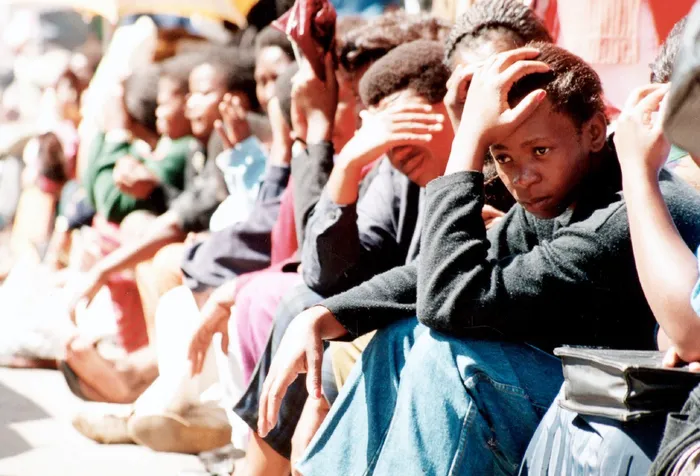
As South Africa marks Youth Month, new labour market data shows young people continue to face steep barriers to work, training, and economic participation.
Image: File
As South Africa marks Youth Month and commemorates 50 years since the Soweto uprising, new labour market data has again laid bare the difficult reality facing young people trying to enter the workforce.
According to Statistics South Africa’s Quarterly Labour Force Survey for the first quarter of 2026, only about three in 10 South Africans aged 15 to 24 who want to work currently have a job.
Youth unemployment among people aged 15 to 34 reached 45.8% in Q1:2026, while about 3.9 million young people aged 15 to 24, representing 37.6% of this age group, were not in employment, education, or training.
The figures come as Higher Education and Training Minister Buti Manamela this week briefed the media on the phasing out of certain pre-2009 qualifications and the move towards occupational qualifications, as part of efforts to better align education, training, and the labour market.
The briefing, held on Thursday, followed public concern over the transition and its implications for learners, training providers, and employers.
Manamela said the changes formed part of the government’s broader skills revolution agenda, aimed at modernising the post-school education and training system, and strengthening the connection between qualifications and workplace needs.
"Education remains at the centre of South Africa’s development agenda," Manamela said.
He said qualifications already awarded would remain valid and recognised, but argued that the country had to move towards qualifications that better prepare learners for the realities of work.
Manamela said legacy qualifications had often favoured the classroom over the workshop, while occupational qualifications were intended to include stronger practical training, workplace placement, and clearer links to industry demand.
For young people, the challenge is already stark. Stats SA reported that young people constituted 21 million, or 49.7%, of the country’s working-age population in the first quarter. However, labour market outcomes remained deeply unfavourable, with 5.6 million young people aged 15 to 34 employed, 4.7 million unemployed, and 10.6 million outside the labour force.
The unemployment rate for those aged 15 to 24 stood at 60.9%, compared to 40.6% for those aged 25 to 34.
Harambee Youth Employment Accelerator’s latest Breaking Barriers publication, which draws on QLFS data, SA Youth platform data, and an income survey of 3,167 young people, placed unemployment among young people aged 18 to 35 at 54.65%.
According to Harambee, 255,000 fewer young people were employed in the first quarter of 2026, with job losses split evenly between men and women. The hardest-hit sectors included community and social services, construction, and retail.
The publication also found that discouraged young workers increased from 10.75% to 11.33%, while the total number of young people not in employment, education, or training reached 9.2 million.
"Growth creates jobs, but not automatically for young people," Harambee stated.
It said its income survey of 3,167 young people found that securing a first structured work experience makes a young person 10 percentage points more likely to remain in the labour market and 10 percentage points more likely to secure further wage employment.
Meanwhile, the University of Johannesburg’s Centre for Social Development in Africa on Friday launched a joint policy brief series examining the role of the Generating Better Livelihoods Project and the Basic Package of Support in improving pathways to livelihoods, employment, and economic participation.
One of the briefs, From Margins to Mainstream: In-Person Support as a Policy Lever for Livelihood Outcomes, argues that many young people need more than digital platforms or jobs programmes.
It says human support is critical in helping excluded young people navigate barriers such as transport costs, repeated rejection, poor mental health, food insecurity, and fragmented public services.