

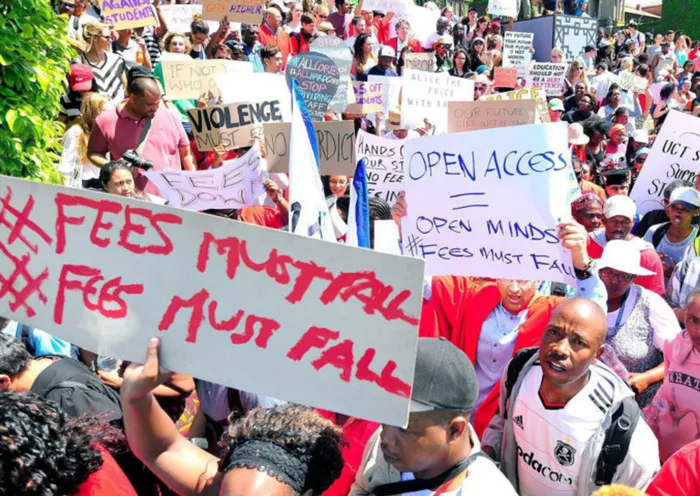
Panellists and attendees at the HSRC Connect dialogue, “Echoes of 1976: Youth then and now”, held in Cape Town ahead of Youth Day. The discussion reflected on the links between the 1976 Soweto uprising, #FeesMustFall and the struggles facing young South Africans today.
Image: HENK KRUGER / INDEPENDENT MEDIA
As South Africa prepares to mark Youth Day, a Human Sciences Research Council (HSRC) dialogue has reflected on how the struggles of young people have shifted from the open repression of apartheid to what speakers described as the slower, more complex battles against bureaucracy, inequality and exclusion.
The HSRC hosted the dialogue, titled "Echoes of 1976: Youth then and now," at its Cape Town office and virtually on Thursday, June 11, as part of its HSRC Connect series.
The discussion brought together voices from different generations of youth activism, including Sibongile Mkhabela - the only female member of the Soweto 11, who was tried and detained by the apartheid state - former #FeesMustFall activist Nompendulo Mkhatshwa, clinical psychologist Mr Kgabe Molepo, and HSRC youth specialists Professor Sharlene Swartz and Dr Adam Cooper.
Opening the discussion, the HSRC said the session was aimed at reflecting on the 1976 Soweto uprising, while also looking at the future of young people in South Africa.
"The 16th of June, 1976 represents a pivotal moment where young South Africans in township schools rose up against the imposition of Bantu education and the enforcement of Afrikaans as the dominant medium of instruction," the programme moderator said.
The HSRC said the conversation was intentionally forward-looking and sought to place the history of June 16 within the context of "a better future for African youth".
Former #FeesMustFall activist Nompendulo Mkhatshwa was among the speakers at the HSRC’s “Echoes of 1976: Youth then and now” dialogue, which examined how youth struggles have changed across generations.
Image: Rowan Abrahams/ACMstudio
The dialogue came as South Africa continues to battle high levels of youth unemployment and exclusion. According to Statistics South Africa’s Quarterly Labour Force Survey for the first quarter of 2026, the official unemployment rate among young people aged 15 to 34 stood at 45.8%. Young people aged 15 to 24 faced the highest unemployment rate at 60.9%, while 3.9 million people in that age group were not in employment, education or training.
Speakers at the dialogue said these figures could not be separated from the country’s unfinished struggle over education, opportunity and economic participation.
Mkhatshwa, reflecting on the link between the 1976 generation and the #FeesMustFall movement, said education remained central to the struggle for dignity and participation in society.
She said many young people were still fighting for “access to an education that’s going to enable us to participate effectively in the economy, and meaningfully in the economy”.
Mkhatshwa said the education system also had to build active citizens, not only workers. She reflected on being part of the generation born into democracy, saying the early years of schooling carried a sense of nation-building and patriotism. She said pupils were taught about the country’s new democratic institutions and history.
"I remember the history projects that got me digging into my history, and where we come from as a country. I remember the days we’d go to school having to carry flags," she said.
However, speakers warned that the promise of democracy had not translated into equal access to quality education or meaningful economic inclusion for many young people.
In a recorded contribution played during the session, Mkhabela offered a sharp critique of the post-apartheid generation, saying society had failed to demand enough of itself.
"As a generation, we should be on trial. If we’re not on trial, we should be on trial," Mkhabela said.
"We’ve had the opportunity to do better for young people, for our children, for our country. We haven’t done as much as what we’re capable of."
She said the country had not demanded the best of itself and, as a result, had "not asked the best of our children."
Mkhabela also criticised the current approach to education, saying it continued to prepare young people mainly to serve the economy.
"We’ve taken an approach to education that I argue, and I know this is not popular, and it’s not going to be popular, but I’m not a populist, and I’ve never been a populist," she said.
She argued that the current system still carried echoes of apartheid-thinking because it treated young people as "tools to the economy."
Molepo said one of the major differences between the struggles of 1976 and those faced by young people today was that repression was now less visible but still deeply felt.
"For them it was out in the open, they were openly repressed, but for us now it’s bureaucracy, and it’s a different type of fight, there needs to be some sort of insurance, because if there’s no follow-through, there’s no follow-up on matters. Things just end, and there’s no movement," Molepo said.