

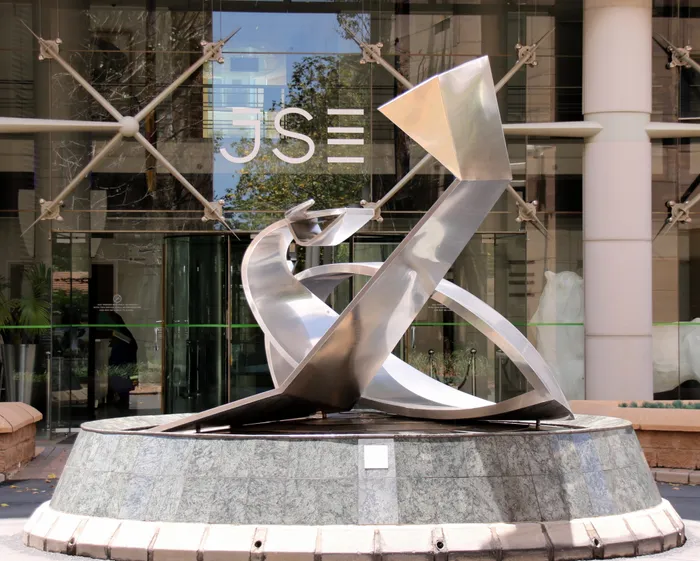
South African markets opened the week with renewed optimism as improving local business activity, easing oil prices and a stronger rand supported investor confidence, although mining stocks continued to face pressure.
Image: Nicola Mawson | IOL
South African financial markets entered the new week on a stronger footing as easing geopolitical tensions, improving local business activity and a firmer rand boosted investor confidence, even as mining shares continued to weigh on broader market performance.
The JSE All Share Index closed Friday up 1% at 111 507.30, supported by gains in technology, platinum and gold mining shares, telecommunications companies and an improving domestic economic backdrop.
South Africa's S&P Global Purchasing Managers' Index returned to expansion territory in June, rising to 50.5 from 49.6 in May, providing a modest but encouraging signal that business conditions are stabilising after recent weakness.
Anchor Capital noted that one of the biggest developments supporting global markets has been the reopening of shipping through the Strait of Hormuz.
"Hormuz transits more than quadrupled in the past week, the single most important operational confirmation that the ceasefire is holding and the waterway is functionally reopening," the investment house said.
Brent crude traded at around $71.73 a barrel early Monday, moving closer to levels seen before the recent Middle East conflict disrupted global energy markets.
Gold remained resilient above $4 160 an ounce as weaker United States employment data continued to reduce expectations of further interest rate hikes by the US Federal Reserve.
The rand also maintained recent gains, trading at R16.26 against the US dollar after benefiting from softer US economic data and South Africa's improving PMI reading.
Asian markets, however, painted a more cautious picture. Technology related concerns continued to weigh on investor sentiment, with Japan's Murata Manufacturing falling 9.8% and South Korea's Mirae Corporation dropping 14.7%.
Anchor Capital noted that "the tech and AI valuation anxiety is persisting" despite improving macroeconomic conditions.
While markets have recovered from recent geopolitical uncertainty, June remained a difficult month for South African equities.
Peter Little, fund manager at Anchor Capital, said the FTSE/JSE Capped All Share Index declined 3.7% during June, leaving the market down 2.8% for the first half of 2026.
"The JSE fell for a second consecutive month, dragging it into negative territory at the midpoint of 2026," Little said.
He explained that precious metals miners were responsible for much of the weakness after gold prices fell 12% during June.
"Gold fell 12% month on month, pushing it back towards US$4 000 an ounce, down about 25% from its January high. The plunging gold price dragged the miners down with it, while their precious metal peers, the platinum miners, fared even worse."
Despite the pressure on mining companies, shares linked to South Africa's domestic economy continued to perform well.
Little said domestically focused stocks gained 3.4% during June and are now 8% higher for the year.
"Even the beleaguered discretionary retailers experienced a bounce, including a 15% month on month jump in Mr Price. Investors perceived the retailer's results as resilient in a challenging backdrop."
Banks also continued to support the local market, ending the first half of the year up 10.6%.
Inflation remains an area of focus after South Africa's headline inflation accelerated to 4.5% in May, largely reflecting the earlier spike in global oil prices.
Little believes that pressure should ease as lower oil prices feed through to inflation data.
"However, this is expected to moderate as the impact of lower oil prices in the wake of the reopening of the Strait of Hormuz filters through to the backwards looking inflation data," he said.
Global investors are also closely watching developments in the United Kingdom, where regulators have warned about the growing use of artificial intelligence in financial services.
Anchor Capital said the UK's financial regulator's warning of an AI "arms race" represents "a significant systemic signal that will drive regulatory action across the sector over the coming quarters."
Meanwhile, Bianca Botes, Managing Director at Citadel Global, said investors remain cautious ahead of earnings from major artificial intelligence companies.
"Asian shares were mixed to negative in early trade, mostly dragged down by the Japanese Nikkei and the South Korean KOSPI, as caution dominates ahead of the release of the artificial intelligence sector's results," Botes said.
She added that Brent crude remained under pressure at about $72 a barrel while the rand continued to hold firm.
"The rand is holding firm after the US's more dovish tilt last week and is trading at R16.25 per dollar, R18.57 per euro and R21.68 per pound."
Looking ahead, investors will monitor economic data releases from Europe and the United States this week, including purchasing managers' index readings and comments from central bank officials, for further clues on the outlook for global growth and interest rates.
Follow Business Report on Facebook, X and on LinkedIn for the latest Business and tech news.