

Why did the Japanese yen hit its weakest level since 1986, and what does this mean for global financial markets? Explore the implications of Japan's new monetary policy strategy.
Image: File.
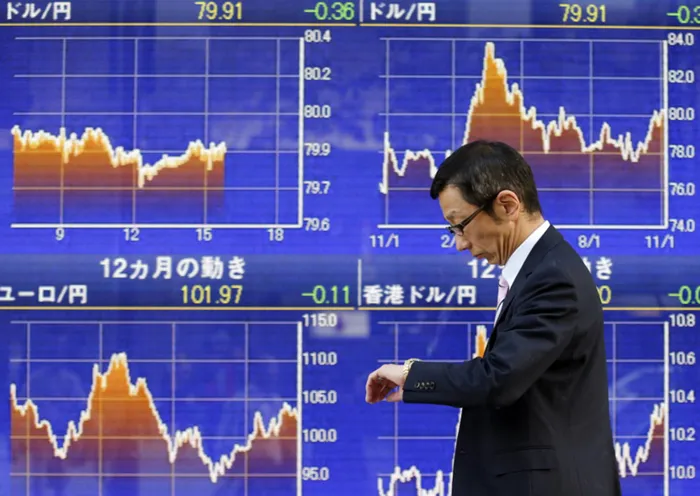
Last week, the Japanese yen hit ¥162.66/$, its weakest level since 1986.
The last time the rate was at this level, Japan was deep inside the asset bubble that would erase a generation of wealth. That context matters, because it is the insight which is informing the Japan’s Ministry of Finance’s (MoF’s) decisions and it explains why Japan’s monetary policy playbook has changed.
Japan has abandoned its practice of telegraphing (communicating) intervention. The old approach was transparent enough that the market had learned to trade around it. Officials would issue warnings, traders would gauge proximity to a threshold and position accordingly, the MoF would step in, the yen would recover briefly and the carry trade (where investors borrow currencies with low interest rates and use those funds to invest in currencies with higher interest rates) would rebuild once the pressure eased.
Japan spent a record ¥11.7 trillion, roughly $72 billion, in a single April to May 2026 intervention window. The yen bounced and fell straight back through the level they had defended.
Tokyo has drawn the obvious conclusion.
What replaces this strategy is silence. No warnings, no line in the sand, no indication of timing.
The decision sits with Japan's top currency official, Atsushi Mimura, who has said nothing publicly since the last intervention.
The objective is not to defend a specific level of the yen but rather to wipe out speculative short positions before traders have the chance to unwind. Japan’s MoF wants shorting the yen to feel dangerous in a way it currently does not.
However, constraints on this approach are tougher than the rhetoric. Japan holds approximately $1.16 trillion in foreign exchange reserves and it is bound by the International Monetary Fund’s (IMF’s) classification rule: three days of intervention counts as a single operation and Japan can execute only two more such windows before November without risking its freely floating currency designation.
Japan is using the ambush to try and make the threat feel unlimited.
None of this addresses the structural problem. The Bank of Japan (BoJ) rate is 1%.
The United States (US) Federal Reserve (Fed) rate sits at 3.50% to 3.75%. That differential funds the carry trade, and Japanese monetary policy intervention will not close it.
In addition, carry trade works only until it reverses violently, which is exactly what happened in August 2024 when the BoJ surprised the market with a 15-basis point hike alongside MoF intervention.
The dollar-yen exchange rate moved from ¥161/$ to ¥142/$ in three weeks.
The Nikkei fell 12% in a single session. Assets with no obvious Japanese connection sold off simultaneously as leveraged positions were liquidated to cover margin.
The short position today is larger than it was then and the carry trade has been rebuilt and extended through 2025 and into 2026, with US Commodity Futures Trading Commission non-commercial net positioning running deeply negative on the yen.
A well-timed ambush in thin liquidity like a US holiday, an Asian session, or a Friday close, could move the dollar-yen exchange rate ¥10 to ¥15 inside days. At that point it is no longer a currency story, it is a global liquidity event.
Carry positions will unwind, leveraged funds will sell risk assets to cover losses, dollar funding will tighten across emerging markets, and Japanese institutional investors will simultaneously reassess the economics of holding foreign bonds as domestic yields make that maths less compelling.
Japan's net international investment position is $3.67 trillion.
The 10-year Japanese Government Bond touched 2.49% in April – its highest level since 1997 – and the response from Japan's life insurers has already begun. Dai-ichi Life Group has stated publicly that yen-denominated debt currently offers better returns than hedged foreign alternatives.
Half of Japan's 10 major life insurers reduced foreign bond holdings in the most recent reporting period, which is a rational reallocation as the domestic market becomes investable for the first time in a generation.
The problem, however, is scale. Even a modest acceleration will move global bond markets.
The rand sits directly in the path of this.
South Africa's (SA’s) open capital account and freely floating currency mean it absorbs global risk repricing in real time with no capacity to intervene.
When carry trades unwind and dollar funding tightens, the currencies that move fastest are the ones with no reserve status and a central bank without the firepower to slow the move.
The rand qualifies on both counts.
A yen-driven unwind would reprice the rand, widen SA credit spreads, and raise external funding costs; not because anything changed domestically, but because the architecture of global capital runs through Tokyo whether Johannesburg is tracking it or not.
US Treasury yields softened as June employment data pointed to a cooler US labour market.
The 10-year yield slipped about two basis points to 4.46%, after payrolls increased by only 57,000 and earlier months were revised lower. Unemployment fell to 4.2%, but mainly because participation weakened to near 2021 lows.
Markets cut September Fed-hike odds to roughly 50%, down from 64%, while Fed Chair, Kevin Warsh, said softer inflation expectations reduced urgency, though price stability remains central.
United Kingdom (UK) gilts tracked the US move, with 10-year yields giving back early gains and falling below 2.8%. Bank of England (BoE) Governor, Andrew Bailey, remained cautious, noting weaker UK growth but warning that sticky inflation still limits near-term rate-cut scope.
German bund yields held above 2.9%, close to a two-week high, as softer US jobs data, easing eurozone inflation and reduced European Central Bank (ECB) tightening expectations were balanced.
June headline inflation slowed to 2.8% and core to 2.4%. ECB President, Christine Lagarde, said growth and inflation risks looked more even, helped by lower oil prices.
The 10-year Japanese Government Bond yield approached 2.8%, near its highest level since October 1996, after a weak auction intensified concerns over fiscal spending, higher borrowing and a ¥370 trillion public-private investment plan to 2040.
The local 10-year yield rose above 8.45% after inflation expectations increased to 4.4% for 2026, 4.2% for 2027, 3.9% for 2028 and 4.1% over five years, above the South African Reserve Bank’s (Sarb’s) 3% target.
A US-Iran ceasefire and prospective talks, however, have eased energy and fuel-price risks before the 23 July decision.
The local FTSE/JSE All Share Index closed at 110,449.25 on 2 July, up 0.76% after Wednesday’s softer session, but only 0.2% above last Friday’s 110,230.96 close. The JSE Top 40 mirrored the move, rising 0.80% to 102,083.88. Despite Thursday’s bounce, the JSE remains below mid-June levels and earlier 2026 highs, reflecting caution after first-half volatility.
Brent crude traded near $72/barrel on Friday, close to levels seen before the Middle East conflict began in late February.
Prices eased as traffic through the Strait of Hormuz improved, US-Iran talks progressed and regional supply risks moderated. Saudi crude exports have recovered to about 90% of pre-war volumes, while the UAE has restored exports through both Hormuz and an alternative pipeline.
US President Donald Trump said negotiations were progressing after Qatari and Pakistani mediators met US and Iranian officials separately in Doha, Qatar.
Gold approached $4,200/ounce on Friday, extending gains as softer US labour data reduced expectations for Fed tightening. US June payrolls rose by only 57,000, below the 110,000 forecast, while unemployment held at 4.2%.
Fed funds futures now imply a roughly 50% chance of a September hike, down from 67%. Fed Chair Warsh noted easing inflation expectations but reaffirmed the Fed’s price-stability focus. Lower oil prices and improving Hormuz shipping conditions added support.
The rand traded stronger at R16.21/$ following comments from Fed Chair Warsh, and softer than expected US labour data, that pressured the dollar and reduced the chances of a Fed rate hike towards the end of the year.
SA and US inflation figures will be closely monitored to gauge the likely path of Sarb interest rates.
Bianca Botes, Managing Director at Citadel Global.

Bianca Botes, Managing Director at Citadel Global
Image: Supplied.
Follow Business Report on Facebook, X and on LinkedIn for the latest Business and tech news.