

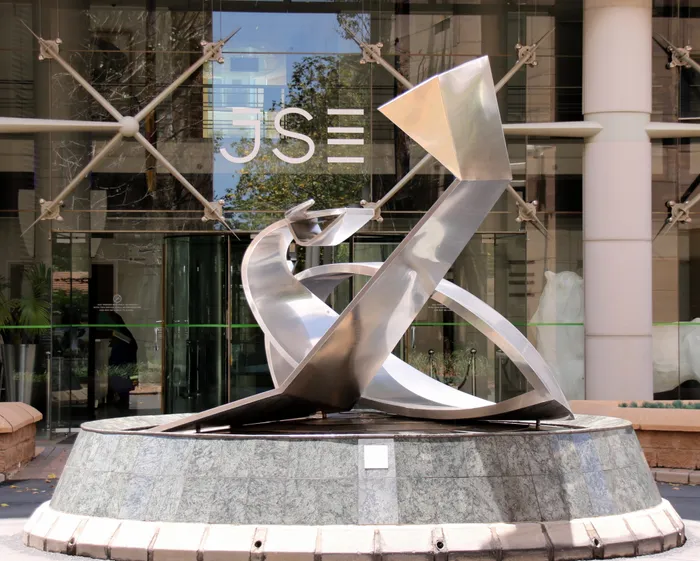
Discover how South Africa's financial markets are rebounding after geopolitical tensions, with key insights into oil prices and currency fluctuations that could impact your investments.
Image: Nicola Mawson | IOL
Over the last two weeks, financial markets across the globe started to recover steadily after the attacks by Israel and the USA on Iran that had led to the closure of the Strait of Hormuz.
The price of Brent crude rocketed from $70 per barrel to past $126 per barrel in April due to severe supply disruptions. In the same manner, prices plummeted back down to pre war levels last Friday, trading at $72 per barrel.
This decline is driven by the rapid resumption of shipping traffic through the Strait of Hormuz and progressing US Iran peace negotiations.
Global financial markets are experiencing a cautious recovery following a framework peace agreement and a 14 point memorandum of understanding signed between the United States and Iran.
The easing of military conflict that disrupted supply chains through the Strait of Hormuz has brought relief to investors and commodity traders.
Major global indices recovered strongly following the breakthrough. On Wall Street, all three main indices recovered strongly last week, with the Nasdaq Composite rising 2.1% (18.0% for Q2), the S&P 500 adding 1.8% (13.7% over Q2), and the Dow Jones Industrial Average gaining 2.0% over the last week and experiencing strong quarter two gains of 13.8%.
Asian markets also saw massive rallies, with Japan's Nikkei 225 up by 2.0% over the last month, surging 22.0% during the last quarter. South Korea's Kospi jumped by 5.7% on Friday and gained 50.4% during Q2.
In the UK, the FTSE 100 also started to recover.
The index increased by 1.6% last week and was higher by 3.3% over the last month after the US and Iran signed the peace treaty. In Europe, the Euro Stoxx 50 followed suit, increasing by the same margin as the FTSE over the last week and month.
The MSCI World Index shot up by 2.0% last week and traded on Friday 12.0% higher than at the beginning of Q2.
On the JSE, equity prices recovered less dramatically.
The ALSI gained 0.6% last week, but due to the strong pullback in precious metal and mineral prices, with the index down 22.2% over the last three months, the ALSI lost 4.0% during Q2. Most JSE indices experienced a pullback last week as precious metals and miners started to recover losses.
The strong increases in commodity prices, together with the lower than expected US non farm employment numbers, boosted sentiment that the Fed will abstain from increasing interest rates soon, leading to the rand exchange rate recovering suddenly last week.
Against the USD, the rand gained 23 cents last week from R16.45/$ to R16.22/$ at the close in New York on Friday. The rand is now only 26 cents away from the R15.96/$ pre war level on 27 February.
The ongoing supply of oil through the Strait of Hormuz, which pushed Brent oil prices close to the $70 per barrel pre war level, together with the stronger rand, pushed the over recovery for petrol up by R2.50 and that of diesel by R3.07 since the last setting of the fuel prices by the Central Energy Fund on 26 June 2026.
If the government does not increase the fuel levy or the slate levy at the beginning of August, motorists are due for another strong fuel price cut. Fuel prices may even test the February pre war levels of R20.10 for 95 grade petrol and R17.91 for 0.05% diesel.
This coming week, the domestic financial markets await the release of South Africa's foreign exchange reserves for June on Tuesday.
As expected, the rand will react strongly. The SARB will publish the composite leading business cycle indicator for South Africa for June on Wednesday. The indicator declined by 1.8% month on month in April 2026, slipping from a downwardly revised 1.5% increase in the previous month.
On Thursday, Stats SA will announce the country's manufacturing production data for May 2025.
On global markets, apart from monitoring the current US Iran peace treaty effects, investors will await the release of the US Federal Reserve Open Market Committee (FOMC) minutes of last month's meeting to see if there are any indications of the Fed's next move on interest rates.
Chris Harmse is the consulting economist at Sequoia Investment Solutions and a senior lecturer at Stadio Higher Education.

Chris Harmse is the consulting economist of Sequoia Capital Management and a senior lecturer at Stadio Higher Education.
Image: Supplied
Follow Business Report on Facebook, X and on LinkedIn for the latest Business and tech news.