

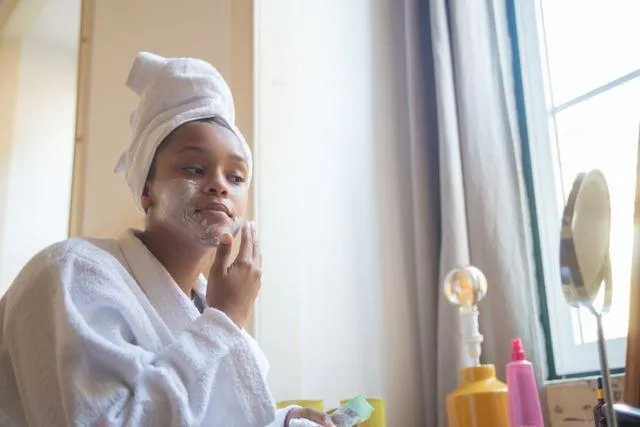
AI beauty filters are shaping children's perceptions of beauty.
Image: Kampus Production
What happens when the technology in your child’s pocket is quietly rewriting what it means to look beautiful?
Look closely at the most popular AI beauty filters: they do not just smooth skin; they actively shrink melanin-rich noses, alter full lips and lighten complexions.
For African children, this isn't just innocent digital play; it is a high-speed erasure of their natural heritage, fuelling a new psychological epidemic.
At ten years old, human skin is biologically at its peak performance: resilient, radiant and packed with natural collagen.
Yet, millions of children are currently treating their healthy faces as medical projects that require fixing.
Driven by algorithms that filter out reality, our youth are developing "cosmeticorexia": an unhealthy, compulsive preoccupation with achieving "flawless" skin and altered facial geometry through harsh cosmetic products and procedures.
A 2020 study by the Dove Self-Esteem Project revealed a heartbreaking reality: by age 13, a staggering 80% of girls are already using filters or photo-editing apps to alter their appearance online.
To understand the biological cost of this digital obsession, Dr Jaco Kotzé, a plastic and reconstructive surgeon at Mediclinic Vergelegen, unpacks this phenomenon with us.
He warns that children are chasing a face that is quite literally physically impossible.
According to him, the widespread use of filters and image-editing tools exposes young people to unrealistic portrayals of skin that appear flawless, ‘poreless’, and free of any natural texture or imperfections.
"This has been further amplified by beauty trends such as ‘glass skin', which promote a luminous, wrinkle-free, seemingly perfect complexion that is biologically unattainable for most individuals."
In the real world, human skin requires pores to breathe and regulate temperature.
Faces naturally possess beautiful structural asymmetry. Real human tissue cannot be warped with a slider tool, yet children are showing early signs of body dysmorphic disorder (BDD), arriving at clinics requesting invasive adult procedures or destroying their natural skin barriers trying to replicate a pixels-and-code aesthetic.
Perhaps the most insidious side of this trend is the digital colourism embedded in popular algorithms.
Most beauty filters are built on Western datasets. This default programming automatically applies a Eurocentric standard of beauty, narrowing nose bridges, widening eyes and subtly lightening skin tones to fit a singular global aesthetic.
When African children constantly view their reflection through these biased lenses, the quiet message they receive is devastating: their rich melanin, broad noses,and unique facial structures are "flaws" that need correcting.
This is not just harmless fun; it is a digital erasure of cultural identity, teaching young children to reject who they are before they are even old enough to understand why.
This obsession does not stay on screen. Today, we are witnessing the "Sephora Kids" pipeline, where pre-teens transition from playing with digital filters to hoarding complex, expensive chemical skincare routines.
The irony is tragic. Tweens are buying potent anti-ageing products like retinol, salicylic acids, and harsh chemical exfoliants to achieve that "poreless filter look" in real life.
Because young skin is naturally thin and sensitive, these aggressive active ingredients do the opposite of what is intended.
"Many products promoted online contain potent active ingredients that are not necessary for younger skin," warns Dr Kotzé.
"Overuse can disrupt the skin barrier, resulting in irritation, dryness, redness, increased sensitivity, eczema flares, and post-inflammatory hyperpigmentation."
In short, children are chemically burning their healthy skin barriers, causing contact dermatitis and long-term scarring, all to fix "imperfections" that were never there to begin with.
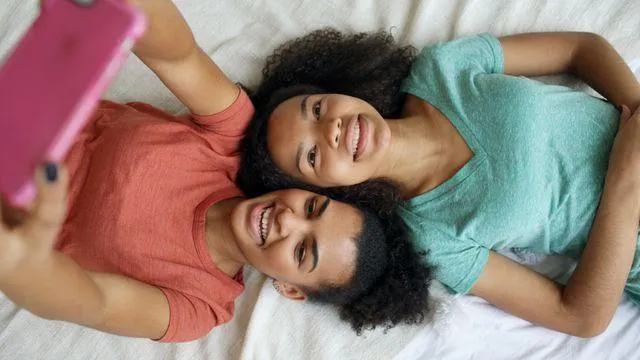
When filters become the norm, children's self-esteem is at risk.
Image: Vitaly Gariev/Pexels
If you are worried your child’s skincare or social media habits have crossed the line from healthy self-care into anxiety, Dr Kotzé suggests watching for these warning signs:
These organisations provide free guides, activities and toolkits to help families navigate digital body image.
It offers the "Confidence Kit", a free guide specifically designed to help parents address online beauty distortion.
Common Sense Media: Provides age-based reviews of apps and practical articles on helping kids decode digital media.
The Body Positive: Offers courses and resources to help youth shift their focus from physical appearance to health and self-love.
Media Smarts: Features digital literacy games and family tip sheets focused on body image in the media.