

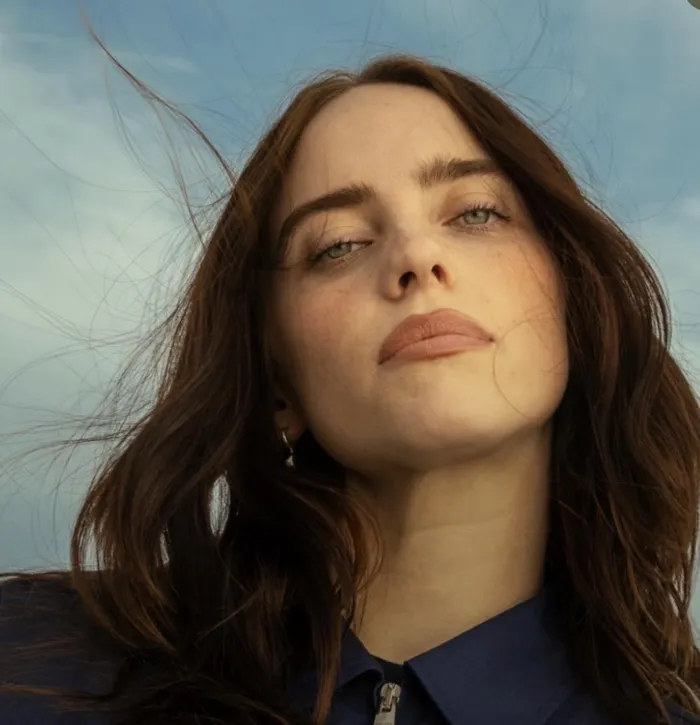
During a recent appearance on Amy Poehler’s ‘Good Hang’ podcast, pop sensation Billie Eilish spoke out against intense societal pressures. She championed the importance of keeping inherited family features, standing in opposition to the growing trend of cosmetic surgery-induced uniformity.
Image: Instagram
We live in an era of unprecedented cosmetic intervention.
Walk down any city street or scroll through a social media feed, and you will notice a striking phenomenon: faces are beginning to look identical. High, pillowy cheekbones, razor-sharp jawlines, unnaturally smooth foreheads, and oversized lips have become the standardised uniform of modern attractiveness.
What began as a luxury trend reserved for Hollywood elites has transformed into an everyday consumer expectation.
Today, teenagers and young adults in their early twenties are routinely booking appointments for "preventative" Botox and dermal fillers before their skin has even experienced its first natural wrinkle.
But our collective obsession with looking forever young goes deeper than a simple, superficial fear of getting older. It is a complex convergence of evolutionary biology, aggressive corporate monetisation, digital dysmorphia and the overwhelming, inescapable influence of celebrity culture.
Evolution has hardwired the human brain to respond positively to baby-like features. In evolutionary psychology, this phenomenon is known as the baby schema effect, or neoteny, the retention of juvenile traits into adulthood.
When the human brain registers these traits, it instantly releases a surge of dopamine. This neurological response triggers deep-seated survival instincts to protect, nurture and care for the individual.
The modern cosmetic industry has brilliantly and aggressively monetised this evolutionary vulnerability by artificially engineering infancy onto adult faces.
By altering adult faces to mimic the soft, untouched proportions of a child, the beauty market has shifted the paradigm of attractiveness. Beauty is no longer about maturity, sophistication, or health. It is about looking permanently untouched by life, frozen in a state of synthetic childhood.
It is precisely within this landscape of "synthetic childhood" that pop icon Billie Eilish delivered a perspective that felt genuinely revolutionary. Speaking on Amy Poehler's Good Hang podcast, the 24-year-old singer pushed back against the pressure to permanently freeze her features.
“I want my kids to look at me and have my face look like their face,” Eilish shared. “Not be some botched version of whatever the f*** is going on out there right now.”
This comment strikes a deeper, more existential chord than standard body positivity talk. Eilish highlighted something rarely discussed in beauty culture: the preservation of genetic legacy.
When someone systematically alters their nose, jaw, and eyes to match a trending social media filter, they aren't just erasing their wrinkles; they are erasing the physical traits passed down by their ancestors. Eilish’s home-run point reminds us that our faces do not belong entirely to consumer trends.
They are the visual bridges between our parents and our future children. To erase your true face is to rob your children of seeing their own biological history reflected in them.
Eilish’s stance cuts cleanly through a massive amount of digital noise. According to mental health experts and clinical reports published in Psychology Today, social media filters and AI-enhanced beauty apps are contributing heavily to a phenomenon known as Snapchat dysmorphia.
Plastic surgeons globally report a surging influx of young patients bringing heavily edited selfies into consultations. Rather than asking to look like a specific celebrity, they demand that surgeons permanently recreate the pinched noses, massive lips, and poreless, mathematically impossible skin textures generated by algorithms.
This trend creates a harmful psychological dissonance between a person's offline physical reality and their online digital persona. Spending significant time editing photos directly predicts an increase in negative mood, self-criticism, and teenage body anxiety.
The crisis has become so severe that tech platforms are facing regulatory pushback. TikTok, for example, restricted certain beauty filters for users under 18 to prevent minors from artificially altering their natural skin tones and features before their self-image has even formed.
The anti-ageing industry no longer waits until a consumer hits their 40s or 50s to strike; it targets teenagers on their smartphones, convincing them that their natural, changing faces are inherently flawed.
Many everyday consumers are simply exhausted by the idea that women must remain eternally youthful to hold value in society.
Eilish, who has navigated the peak of Hollywood stardom under intense public scrutiny, clarified in an interview with "The Guardian" that her issue isn't with cosmetic procedures themselves, but with the lack of transparency surrounding them.
“It’s completely fine to get work done,” she noted. “Do what makes you feel happy. But when you deny it and say, ‘Oh, I got this all on my own,’ that makes me furious. It is so bad for young women and boys, too, to see that.”