

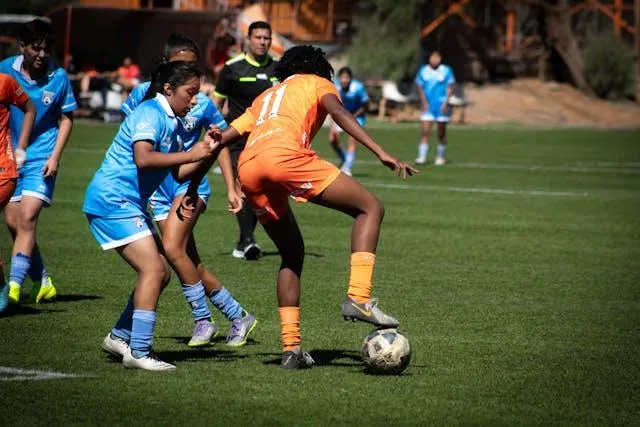
Rather than a deficiency in skill, it is often a fading sense of belonging that causes girls to pull away from sports.
Image: Luis Andrés Villalón Vega/Pexels
As South Africa enters Youth Month and the countdown to the FIFA World Cup 2026 intensifies, one conversation is demanding as much attention as the sport itself: Why are so many girls walking away from the sports they once loved?
According to global research cited by Dove and FIFA, nearly 50% of girls stop participating in sport by the age of 14.
This mass exodus is rarely driven by a sudden lack of interest or talent. Instead, it is fuelled by body criticism, low self-esteem, and a growing, pervasive feeling that they no longer belong.
It is a statistic that feels particularly heavy in a country like South Africa, where sport has long been celebrated as a powerful vehicle for opportunity, confidence, and social change.
Youth Month has always been about asking difficult questions about the future that young people are inheriting. This year, the question we must confront is whether girls are truly being given the same freedom to participate, lead and thrive in sport.

Sports presenter and actress Hope Mbhele spearheading the Girl Talk initiative.
Image: Sibonelo Ngcobo
The statistics are clear, but the real stories from girls are even more troubling. For sports presenter and actress Hope Mbhele, these numbers were disappointing but not surprising.
"Honestly, it made me sad, but it also didn't shock me," she told Independent Media Lifestyle.
"Because when you look around, you realise how many girls slowly disappear from spaces they once loved. Not because they stopped loving sport, but because something convinced them they no longer belonged there."
Those "somethings" are often subtle but deeply destructive. A passing comment about weight from a classmate.
A joke about changing body shapes during puberty. An uncomfortable realisation that they are being watched and judged rather than coached and encouraged.
Studies published by organisations like the Women's Sports Foundation and UN Women show that girls who stay involved in sport are far more likely to develop leadership skills, resilience, and positive self-esteem.
Yet, the pressure to conform to societal beauty standards often forces them out before they can experience these benefits. In essence, joy is replaced by pressure, and confidence disappears long before talent does.
Football culture in South Africa remains deeply passionate, but it can still feel overwhelmingly masculine. From school fields to television studios, men have historically dominated the conversations around the game.
Mbhele believes that this structural imbalance directly affects how young girls view their own potential.
"The idea that women in football must constantly prove they belong is something we still need to challenge," she said. "Women have always loved sport. We're just demanding to be heard properly now."
Her point speaks to something larger than football: who gets to tell the story ultimately determines whose story matters.
When young girls rarely hear women analysing matches, leading sports broadcasts, or debating tactics, they unconsciously absorb the message that expertise belongs exclusively to someone else.
"Storytelling shapes culture," advocates Mbhele. "The people behind the microphone influence how audiences understand sport, whose stories get prioritised, and whose perspectives are considered authoritative.
"Hearing someone who reflects your identity in a position of authority reduces the feeling that certain spaces belong only to other people. It normalises ambition."
Girl Talk, a fresh collaborative effort between Dove and the FIFA World Cup 2026, is empowering the upcoming generation of women by giving them a platform to confront these obstacles.
The campaign encourages young women to pursue sports commentary while opening broader conversations about representation and belonging in football culture.
Instead of watching from the sidelines, South African residents aged 14 to 17 have a direct chance to break into the industry through an exciting nationwide competition.
The initiative is currently searching for the next female voice in sports, offering the winner a once-in-a-lifetime broadcast opportunity, mentorship from a world-class female commentator and an exclusive Dove pack for their family.