

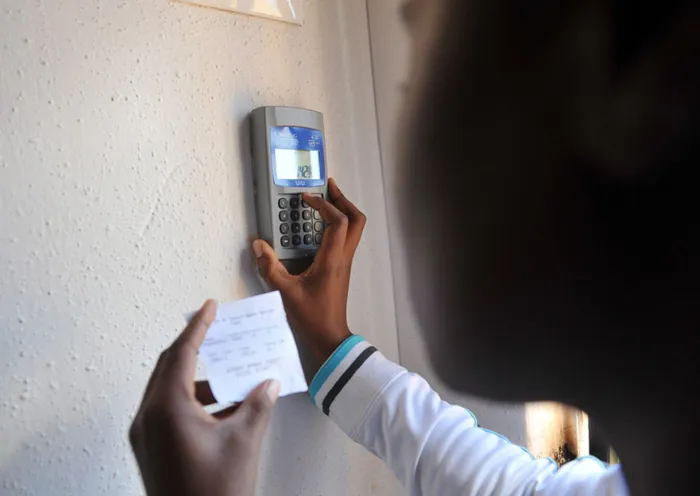
South African consumers are being hit by rising tariffs and fixed electricity charges that undermine energy saving efforts and discourage solar adoption, according to GoSolr.
Image: File
South Africa's electricity crisis has entered a new phase where households are no longer being punished by rolling blackouts alone, but increasingly by rising costs that make cutting electricity consumption less effective at reducing monthly bills.
That is the warning contained in GoSolr's latest quarterly Light Paper, which argued that the country's energy challenge has evolved into an affordability crisis driven by escalating tariffs, growing fixed charges and inconsistent municipal pricing structures.
According to the report, electricity tariffs have increased by more than 1 100% since 2007, while the latest Eskom increases of 8.76% followed by a further 8.83% increase have added to the burden facing consumers. Municipal customers often pay even more once local mark ups are applied.
GoSolr said one of the biggest concerns is the sharp rise in fixed charges, which means consumers now pay significant amounts simply to remain connected to the grid, regardless of how much electricity they use.
The report noted that using less electricity no longer guarantees meaningful savings, particularly for middle income households and small businesses already under financial pressure.
According to the company, electricity bills also fail to reflect the full cost of South Africa's energy system.
Beyond the price of electricity consumed, consumers indirectly fund grid infrastructure, system losses, electricity theft, non payment, diesel powered emergency generation and varying municipal surcharges.
Many households also carry additional costs through backup power systems, damaged appliances and productivity losses during supply interruptions.
Andrew Middleton, chief executive of GoSolr, said South Africa's electricity system remains under strain despite improvements in supply stability.
"South Africa's energy system is under pressure, but it's not beyond repair," Middleton said.
"What we're seeing now is the result of outdated pricing models that try to maintain the status quo and protect revenues, rather than embracing and enabling a rapidly changing energy landscape."
While South Africa has experienced fewer periods of load shedding in recent months, Middleton cautioned that reliability alone cannot be considered a success if electricity continues becoming less affordable.

Andrew Middleton, chief executive of GoSolr.
Image: Supplied.
"South Africa has made real progress in stabilising its electricity supply. That should be acknowledged. But stability without affordability is not success, it's just a different kind of failure."
"Right now, the system is sending the wrong signals, rewarding inefficiency and punishing progress, while quietly redefining electricity as something not everyone can afford."
The report highlighted stark differences between municipalities, arguing that inconsistent tariff structures have created inequality across the country.
Cape Town was cited as adopting a relatively balanced approach with more moderate increases in fixed charges and an optional time of use tariff structure.
Johannesburg, however, was identified as an example of how pricing structures can disadvantage consumers, with some households reportedly facing fixed charges of as much as R1 761 per month before using a single unit of electricity.
GoSolr also warned that current pricing structures risk discouraging rooftop solar installations and battery storage at a time when South Africa should be encouraging greater distributed electricity generation.
The company argued that penalising customers who invest in self generation could contribute to what it described as a slow motion pricing death spiral, where declining electricity consumption forces utilities to increase charges further to recover revenue.
To address the growing affordability challenge, GoSolr is calling for greater transparency in electricity pricing, clearer separation between infrastructure and consumption costs, standardised rules for embedded generation and reforms to municipal funding models that reduce dependence on electricity sales.
Middleton said South Africa has an opportunity to build a more resilient and inclusive energy system if policymakers align incentives with changing consumer behaviour.
"If we can align incentives, embrace distributed generation, and build a pricing framework that is transparent, fair, and future fit, we can unlock a more resilient and inclusive energy system for everyone."
"This is not about choosing between the grid or private power. It's about making them work together. If we get this right, South Africa won't just stabilise its energy future, it can lead it."
The report concludes that unless pricing reforms accompany improvements in electricity supply, many South Africans will continue facing higher monthly bills despite consuming less electricity, leaving affordability as the country's next major energy challenge.
Follow Business Report on Facebook, X and on LinkedIn for the latest Business and tech news.