

KPMG forecasts stronger GDP growth for South Africa, but Debt Rescue says households are running out of options to absorb rising living expenses.
Image: ChatGPT
South African consumers are facing renewed financial pressure following the latest fuel price adjustments, even as economists anticipate stronger than expected economic growth for the first quarter of 2026.
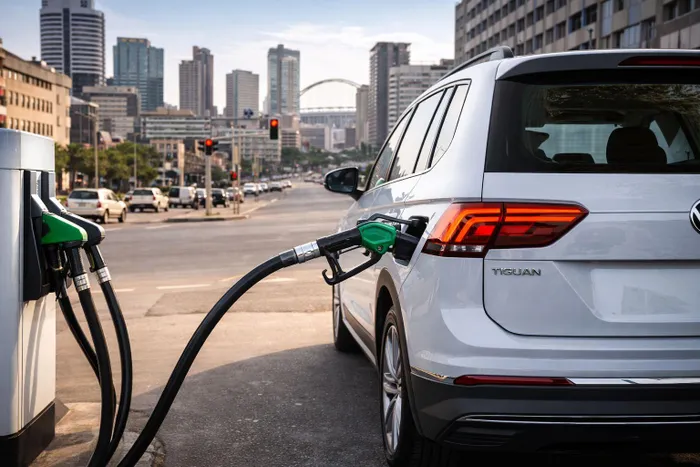
While diesel users will benefit from substantial price cuts this month, motorists filling up with petrol will pay more at the pumps, adding another burden to households already grappling with rising living costs, higher borrowing costs and persistent inflationary pressures.
According to Neil Roets, CEO of Debt Rescue, the latest fuel price changes highlight the growing strain on consumers who have little room left in their budgets to absorb additional costs.
"For many South Africans, the June fuel price adjustment feels like taking one step forward and two steps back," said Roets.
He acknowledged that the diesel price reduction would provide some relief to transport and logistics dependent industries and could eventually help moderate the cost of some goods. However, he warned that the immediate reality for most consumers is a higher petrol bill.
"What makes this increase particularly difficult is the timing. Consumers have barely had an opportunity to absorb the recent 0.25% interest rate hike and are now confronted with another increase relating to a major monthly expense," he said.
The South African Reserve Bank recently increased the repo rate by 25 basis points, pushing borrowing costs higher for households already struggling with debt repayments and everyday expenses.
Roets said consumers often underestimate the cumulative effect of rising costs.
"The danger is that people often look at individual increases in isolation. A higher petrol bill may not seem catastrophic on its own. A slightly higher bond repayment may appear manageable. However, consumers do not experience these costs separately. They experience them collectively."
He added that many families have already exhausted traditional cost cutting measures.
"Over the past few years, families have already cut discretionary spending, reduced entertainment budgets, postponed purchases and sought cheaper alternatives wherever possible. The ability to absorb additional increases is becoming increasingly limited."
Although diesel prices have fallen, Roets noted that they remain significantly higher than at the start of the year, limiting the likelihood that businesses will pass meaningful savings on to consumers anytime soon.
"What concerns us most is the emotional and psychological impact of these ongoing financial pressures. When consumers feel as though every month brings a new increase, whether it is fuel, electricity, interest rates, food or municipal charges, it creates a sense of uncertainty and anxiety about the future."
Despite the pressure on households, there may be some encouraging news on the broader economic front.
Frank Blackmore, Lead Economist at KPMG South Africa, believes South Africa's first quarter GDP figures could surprise on the upside when released next week.
"My view is that this will probably be a surprise on the upside," said Blackmore.
He pointed to several positive developments that helped close out 2025, including a stronger rand, South Africa's removal from the Financial Action Task Force grey list, a sovereign debt upgrade and economic growth of 1.1%.
"I think that momentum will be passed through into the first quarter of 2026," he said.
Blackmore highlighted strong performances from agriculture and mining, supported by favourable commodity prices, while retail sales and motor vehicle sales also showed encouraging growth.
"Retail has also seen good growth, and even motor sales are up around 7.8% year on year. So, it indicates that the sector, which is weighted at 14.2%, is going to contribute positively."
He expects first quarter GDP growth to come in between 1.3% and 1.6%.
"We can end up with a growth rate in the first quarter between 1.3% and 1.6%, I would imagine, and I think that would be an upside surprise."
However, Blackmore cautioned that the economic effects of the conflict involving the United States, Israel and Iran are only beginning to filter through the economy.
"The impacts of the US Israeli war in Iran on inflation have only kicked in really from April, and we've seen this in the increase in the CPI for April to 4%."
He warned that second round inflationary effects are likely to emerge in coming months as higher fuel and transport costs feed through to manufactured goods and consumer prices.
"From now on, we might get second round effects coming through manufactured goods, as well as the increase in pump prices for consumers and businesses."
While South Africa may be heading into the middle of the year with stronger economic momentum than anticipated, the combination of higher fuel costs, elevated interest rates and inflationary pressures means many households remain under severe financial strain.
Roets further said, "The June fuel price adjustment may contain some positive elements, but for millions of South Africans the broader picture remains unchanged. Household budgets are under immense strain, and many consumers are finding it increasingly difficult to keep pace with the rising cost of everyday life."
Follow Business Report on Facebook, X and on LinkedIn for the latest Business and tech news.