

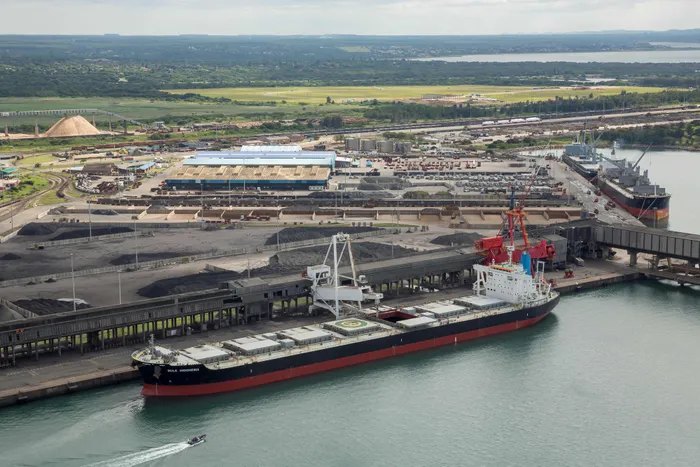
As South Africa invests billions in modernising its ports, cybersecurity experts have warned that protecting digital infrastructure is becoming just as important as upgrading physical assets.
Image: Supplied/Transnet
South Africa's ports are becoming increasingly digital as operators invest in modern technology to improve efficiency, reduce delays and strengthen the country's logistics network.
However, cybersecurity experts have warned that as ports become smarter, they also become more vulnerable to cyberattacks that could disrupt trade and cost the economy billions.
Martin Fernandes, Business Development Manager for Operational Technology in Africa at Fortinet, said modern ports are no longer simply physical infrastructure but complex digital ecosystems where every connected system plays a role in keeping cargo moving.
"A modern port is now part of a much larger digital trade ecosystem where all systems need to work together. If one part of that ecosystem is disrupted, the impact can move quickly through the supply chain," Fernandes said.
His warning comes as South Africa continues investing heavily in port modernisation.
Transnet announced plans to invest R127 billion over five years to upgrade rail infrastructure and ports, including Durban's Pier 2 container terminal and the Richards Bay dry bulk terminal.
In December 2025, Transnet also signed a 25 year concession agreement with ICTSI to modernise Durban Container Terminal Pier 2, which handles more than 40% of South Africa's container traffic.
Fernandes said these investments have the potential to significantly improve South Africa's competitiveness in global trade.
"Technological leaps like these can make a material difference to throughput. Yard stacking algorithms can improve how containers are stored and retrieved, while APIs can connect shipping lines, freight forwarders, customs, terminal operators and logistics partners more efficiently. For obvious reasons, the security of these systems is paramount," he said.
While automation and digital connectivity promise faster cargo handling, they also create new risks. According to the World Bank's 2025 Port Reform Toolkit, ports are rapidly evolving into interconnected infrastructure where operational technology, cloud platforms, logistics systems and external partners are all linked through digital networks.
Fernandes said protecting a single network is no longer enough.
"The bigger question is how every connected system is identified, monitored and protected. That includes yard systems, gate automation, remote access, operational equipment, contractor connections and the platforms that link the port to road, rail and warehouse operations. In order to support and securely adopt these new technologies, the maritime industry needs to rethink its cybersecurity posture and move toward a seamless, comprehensive, and zero trust strategy," he said.
Cybersecurity is increasingly being viewed as a business continuity issue rather than simply an information technology concern.
Fernandes explained that disruptions to digital systems can quickly spread through the wider logistics chain.
"When organisations have visibility across their connected assets, can control access properly and can respond quickly to unusual activity, security acts as an enabler of port performance because they keep operations moving and reduce the likelihood of disruption," he said.
South Africa's ports remain critical to the movement of minerals, agricultural products, manufactured goods, fuel, vehicle components and consumer products. Any prolonged disruption could affect exporters, retailers, manufacturers and consumers alike.
Fernandes said the country's logistics improvements must be matched by equally robust cyber resilience.
"So many parties, organisations, and people have worked so hard to revitalise trade and logistics infrastructure. The potential gains and opportunities are considerable. It's crucial that we remember that integration of this sort is both a catalyst for unparalleled benefit, but also new and emerging threats. Cybersecurity is a journey, and sometimes a race, not a destination. Developing this new chapter of such an important building block of our economy will need to be continuously done in parallel with digitally securing it," he said.
He added that governance should sit at the centre of digital transformation.
"Operators must establish accurate asset and risk management strategies to maintain clear visibility of connected devices, systems, users and data flows across both IT and OT environments. Once governance, workflows and accountability are clearly defined, technology can be applied effectively to enforce the required security controls," Fernandes said.
These controls include network security, identity and access management, privileged access management, Zero Trust Network Access, secure remote access and automated incident detection and response across both enterprise and industrial environments.
Fernandes believes South Africa has a unique opportunity to embed cybersecurity into its port modernisation programme from the outset.
"The goal is safer, faster and more reliable trade. Cybersecurity has a direct role to play in that because smart ports depend on trusted systems, and trusted systems depend on security that is built for both digital and physical operations," he said.
Follow Business Report on Facebook, X and on LinkedIn for the latest Business and tech news.