

South Africa's recent marches reflect deep societal frustrations over unemployment and public services, challenging the narrative of a violent nation. This article explores the underlying economic issues and the urgent need for action.
Image: Itumeleng English / Independent Newspapers.
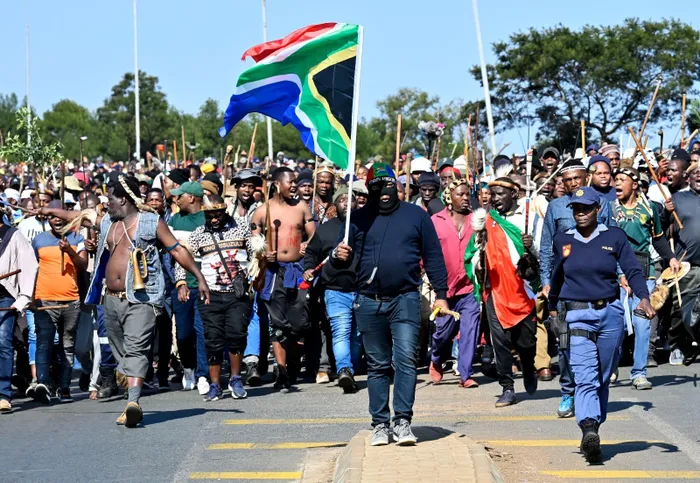
South Africa occupied international and local headlines for all the wrong reasons this week with the marches that took place on Tuesday.
The image sent to the rest of the world is of a violent nation that hates foreigners, particularly African. This of course is completely unrelated to reality.
It is critical that all of us listen to our people’s deep-seated frustrations and anger. Society is exhausted by an economy barely growing fast enough to keep pace with population growth, let alone able absorb hundreds of thousands of young people entering it annually. We have one of the world's highest unemployment rates at 43.7% and subsequently entrenched levels of poverty and inequality.
Whilst our challenges are many, we remain the economic hub for the Southern African region and much of the continent. We cannot continue to remain a relative island of prosperity in an ocean of poverty.
The marches have come and gone, and largely peacefully. For this we must be thankful, in particular to our hardworking men and women in the police.
What we cannot afford to do is to ignore the genuine calls of the marchers and society, in particular the working class. The burning fires remain and need urgent action to resolve them.
First is the crisis of unemployment. No society can be proud or safe if four out of ten citizens cannot find work, let alone a decent, permanent job. 62% plus youth unemployment is a ticking time bomb.
Tackling unemployment must be our single most important focal point as government, business, labour and society. Once people have jobs, then many of our pressing socio-economic crises will begin to ease.
To create jobs, then we need to unlock the economy from the anemic 1% it’s been stagnating at for more than a decade to the 3% plus needed. This means assisting Eskom and municipalities to make electricity affordable for working class families, businesses and industries once again. It means expediting our investments in rail, ports, roads, water, airports and other essential economic infrastructure.
It requires making it easier for SMMEs and investors to establish businesses and to make finance accessible and affordable for SMMEs, particularly in townships and rural areas.
The private sector needs to come to the party by creating jobs, including engaging workers and unions on alternatives to retrenchments.
Employers need to pay workers a living wage. This is key to ensuring workers are able to buy the food, shelter and medicine needed to be healthy and productive but also to feel valued and motivated. It is equally critical for economic growth for workers to be paid a decent salary and become shareholders so they can afford to buy the goods that businesses need to sell.
Employers need to prioritise hiring young South Africans. All too often we have seen employers exploit the desperation of undocumented migrant labour, violate their labour rights and immigration laws. This will be the fuse that lights future fires if not dealt with.
Part of the anger of the marches is about the state of public and municipal services. When communities experience the decline of water and sanitation infrastructure with sewerage leaking onto roads in townships, why should we be shocked when they protest?
When workers spend days queuing at Home Affairs or in hospitals for the most elementary of services, why would they not be despondent?
Whilst there is much we must all be angry about, we must equally appreciate and welcome the real progress we have made as a society since 1994 under successive African National Congress administrations rolling out public services to working class communities to alleviate poverty and inequality and over the past few years to overcome the load shedding that devastated the economy, to rebuilding other state-owned enterprises, and to begin to dismantling the state capture networks that bleed the state of badly needed resources.
Equally we must be honest about our unacceptable levels of crime and what needs to be done to fix them.
As with fixing other parts of the state, we must ensure that our law enforcement institutions have competent leadership, that frontline vacancies are filled and critical skills recruited, and that the staff and institutions have the resources needed to win this war. The marches took place precisely because society is losing faith in the capacity of the state to enforce the rule of law. That is a very dangerous place to be in for any society.
We must unequivocally reject any form of xenophobia, racism or discrimination. We know what these demons mean better than any other nation. We lived under apartheid. That is not who we are nor must ever be.
We must equally demand that everyone in South Africa, citizen or non-citizen, must obey by all our laws at all times. Migration must be managed and cannot be a free for all. Neither can South Africa carry the burden of providing jobs for an entire region or continent. We owe our loyalty first to South Africans.
Migration is a part of history, including ours, with the mining sector built by generations of workers from Cofimvaba to Cabo Delgado. We have an historical obligation and need to help uplift the region that we owe so much to. We need the region and the continent to do well.
This requires other African governments to accept their responsibilities to their citizens, to address the reasons why they are forced to leave due to massive human rights violations, climate change or a complete absence of jobs and economic opportunities.
Our government must do more to ensure our borders are secure, that Home Affairs and the Border Management Authority as well as SAPS and the SANDF have the resources, they need to enforce the rule of law at all times.
Our challenges are many but must be tackled. Migration is in the DNA of humanity and must be managed in a humane and sustainable manner. The marches were a wake-up call that we dare not ignore.
Zingiswa Losi is the president of Cosatu.
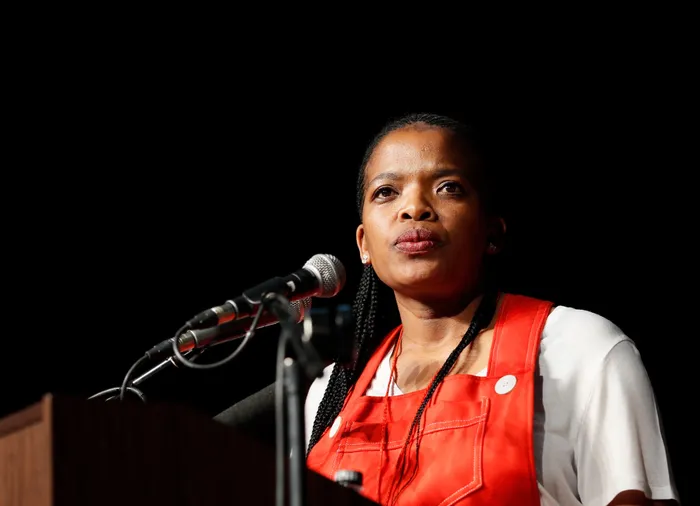
Zingiswa Losi is the president of Cosatu.
Image: Independent Newspapers
Follow Business Report on Facebook, X and on LinkedIn for the latest Business and tech news.