

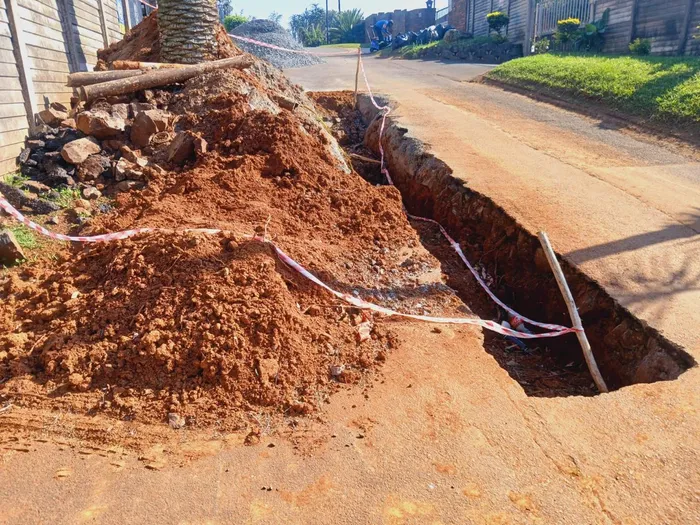
Cosatu expressed deep concern over the Auditor General's report revealing a dire state of South Africa's municipalities, urging the government to take immediate action to address the alarming issues highlighted.
Image: Supplied
The Congress of South African Trade Unions (Cosatu) is deeply distressed by the recent Auditor General’s report into the state of our 257 municipalities.
It paints a scary insight into what is happening in local government. But it also provides clear focal points to government on what must be fixed.
On virtually every indicator, the AG’s report exposes a depressing picture of local government.
Only 39 out of 257 municipalities or 15% achieved clean audits with all 8 metros failing and 5 municipalities not even bothering to submit their reports timeously.
Securing a clean audit should not be considered an achievement but doing what municipalities are legally required to do, accounting for how public funds are utilised to serve the public.
This is despite R1.6 billion spent on consultants to help prepare these reports!
62 municipalities are in severe financial trouble compared to 35% said to be financially healthy. Debt owed to municipalities is rising and municipal debt to Eskom, Water Boards similarly increasing.
The list goes on.
There are however some green shoots, with Limpopo, Mpumalanga and KwaZulu-Natal having no disclaimers, the worst possible finding, and since 2020 the number of such municipalities falling from 29 to 8. R28 billion has been allocated in this year’s budget to capacitate metros to bill consumers correctly and to collect those municipal tariffs. Legislation is being reviewed to enable national and provincial governments to intervene timeously and faster when municipalities begin to stumble.
To be fair to local government, some of the challenges it is facing were inherited or imposed. During the apartheid era municipal services were not taken seriously for 90% of our communities; Black, Coloured and Indian.
They were underfunded and the bare minimum level of services were put in place.
Since 1994 under successive African National Congress led administrations, government did well to roll out basic services to all communities, ensuring that access to water, sanitation and electricity went from on average a third of society, to more than 90%.
During the decade of state capture, local government, did not emerge unscathed with some of the most ingrained forms of corruption and tenderpreneurship and even violence taking place. The consequences have been alarming.
Municipal workers have paid a heavy price with between one to three dozen municipalities at any time failing to pay our cleaners, refuse collectors and other municipal workers their salaries. More than a hundred municipal pension funds are in arrears. Amahlathi Municipality once resorted to paying its employees with Pick ‘n Pay vouchers. The South African Municipal Workers’ Union (SAMWU) has fought valiantly for workers to tackle this crisis.
The collapse of municipal services in towns like Lichtenburg and Frankfort led to the closure of Clover dairy plants there, resulting in massive job losses for already deeply impoverished communities. Rural towns will not attract the investment needed to reduce unemployment if businesses cannot be guaranteed basic services. We are now seeing this same crisis repeating in some of our metros.
The impact on local communities, in particular townships, is shameful with dumping of rubbish, potholes and water leaks allowed to become the norm as municipalities neglect infrastructure maintenance and basic services.
Despite this depressing picture, the state can and must be fixed. We have seen it can be done with the remarkable turnaround in a relatively period of Eskom, Transnet, Metro Rail, South African Airways and the South African Revenue Service. What these success stories all have in common are the need to appoint competent management, remove corrupt and criminal elements, fill frontline vacancies and recruit critical skills, and invest in staff, institutional capacity and infrastructure. This is exactly what must be done to fix local government.
This requires a review of the 257 municipalities. How many are financially sustainable and which should be integrated? Some are too small to survive on their own. The challenge this creates is that they are not able to pay the salaries needed to attract the specialised skills to maintain critical infrastructure.
The White Paper on Local Government speaks to a new municipal funding. This is urgent and must be implemented if we are to turn local government around. This must be accompanied by a review of municipal mandates as we have continuously added to their tasks since 1994, but the necessary additional funding has not kept pace.
The legislative amendments to strengthen oversight over local government must be expedited and tabled at Parliament before the end of 2026. It can no longer be an option upon whether municipal managers have the necessary skills and qualifications to do their work. The rot in local government starts at the top and they must be kept on a tight leach.
The same goes for the quality of Councillors that political parties deploy. We cannot be shocked when municipalities fail to submit clean audits when Councillors cannot read their own municipalities’ financial statements.
There must be real consequences when municipalities fail to secure clean audits and when corruption is uncovered. The Hawks, SIU, SAPS and NPA’s capacity to tackle local government corruption must be drastically ramped up if we are to win this war.
Municipal debt to Eskom and the Water Boards threatens their very ability to deliver these essential services. Eskom, the Water Boards and the Department of Water and Sanitation and SANRAL must be enlisted to restore basic services and recapacitate municipalities.
Tough love is needed to ensure all services consumed are paid for. We cannot expect municipalities to maintain drains or electric cables if we deny them the monies to do so. SAPS must accompany municipal workers when they cut illegal connections. Ensuring that everyone pays for services consumed will not only stabilise municipal finances but enable them to provide greater relief to indigent households and end above inflation tariff hikes that suffocate the economy.
Local government is in the ICU.
The time to stabilise and turn it around is now but it requires bold and decisive leadership. It can and must be done.
Zingiswa Losi is the president of Cosatu.
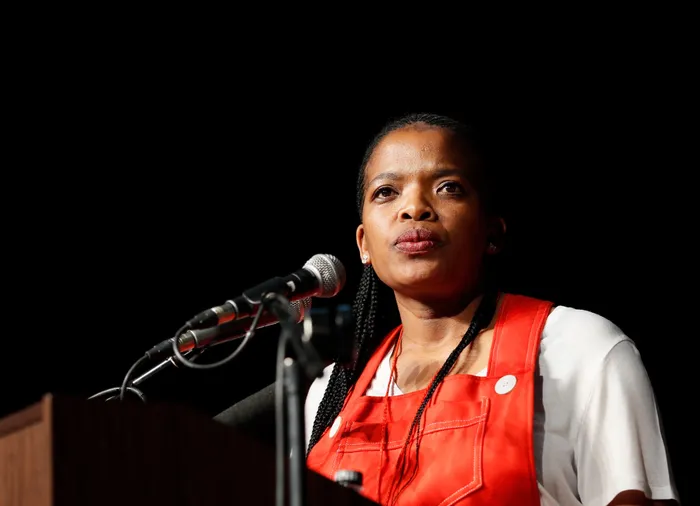
Zingiswa Losi is the president of Cosatu.
Image: Independent Newspapers
Follow Business Report on Facebook, X and on LinkedIn for the latest Business and tech news.