

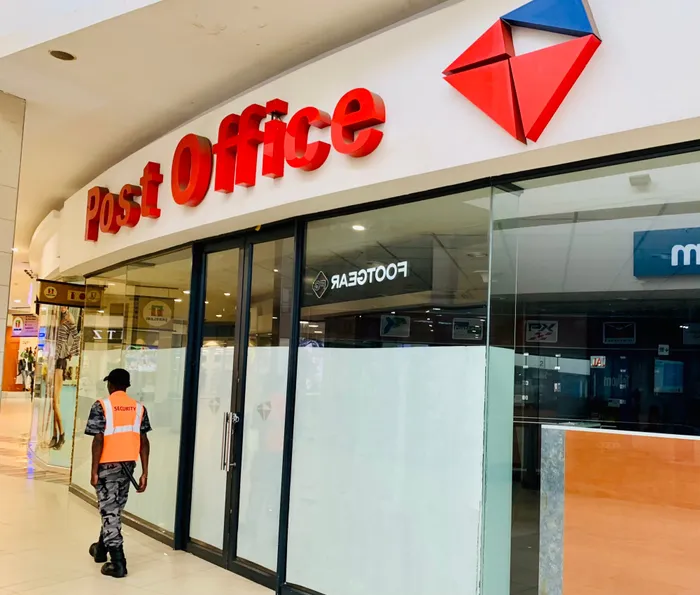
Discover how the Congress of South African Trade Unions (Cosatu) is optimistic about the future of the South African Post Office following the appointment of a new Board and the application to exit business rescue. Learn about the implications of these changes for the postal service and its impact on communities.
Image: Bhekikhaya Mabaso / Independent Newspapers
The Congress of South African Trade Unions (Cosatu) has been encouraged by two key developments for the stabilisation and turnaround of the South African Post Office (SAPO) have recently taken place.
First was the appointment of a new Board.
Second was the lodging of an application at the Gauteng North High Court for SAPO to exit business rescue. These important steps send a positive signal that SAPO is preparing to turn the corner after years of freefall.
SAPO’s decline, like many other state-owned companies, was allowed to take place and even facilitated over the decade of state capture and corruption.
These inflicted a heavy toll upon the fiscus expected to spend billions on bail outs, workers’ wage and pensions left unpaid, and communities dependent upon SAPO and the Postbank, denied access to their services.
SAPO’s management over many years dismally failed to ensure that it kept pace with deep structural shifts taking place in the postal business, e.g customers moving from posting letters to sending emails. This led to SAPO losing customers, unable to pay bills or salaries and ultimately being placed under business rescue after a court application by service providers owed monies.
Some free-market fundamentalists have demanded, wrongly, that government simply close or sell SAPO. They miss the point that SAPO and the Postbank service millions of township and rural residents as well as social grant recipients often neglected by commercial banks or unable to access or afford private courier services.
The appointment of the Business Rescue Practitioners (BRPs) initially gave hope that SAPO would be turned around. However, whilst their tenure saw the settling of much of its debt and slashing annual losses, it came at a painful and heavy price of closing more than 300 branches and retrenching 4 000 staff.
2026 marked a low point in SAPO's history with the BRPs threatening to apply for liquidation of SAPO unless they received a cash injection from the fiscus which wasn’t forthcoming.
The 6th Parliament amended the Post Office Act enabling SAPO to enter the highly lucrative courier space and to become a one stop shop where members of the public can apply for a variety of government services, from IDs to social grants, NSFAS funding or Unemployment Insurance and other benefits. Yet no movement has been made to do this by the BRPs.
The Postbank Act was also amended by the 6th Parliament to enable the Postbank to become a fully licensed bank. This is important for SAPO given their symbiotic relationship and even shared premises.
The Board appointed recently comprises people of integrity, capacity and experience, including representatives from labour and postal workers.
The insight of the latter is key to ensuring the lived experiences of postal workers are heard by the Board and addressed and that SAPO’s staff are able to input into its turnaround plan and ultimately have a sense of collective ownership for its implementation and success. No company can succeed without the buy in of its employees.
It is key the new Board hit the ground running and put in place a turnaround plan building upon work already done over the past few years. Key to this is appointing competent management. The organisation’s turnaround plan won’t succeed without a management team that understands the sector, is able to engage staff and government, and roll out a bold vision for this once thriving public entity.
Management will need to ensure that frontline vacancies are filled and critical skills are recruited. SAPO is not going to recover without warm bodies and the right skills.
Reaffirming the rights of its employees is key, including assuring them that their jobs are safe and their salaries and third-party payments will be honoured. Workers have families they need to support and are entitled to expect their labour rights to be respected at all times.
Individuals involved in criminal activities, including corruption and theft, must be held accountable according to the law. Customers will not return to SAPO if they fear their parcels will be tempered with. Government departments, e.g. Home Affairs or SASSA, will not extend their networks to SAPO if they are not assured their systems will be respected.
Treasury needs to be engaged and come to the party to provide SAPO necessary financial support to enable the implementation of a turnaround plan. Yes it cannot be a blank cheque or yet another bail out without conditions, but SAPO needs to be rebuilt, its systems modernised and secured, and its physical capacity made fit to compete in the highly competitive and lucrative courier sector. Similarly utilising SAPO’s nearly 800 branches for other government institutions to roll out their services, requires a fit for purpose infrastructure.
Other government institutions are under severe pressure to ensure the public is able to access their high in demand services.
The long queues at Home Affairs and the Labour Centres, of which there are approximately 70 each across the country, is evidence of the game-changing potential that enlisting SAPO’s nearly 800 branches can play in ensuring that members of the public are able to access government services where they live.
This requires SAPO’s new Board to ensure that agreements are put in place with the Departments of Home Affairs, Employment and Labour as well as Social Development, Higher Education and Training and Small Business Development for a process to roll out their services through SAPO Branches.
This will take time and it may be wise to start with one department at a time, perhaps starting with Home Affairs, which has already begun similar partnerships with the banking sector.
The real progress in stabilising and rebuilding other once embattled state-owned entities, from Eskom to Transnet, Metro Rail and SAA, shows that these once thriving institutions can be fixed and once again be enablers of economic growth.
SAPO too can be fixed and play an important role in connecting often marginalised communities to their families, government services and the economy. The new Board provides the opportunity to do exactly that.

Solly Phetoe is the general secretary of Cosatu.
Image: Doctor Ngcobo / Independent Newspapers.
Solly Phetoe is the General Secretary of Cosatu.
Follow Business Report on Facebook, X and on LinkedIn for the latest Business and tech news.