

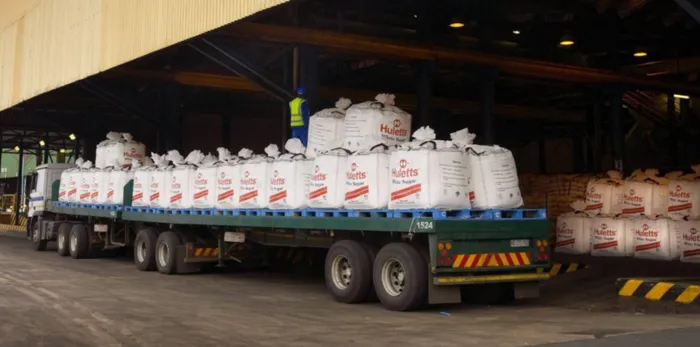
TMA-SA pointed to the rescue of Tongaat Hulett as an example of how preserving a distressed company can protect significant social and economic value that might otherwise be lost through liquidation.
Image: Supplied
South Africa needs to fundamentally change how it approaches corporate distress and business failure, according to the Turnaround Management Association Southern Africa (TMA-SA), which is calling for a stronger national business rescue culture as the number of financially distressed companies continues to rise.
The call comes as new research prepared for TMA-SA reveals that 48 companies entered business rescue in February 2026 alone – the highest monthly figure recorded since the introduction of the business rescue regime under Chapter 6 of the Companies Act.
The research, based on an analysis of 4,373 Companies and Intellectual Property Commission (CIPC) proceedings between 2005 and March 2026, shows that 1,409 companies are currently in business rescue.
The findings were presented at TMA-SA’s inaugural Conference on Distressed Investment and Business Rescue, which brought together business rescue practitioners, investors, legal experts, academics and government representatives to examine the state of South Africa’s restructuring environment.
According to TMA-SA, corporate distress is expected to intensify throughout 2026 as businesses grapple with slowing global growth, high borrowing costs, persistent energy expenses, weak consumer demand and geopolitical instability.
“Our research shows that business rescue is neither quick nor a guaranteed lifeline,” said Stefan Steyn, a director of TMA-SA who conducted the research.
“Successful rescues take an average of 18 months to complete,
while companies that ultimately fail spend more than a year in the process before ending in liquidation. That raises important questions about whether some businesses are entering rescue too late or remaining in the process without realistic prospects of recovery.”
Despite the challenging environment, the data points to encouraging outcomes. TMA-SA said two out of every three companies entering business rescue ultimately return to operation, while preserving approximately 87% of their economic value.
TMA-SA chairperson Haroon Laher believes South Africa must move beyond viewing business rescue as a last-ditch effort for failing companies and instead recognise it as a strategic tool for economic recovery.
“Business rescue is not for the ‘terminally ill’. It is a strategic intervention that can create significant social and economic value by preserving jobs, protecting businesses, and preventing further losses to creditors and the broader economy,” Laher said.
He noted that while restructuring processes such as Chapter 11 bankruptcy protection are widely understood and accepted in countries such as the United States, South Africa continues to associate business rescue with failure.
“In the United States, restructuring is widely understood through the lens of Chapter 11. In South Africa, business rescue is still too often associated with failure,” said Laher. “We need to change that. We need a business rescue culture that is trusted, credible, and used proactively rather than only as a last resort.”
The conference highlighted the broader impact of corporate failures, which extend beyond creditors and shareholders to employees, suppliers, local communities and regional economies.
TMA-SA pointed to the rescue of Tongaat Hulett as an example of how preserving a distressed company can protect significant social and economic value that might otherwise be lost through liquidation.
“Rather than automatically liquidating financially distressed companies, business rescue creates a structured opportunity to reorganise operations and debt in pursuit of recovery,” Laher said. “It is a more compassionate and constructive approach that seeks to balance the interests of all stakeholders.”
However, conference participants also warned that many companies continue to enter business rescue too late, reducing the likelihood of a successful turnaround.
“Business rescue is not a solution in itself; it creates the framework and time needed for a company to find solutions,” Laher explained. “The later a company enters rescue, the harder recovery becomes.”
The conference also identified growing concerns around trust and capability within the business rescue ecosystem. Lengthy proceedings, costly legal disputes, unclear fee structures and uncertainty over outcomes have contributed to declining confidence among stakeholders.
Looking ahead, TMA-SA is advocating legislative reforms to modernise South Africa’s business rescue framework, including a more differentiated approach for state-owned enterprises, small businesses and large corporates, as well as specialised judicial training for the newly established Insolvency Court.
“Business rescue is more than a legal mechanism; it is a means of preserving economic value, protecting jobs, and giving viable businesses a pathway to recovery,” Laher said.
“The TMA-SA Conference reinforced that South Africa does not lack the tools or the talent to make business rescue work. What it needs is the will to embed a business rescue culture, a constructive and proactive mechanism through which distressed businesses are preserved, creditors are protected, and economic value is retained.”
BUSINESS REPORT