

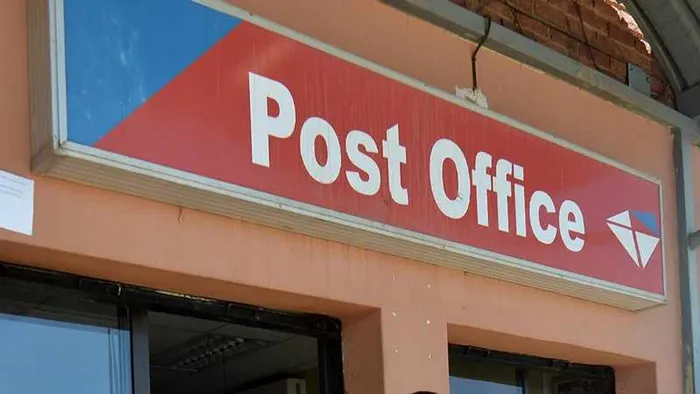
SA Post Office's business rescue practitioners have applied to the Pretoria High Court to bring the organisation out of business rescue.
Image: File
South African Post Office creditors received 12 cents on the rand, 355 branches were closed, and more than 4,300 employees lost their jobs in a business rescue process over two years that is now drawing to a close.
SAPO’s joint business rescue practitioners (BRPs) applied to the Pretoria High Court on June 12 for an order to end the business rescue and authorise the filing of a notice of substantial implementation of the adopted business rescue plan.
“This is a step to formally and successfully conclude SAPO’s business rescue process. We now await a court date to have the application heard and get an order to terminate the rescue proceedings,” the BRPs said in a statement on Wednesday. There remain 657 branches, including strategically retained sites to serve the rural communities.
“The business rescue process has stabilised SAPO’s balance sheet and significantly improved its operational position. The entity is paying its liabilities in the ordinary course of business,” said Joint BRPs Anoosh Rooplal and Juanito Damons.
SAPO reduced creditor debt from about R8,7 billion to R440 million. More than 99% of the approved creditors received 12 cents in the rand distribution, amounting to about R1,02bn, which was paid to creditors by August 2024.
The BRPs said this compared favourably to the estimated liquidation return of 4,08 cents in the rand.
A section 189A process resulted in a reduction of 4,342 employees, completed by April 2024, with all retrenchment obligations settled by November 2024. Monthly staff costs reduced from R211,9m to R115m, generating annual savings of about R1,2bn.
SAPO recently reported encouraging financial results for the 12 months to March 31, 2026. Revenue increased to R1,54bn, while the net loss reduced significantly to R71m, from a net loss of R514m in the previous financial year. This is the lowest net loss recorded over the past several years and reflects the positive impact of the business rescue process.
“The next phase, to grow and modernise the entity, requires shareholder-led intervention, injection of capital, and permanent governance structures. We have asked the court to declare the business rescue substantially implemented, so SAPO can transition back to normal governance under its shareholder, leadership team, and new board,” the BRPs said.
The new board’s tenure starts on June 22, 2026. Acting CEO Fathima Gany has established a High Care Leadership Team (HCLT) to drive SAPO's so-called "High Care Transition Program."
The HCLT will serve as an executive forum to ensure business continuity while supporting governance stabilisation, board readiness, operational resilience, reputation management, and long-term sustainability. The HCLT does not replace the authority of the board and will report directly to the board throughout the transition period.
“Although challenges remain and SAPO is not yet fully out of difficulty, the organisation is operating from a more stable foundation,” the BRPs said.
They said the High Care Transition Programme had been designed to preserve the progress, safeguard value created during business rescue, and support the organisation's continued recovery.
“There will be a deliberate focus on extending the cash cycle while executing on strategic initiatives, including the partnership program, revenue diversification, and property monetisation,” said Gany.
SAPO’s balance sheet improved materially, moving to a positive R840m from a negative net asset value of R7.9bn, rendering the organisation technically solvent.
The BRPs said certain components of the turnaround strategy remain incomplete due to funding constraints.
“While SAPO received an initial R2.4bn government allocation, used to support creditor distributions, retrenchment costs, and operational cash flow, a second R3.8bn funding tranche required for capital investment and growth initiatives was not forthcoming and lapsed.”
As a result, several modernisation initiatives, including IT upgrades, digital services, and broadband capabilities, would now fall within the responsibility of the shareholder and the new board, who have been appointed by the Minister, the BRP's said.
Visit:www.businessreport.co.za