

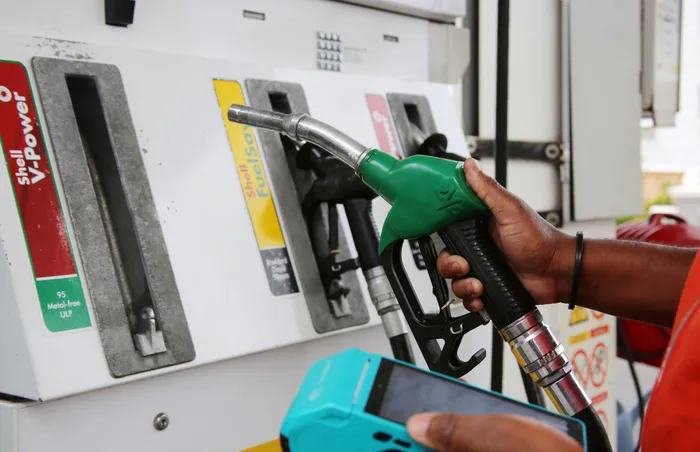
The latest figures have heightened concerns that rising fuel costs linked to global oil market disruptions could place renewed pressure on households and complicate the monetary policy outlook.
Image: Tumi Pakkies / Independent Newspapers
South Africa’s annual consumer inflation accelerated sharply to 4.5% in May, its highest level in 22 months, as surging fuel prices filtered through the economy and pushed headline inflation beyond the South African Reserve Bank’s (Sarb) preferred target range.
Data released by Statistics South Africa (StatsSA) on Wednesday showed that consumer price inflation (CPI) climbed from 4.0% in April to 4.5% in May, marking the highest annual inflation rate since July 2024, when inflation stood at 4.6%.
The latest figures have heightened concerns that rising fuel costs linked to global oil market disruptions could place renewed pressure on households and complicate the monetary policy outlook.
Nedbank economists said they expect headline inflation to rise further to a peak of around 4.9% in June before gradually moderating to end the year around 3%.
Though they said recent geopolitical developments have been favourable and food inflation should also continue to ease, administered prices will remain a source of inflation.
“The upward pressure in June will likely stem primarily from the petrol price hike at the start of the month, when global oil prices were still relatively high, as the Strait of Hormuz remained closed and National Treasury began phasing in the remainder of the fuel levy,” they said.
“Overall, the inflation outlook has improved materially following the resolution of tensions affecting oil supply routes. We now forecast that headline inflation will gradually decline over the second half of the year, ending the year at around 3% and averaging 3.6% in 2026.”
Patrick Kelly, chief director for price statistics at StatsSA, said fuel costs were the primary driver behind the increase.
“The inflation surge was largely driven by fuel price increases. The Fuel Index recorded its second consecutive large increase, leaping by 14.3% to reach an annual rise of 28.7%,” Kelly said.
He noted that over the past year, petrol prices increased by 24.8% while diesel prices surged by 53.8%.
“The impact of higher fuel prices on overall inflation can be seen by the Index by looking at the CPI excluding fuel. This Index annual change was 3.7% in May, the same as the previous month,” he said.
“This measure has moved in a narrow range between 3.5% and 3.8% percent over the past 12 months. The monthly increase was 0.2% in May compared to the overall CPI, which increased by 0.7% between April and May.”
Economists said the inflation increase reflected the lingering effects of the recent spike in global oil prices following conflict in the Middle East, which translated into significant fuel price hikes locally.
Investec chief economist Annabel Bishop said the increase in fuel costs had a direct and substantial impact on May’s inflation reading.
Bishop estimated that fuel alone contributed 0.6 percentage points to the monthly increase in CPI.
“There were no other significant price increases coming through in the month, except the 0.1% rise in the residual, which captures and amalgamates the insignificant price increases in the categories of the CPI that are too small on their own to reflect,” she said.
“In June, the petrol price rose a further R1.43/litre, which will push CPI inflation to nearer 5.0% y/y in the next print, with the SA Reserve Bank’s upper tolerance band of 4.0% y/y already exceeded in May.”
However, Bishop said some relief could be on the horizon as a R2.65/litre cut for July is building.
“However, the latter will be reduced by the planned reversal of the general fuel levy cuts, with a further R1.50/litre increase for petrol prices from this source,” she said.
Lerato Ntuli, an economist at Anchor Capital, said inflation pressures extended beyond fuel, with housing and transport remaining major contributors to headline inflation.
“Insurance and financial services also remained elevated, rising 5.7% year-on-year, although with a smaller contribution of 0.6 ppts. Overall, goods and services inflation stood at 4.4% and 4.7%, respectively,” she said.
“The preliminary agreement between the United States and Iran points to downside risks for global oil prices, with Brent crude recently falling below $80 (R1297) per barrel. However, a return to normal production and export levels in the Gulf is likely to be gradual, keeping oil prices above pre-conflict levels in the near term.”
BUSINESS REPORT