

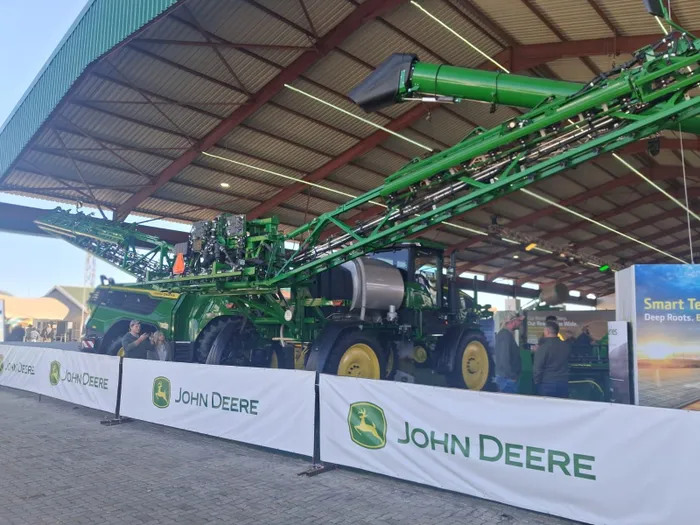
Agricultural Machinery Sales experienced a big drop in sales in May following a modest recovery in April.
Image: File
South Africa's agricultural machinery market suffered a significant setback in May, with tractor and combine harvester sales declining sharply as farmers grappled with rising input costs, weather uncertainty and concerns about the upcoming production season.
Data released by the South African Agricultural Machinery Association (SAAMA) showed that tractor sales fell by nearly 15% year-on-year in May, signalling what industry leaders believe could be the beginning of a broader slowdown in agricultural equipment purchases.
SAAMA chairperson Willie Human said 542 tractors were sold in May, compared with 635 units in the same month last year.
“On a year-to-date basis, tractor sales are now 1% down on last year. Twenty-seven combine harvesters were sold in May, 14 less than the 41 units sold in May last year,” he said.
Human added that on a year-to-date basis, combine harvester sales are now approximately 3% down on last year.
“Although market sentiment remains positive, an increasing number of uncertainties are overhanging the market. Amongst others, these are current summer crop yields, input costs, commodity prices, interest rates, and weather prospects for the forthcoming summer cropping season.”
Human said that these uncertainties are driving farmers towards postponing their equipment buying decisions.
“With maize harvesting, in particular, having been delayed because of late rains, it will probably only be in a few months’ time that direction within the industry will be seen,” Human said.
“Current predictions of tractor sales for the 2026 calendar year are still that these will be similar, or marginally lower, than those in 2025.”
The slowdown was not unexpected, according to Wandile Sihlobo, chief economist at the Agricultural Business Chamber of South Africa (Agbiz).
Sihlobo said the May decline reflected a combination of seasonal factors and mounting concerns about production costs and global geopolitical developments.
“This is due to a combination of factors, including uncertainty about the weather outlook heading into the 2026-27 season and elevated input costs driven by the war in the Middle East,” Sihlobo said.
“The data released earlier by the South African Agricultural Machinery Association shows that tractor sales fell by 15% year-on-year in May 2026.”
Sihlobo added that this decline is unsurprising and may be a mark of a change in sales going forward.
“South Africa has had a good run, with strong tractor sales for much of 2025 and into the early months of 2026. There was always going to be some normalisation,” he said.
“The robust sales in recent months were driven by the ample harvest in the 2024-25 production season, particularly of grains and oilseeds, which supported farmers' incomes. The horticulture industry also performed well in that period, supporting farmers' incomes.”
However, Sihlobo warned that conditions were becoming less supportive despite expectations of another strong harvest this season.
South Africa is currently forecast to produce a record 21.1 million tonnes of summer grains and oilseeds in the 2025-26 season, up 3% from the previous year. The harvest includes maize, sunflower seed, soybeans, groundnuts, sorghum and dry beans.
Yet Sihlobo believes rising fertiliser and fuel costs linked to the ongoing Middle East conflict pose a major threat to future investment.
“The source of our concern is the ongoing war in the Middle East and the subsequent surge in fertiliser and fuel prices,” he said.
Sihlobo added that these two inputs account for only about half of input costs in some field crops, and when prices surge, farmers feel financial strain.
“Moreover, forecasts of an El Niño in the season ahead will likely place additional strain on the farming sector, as farmers face lower commodity prices for harvested crops, specifically grains, oilseeds, and sugarcane.”
Sihlobo said the industry worries about the path ahead for tractor and combine harvester sales.
“This year may mark a shift from the period of strong agricultural machinery sales we observed at the beginning of 2025.”
BUSINESS REPORT