

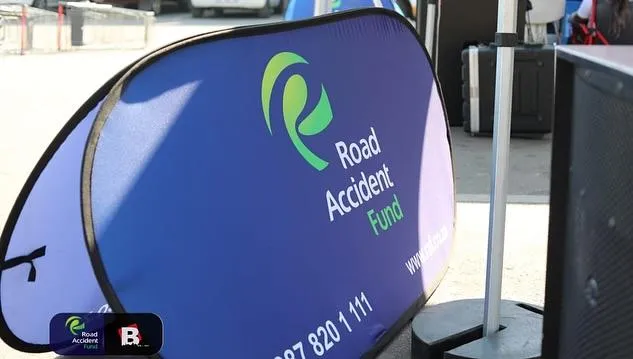
With increasing petrol prices due to Middle East tensions, the Democratic Alliance (DA) has called for the removal of the multiple rands-per-litre that the Road Accident Fund (RAF) adds to the pump price of petrol and diesel
Image: FACEBOOK/RAF
The Democratic Alliance has intensified calls for the scrapping of the fuel levy used to fund the Road Accident Fund (RAF), arguing that motorists should no longer bear the cost of what it describes as a dysfunctional and corruption-ridden institution amid rising fuel prices linked to escalating tensions in the Middle East.
DA transport spokesperson Chris Hunsinger last week said the party plans to engage Transport Minister Barbara Creecy on legislative amendments aimed at replacing the RAF with a scaled-down compensation system backed by compulsory third-party insurance for motorists.
“Every vehicle in South Africa pays multiple rands-per-litre to the RAF with every filling-up of fuel at a filling station, yet the RAF squanders this money,” he said.
The RAF levy currently forms part of the general fuel price structure and contributes several rand to every litre of petrol and diesel sold in the country.
The DA argues that motorists are effectively funding a system that has failed to deliver timely compensation to road accident victims while becoming mired in corruption allegations, mounting legal battles and administrative inefficiencies.
Hunsinger added that the alternative to the RAF is a scaled-down safety net for road accident victims, paired with compulsory third-party insurance for all drivers.
“The RAF is a failed entity, wracked by corruption, and unable to deliver settlement payments to hundreds of thousands of road accident victims. Just this week, its former CEO faces possible criminal charges from Parliament.”
Hunsinger said the RAF’s original purpose — providing compensation to road accident victims who suffer financial losses and cannot recover damages from at-fault drivers — was commendable in principle but deeply flawed in execution.
“The purpose of the RAF is noble, but the execution is an outright failure,” he said.
“Deserving victims and survivors wait years for any RAF settlement, they are fought in court, and many unscrupulous individuals have established entire business practices aimed at milking the RAF for the most minor traffic incidents. The model does not work, and South Africans must not be made to pay for it any longer at the pump.”
The DA’s proposal would replace the RAF with compulsory third-party insurance for all motorists, a model the party says would shift risk management and claims processing to private insurers with greater expertise and efficiency.
The proposal has received support from the Road Freight Association (RFA), which said it has engaged government for decades on reforming the RAF funding model.
Gavin Kelly, CEO of the RFA, said a compulsory third-party insurance system existed historically in South Africa before the current RAF structure was introduced.
“The RFA supports a 'third-party' cover - this has been part of transport structures since the advent of national legislation and licensing structure (from the early 1950s),” Kelly said.
“Previously to the RFA, vehicle owners were required to 'purchase' a third-party disc from either their own short-term insurer or from a number of identified insurers where individuals did not have short-term insurance cover in their own right.”
Kelly argued that returning to such a system would eliminate many of the governance and operational problems associated with the RAF, including allegations of corruption, legal disputes over compensation and inefficiencies in claims administration.
“Insurance companies are the experts in these areas, not a government agency. It is further worth noting that the removal of the fuel levy sounds the best way to go, and a system run by insurance will, by far, be better for all concerned. The third-party insurance (as it was called in the past) can be electronically done - i.e. no extra discs or admin processes.”
However, the Department of Transport warned that removing or reducing the RAF levy could have serious consequences for vulnerable road accident victims.
Spokesperson Collen Msibi said that reduction will have an impact on the lives of victims of road crashes who are mostly breadwinners and can't afford added costs brought by road crashes in such a difficult economy.
BUSINESS REPORT