

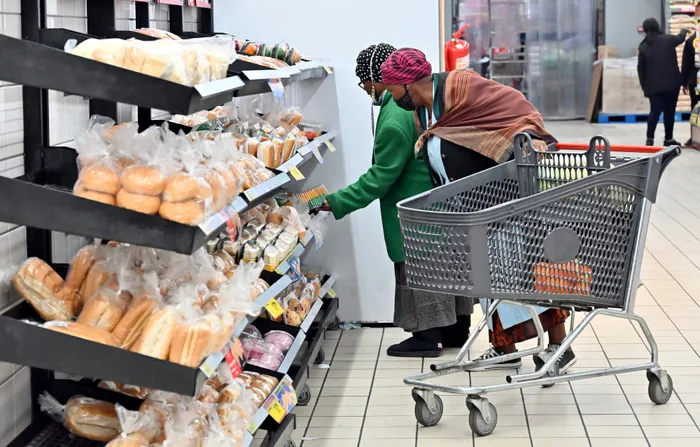
Rising fuel prices, driven by geopolitical tensions, are set to push South African inflation rates higher, impacting consumers and the economy. Experts warn of potential inflation spikes as producers pass on costs.
Image: Ayanda Ndamane/ Independent Newspapers.
The ongoing conflict between the US and Israel against Iran is sending shockwaves through the global economy, significantly affecting energy prices and exchange rates.
In South Africa, this turmoil is expected to have direct repercussions on consumer wallets, as the local importation of fuel becomes increasingly expensive.
Frank Blackmore, lead economist at KPMG South Africa, told Business Report that the depreciation of the South African rand is exacerbating the situation, with oil prices surging due to geopolitical tensions.
“In South Africa, we've seen a depreciation of the exchange rate. Both of those influence transport prices, transport costs form about 14% of the CPI basket and the impact of the ongoing war against Iran is going to mean that your fuel costs, comprised of diesel and petrol, in combination in your CPI index, will see petrol pump prices increase by about 1.1% to 1.2%,” Blackmore said.
He added that fuel price hikes are likely to affect the production side of the economy as well.
"The response from producers, who carry a higher weighting in the Consumer Price Index (CPI) for petrol (4.4%) and diesel (4.2%), suggests that they will not absorb these increased costs. Instead, producers are expected to pass these inflationary pressures onto consumers, affecting the overall cost of goods and services," Blackmore said.
As a result, South African consumers should brace for rising inflation in the coming months.
Current inflation, which stands at around 3%, could climb to estimates of between 4.5% and 4.8%, influenced by both direct fuel price increases and indirect cost transfer from producers, the KPMG economist said.
“We could see inflation climbing back to around 4.5% or even 4.8% levels, as long as the war continues, prices remain inflated, and the impact will be higher,” Blackmore added.
However, he added that if the conflict subsides sooner, the inflationary impact may also lessen.
The South African Reserve Bank's response to these developments remains uncertain.
According to Blackmore, if the second-round effects of inflation start influencing wage rates and other economic indicators, interest rates may also be subject to increases.
“As long as the central bank sees this war as temporary and not affecting inflation on a more permanent basis, rates will remain steady,” he noted.
John Loos, an independent economist said that South Africa’s heavy reliance on the consumer to drive economic growth makes it tough to still see stronger growth in 2026 amidst the ongoing Middle East uncertainty.
"South Africa’s strong reliance on its consumer for its economic growth,makes it increasingly difficult to foresee 2026 GDP growth improving on 2025," he said.
"For further growth improvement, we may haveto look beyond this year, to a time where, hopefully, a lasting peace will have been achieved around Iran and the Gulf, enabling free flows of shipping through the Strait of Hormuz, and when the prices of fuel, fertilizer and a host of other important products have 'normalised'."
In summary, the combination of geopolitical tensions and currency fluctuations is poised to create a challenging economic landscape for South Africans, with fuel prices set to influence inflationary trends in the months ahead.