

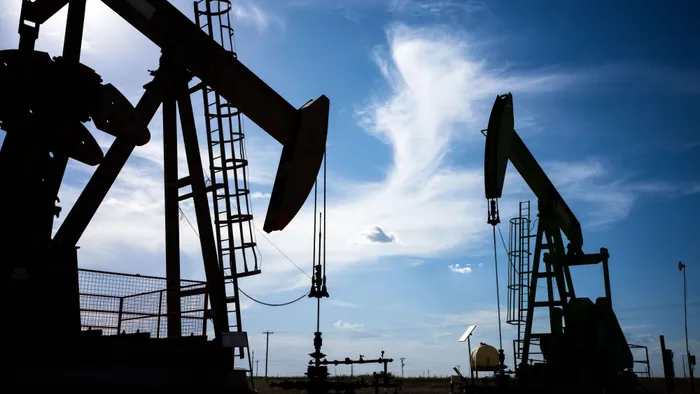
As tensions rise over the potential blockade in the Strait of Hormuz, the global financial landscape hangs in the balance. Investors need to prepare for a resounding ripple effect across economies, greater inflation, and shifting equity valuations—changes that could happen almost overnight. This is a wake-up call for a financial world resting on the precipice of volatility.
Image: File / AFP
Higher global oil prices, resulting from the failed peace talks between the United States (US) and Iran, along with President Donald Trump's announcement of a US blockade at the Strait of Hormuz sent markets plunging on Monday.
Bianca Botes, managing director at Citadel Global, yesterday said that while what was initially reported as a constructive negotiation failed to transpire into an agreement, as the US prepared for a naval blockade of the Strait of Hormuz.
"Markets are back on edge with Wall Street futures sinking as much as 1%. The dollar and oil prices capitalised on the breakdown in talks, with oil gaining over 7% to trade at $102/barrel," she said.
"Gold prices, while still at elevated levels, declined by 0.6% this morning, to trade at $4,718/ounce."
In a stark warning that underscored the fragility of global oil supplies, Nigel Green, CEO of advisory firm deVere Group, cautioned investors to brace for an oil shock if the US were to carry out a blockade of the critically important Strait of Hormuz.
Should tensions escalate to the point of outright closure of this vital maritime corridor, Green said the ramifications on global oil prices, and consequently, on the broader financial landscape, will be significant.
Green said that if oil supplies were to be threatened, Brent crude prices could soar towards $120 or even beyond, which would likely reset inflation expectations on a global scale.
“Take that flow out of the system and Brent doesn’t move five or ten dollars, it moves structurally higher,” Green said.
Sectors such as energy equities could see immediate benefits, with integrated oil companies, US shale producers, and Middle Eastern exporters enjoying expanded profit margins and enhanced cash generation capabilities.
In contrast, industries reliant on energy imports, such as airlines, shipping, and heavy manufacturing, would find their costs climbing sharply.
With energy producers gaining newfound pricing power, Green advised investors to rotate their capital out of energy-sensitive sectors rather than waiting for earnings revisions that may arrive too late.
“Energy producers gain pricing power overnight,” he said.
The potential fallout extends beyond the energy sector, with currency markets poised for divergence.
Green pointed out that ongoing market sentiment has leaned towards easing measures, but a sharp and prolonged uptick in oil prices could force a reevaluation of that stance, resulting in a repricing of interest rates and negatively impacting high-growth equities.
Tech stocks, noted for their long-duration earnings, remain particularly vulnerable to shifts in the financial climate.
As discount rates increase in response to rising inflation expectations, the present value of future earnings may prompt heightened volatility in sectors that have recently been at the forefront of market gains.
Beyond oil, a range of commodities could also see price hikes; LNG prices are anticipated to move in tandem with crude oil, while gold often benefits during periods of geopolitical strife and diverging real yields.
Green added that gold is likely to become a prominent hedge against uncertainty, further illustrating the far-reaching implications of events surrounding the Strait of Hormuz.
Andre Cilliers, currency strategist at TreasuryONE, said the two-week ceasefire still remains in place for now, however, markets are on edge as they await Tehran's reaction to Trump's threat.
"Brent crude has jumped to above the $100 level once again, while the Dollar DXY index is back up at 99.00. The rand has opened around 1.0% weaker at R16.55 on the back of higher oil prices, a stronger dollar, and geopolitical concerns," Cilliers said.
"The local currency will once again take its cues from international moves. Gold loses some ground as oil and the dollar rise. The failed peace talks, higher oil prices, and a stronger dollar are also weighing on gold prices, which currently sit at $4,724."
BUSINESS REPORT