

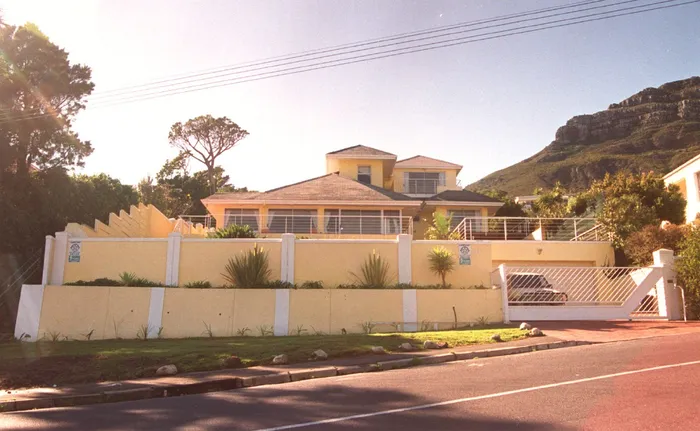
Older homeowners also own proportionately more homes above R2 million than below.
Image: File
South Africa’s mature homeowners remain key drivers of the property market's growth and stability.
They are far from exiting the market in their retirement years, says Bradd Bendall, BetterBond’s National head of sales.
While only about one in 10 South Africans is aged 60 or older, this cohort controls nearly half of the country’s residential property market valued above R500 000, according to LOOM Property Insights.
Many have settled in coastal, lifestyle and inland towns, sometimes owning up to 60% of properties in the area. These buyers also do not move much as they get older.
“This data challenges the assumption that retirees typically downsize into retirement villages. Instead, many older homeowners are opting to remain in their primary properties, either from necessity or to meet their lifestyle needs,” Bendall says.
Another reason for this trend is the constrained supply of retirement accommodation. LOOM reports that for every one unit in a retirement development, there are 30 units owned by people aged 60 and older outside of such developments.
As there are only about 650 formal retirement complexes with around 44 000 residential units, many mature buyers have to consider alternative housing options in their golden years, notes Bendall.
“The demand for well-located retirement developments often exceeds supply, and many retirees face long waiting lists.”
Mature buyers can play a significant role in market stability, says Bendall. He says they entered the property market decades ago when deposit requirements were lower, and affordability was less of a challenge.
Many also own homes in high-value suburbs where property prices have shown significant growth over time, he adds.
Unsurprisingly, the national head says older homeowners also own proportionately more homes above R2 million than below.
They are remaining in their property for longer, with LOOM reporting that 58% of buyers between 80 and 85 have been in their homes for 25 years or more. This increases to 65% for owners over 85, he says.
According to BetterBond data for the 12 months ending April 2026, the average income of buyers over 60 has increased by just over 8%. These buyers are also spending just over 8% more on their homes, with the average purchase price at approximately R2.3 million.
“Buyers who are moving out of their primary homes as their needs change may downsize but not downscale in value. Not only are older buyers remaining active in the property market, but they are also retaining ownership of high-value residential assets above the R500 000 threshold.”
Many of these buyers have built up significant equity over time, enabling them to pay substantial deposits with little reliance on financing when they do decide to invest in another property.
According to the latest FNB Estate Agents Survey, retirement is one of the life stage changes accounting for 21% of property sales.
“We are seeing mature homeowners choosing to hold onto their family homes as they downsize later in life. This reflects strong financial stability among mature buyers, making them lower risk from a lending perspective.”
"LOOM also notes that of buyers over 60 living outside of retirement villages, 80% are in freehold homes, and 20% opt for sectional schemes or estate living. This shift has implications for housing design and adaptation, as standard residential properties may require modifications to meet changing mobility and accessibility needs.
"Adjustments include single-level living options, wider walkways, walk-in showers and integrated smart-home automation.
For developers, there is a growing demand for inter-generational lifestyle estates offering modern homes with access to on-site healthcare and supporting amenities.
Many older homeowners settle outside of bustling urban hubs, favouring the lifestyle offering of coastal destinations and inland towns. Popular retirement options include the West Coast, Garden Route and KwaZulu-Natal’s North and South Coasts.
“As many mature homeowners own their properties outright or with minimal debt, they are largely insulated from interest rate fluctuations, which further supports housing market stability,” says Bendall.
Even when faced with economic uncertainty, this age group can continue paying municipal rates and taxes, spend on home maintenance and support community security and infrastructure initiatives.
This concentration of homeownership reflects a widening intergenerational asset gap, where older generations hold a significant share of higher-value homes while younger buyers face affordability barriers, concludes Bendall.
“However, as these high-value assets are inevitably passed down to the next generation, this ‘wealth transfer’ will play a role in shaping the property market for decades to come.”
Last month, Lloyd Rees, the principal agent at Lloyds Real Estate in Ballito, said the KwaZulu-Natal (KZN) North Coast now offers a compelling alternative coastal retirement market, and in several practical respects, it has advantages that are worth understanding.
He said this South African market has historically been dominated by the Western Cape, Hermanus, Knysna and the Boland.
“Ballito and the broader North Coast offer mild weather year-round. Winter temperatures rarely fall below 15°C and the North Coast avoids the cold fronts, grey skies and periods of persistent rain that characterise Cape winters.
"For retirees whose health, comfort and daily activity depend on outdoor living, this is a meaningful practical advantage.”