

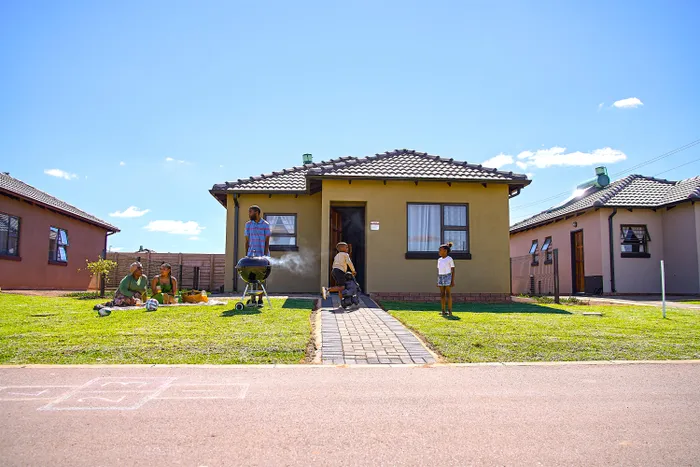
Driven by aspiration, South African buyers seek quality construction and safe environments within communities that embody progress and dignity.
Image: Supplied
At a time when South Africa continues to grapple with housing shortages, rapid urbanisation and growing pressure on working families, the affordable housing sector requires a more human-centred approach.
Working families are not looking for temporary solutions. They are looking for stability, ownership, and communities that support upward mobility, says Briers Bekker, the project lead of Thorntree.
He says that, importantly, the affordable housing market should not be misunderstood as a market built on desperation.
“South African buyers are aspirational. They want safe environments, quality construction, and communities that reflect dignity and progress. They want to feel respected throughout the process of becoming homeowners.”
Thorntree Developments, formerly known as Valumax, has over 40 years of experience in the SA property and residential development industry.
The country's housing sector also needs to place greater attention on the country’s so-called “missing middle”; working families who earn too much to qualify for traditional social housing, but too little to comfortably access the conventional residential market.
It says these are teachers, healthcare workers, retail staff, artisans, municipal employees, and young professionals actively searching for pathways into formal ownership and long-term security.
Affordable housing can and should be aspirational. This is not about luxury, Bekker says. He adds it is about respect.
“It is about recognising that every South African family deserves the opportunity to build a future within a community they are proud to call home. Thorntree represents that continued commitment and what we strive to deliver on with every new development we build and release into the Soshanguve community.”
The residential property developer says SA’s housing challenge, particularly in less affluent areas, has never simply been about the number of homes delivered.
It says the deeper issue has always been whether those developments create dignity, stability, opportunity and long-term upward mobility for the families who live within them.
“For decades, affordable housing has largely been measured through statistics such as units completed, subsidies allocated, and infrastructure rolled out. And yet, families do not experience housing through numbers.”
According to Bekker, a South African family deserves access to a quality home that they can be proud of.
He says while low-cost housing has historically focused on accessibility and large-scale housing delivery, their philosophy has always centred around affordable living, creating communities that offer dignity, stability, opportunity and long-term upward mobility for the families who live within them.
“That philosophy has guided the company’s work across Gauteng and, more specifically, within Soshanguve, where it has spent more than twenty years building not only homes, but thriving communities.”
Over this period, the company says more than 30 000 housing opportunities have been delivered by them, creating a thriving residential environment that today supports over 150 000 residents.
“For us as a business, however, those numbers have never simply represented growth. They represent families who moved from uncertainty into stability, from renting into ownership, from temporary living into places they can truly call home.”
The project lead says one of the most valuable lessons learned through our ongoing and long-term development in Soshanguve is that housing is never just about bricks and mortar.
It says communities thrive when developments extend beyond housing alone and create access to schools, transport routes, retail opportunities, healthcare facilities, public spaces, and local economic activity.
“When families can live close to opportunity while remaining rooted within their cultural and social environments, developments become sustainable ecosystems rather than temporary housing solutions.
“Importantly, affordable living is about far more than the structure of a house itself. South African buyers are aspirational. They are not simply looking for the cheapest available option, but for ownership, pride, security and communities that represent progress and a better future for their families.
At the beginning of last year, Tsekiso Machike, the spokesperson for the Department of Human Settlements(DHS) Minister Thembi Simelane, told "Independent Media Property" that the Human Settlements sector faces challenges with the housing accessibility opportunities for the gap market.
He said the gap market pressures are felt more strongly in metropolitan municipalities, intermediate cities, and small towns.
“All stakeholders in the value chain must find long-lasting solutions to this challenge since the gap market challenges drive the proliferation of informal settlements,” Machike said last year.
In February this year, the Western Cape Committee Member of the South African Reward Association (SARA) said the government should consider potentially widening the eligible salary range for the first-time home buyers benefit.
The professional body aimed at promoting the reward profession and practices made this call ahead of Finance Minister Enoch Godongwana delivering the 2026 Budget Speech, saying the first-time home buyers' benefit could be widened to cater for a wider salary range to ease pressure and support first-time buyers.
The Financed Linked Individual Subsidy Program (FLISP), better known as First Home Finance, was developed by the Department of Human Settlements (DHS) to enable sustainable and affordable first-time home-ownership opportunities to South African citizens and legal permanent residents earning between R3 501 and R22 000 per month (the “affordable” or “ gap” market).
Independent Media Property