

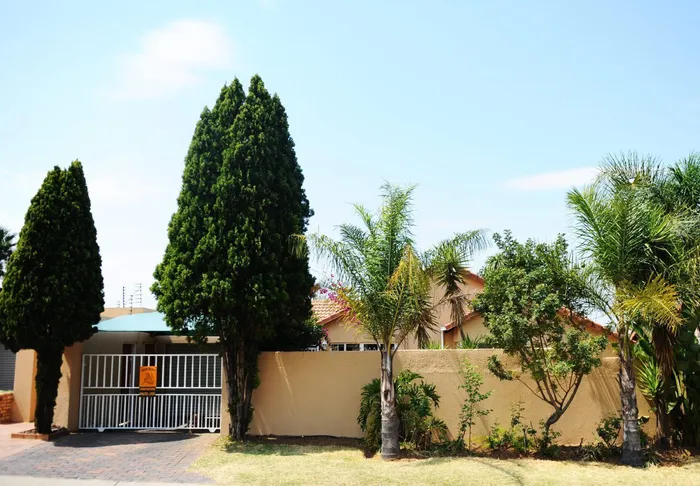
Many millennials and Gen Z are choosing to purchase in more affordable regions, with the intention of renting those properties out for income.
Image: Paballo Thekiso
South Africa’s property market is experiencing a noticeable shift, which does not follow traditional routes.
Owning a home no longer necessarily means living in it, says Regard Budler, CEO of BetterSure. He says that increasingly, millennials and Gen Z are renting in areas that suit their lifestyle while buying property elsewhere as investment opportunities.
“This approach, often referred to as the ‘rentvestor’ approach, reflects a younger generation that is thinking more flexibly about money, mobility, and long-term security.
"With affordability challenges in major urban centres such as Sandton, Cape Town and Pretoria, younger buyers are choosing exactly which suburbs they want to live in, but also using homeownership as a source of income in other areas. The rentvestor approach essentially helps pay off a dream home,” Budler says.
The home insurance specialist says rather than stretching themselves too thin financially to buy in high-demand areas, many millennials and Gen Z are choosing to purchase in more affordable regions, with the intention of renting those properties out for income.
It says that at the same time, they continue renting in locations that align with their lifestyle.
“This allows them to enter the property market without being tied down. According to Investec, of the 6.8 million homeowners in the country, around 1 million own more than 1 property, and 40% of this figure falls into the 35-49 age range, with Gen Z also gaining prominence in the trend.
“There is a mathematical case for rentvesting that's worth unpacking,” Budler says.
“Under certain market assumptions, a R100k deposit on a R1m home means your investment grows on the full property value, not just on the cash you put down. Over 20 years (with a tenant helping to service the bond), that same R100k can build roughly R3.2m in property equity, compared to around R466k if invested at 8% in a balanced unit trust.
"This is the quiet power of gearing. It's the difference between saving towards a dream home and steadily building one, one tenant payment at a time.”
The CEO says owning a rental property is not the same as owning the home one lives in, and this is where homeowners can get caught off guard. He says that with tenants involved, there is potential for missed payments, damage to the property and vacant periods.
These realities can impact returns, he says.
“Tenant-related risks can include damage caused by improper use of the property and issues arising from tenant negligence, so it is important to do regular property inspections and to familiarise oneself with the conditions of the home cover to avoid situations where preventable tenant behaviour could lead to complications during the claims process.”
According to Budler, rentvesting can allow for earlier entry into the market and create the potential for passive income over time.
He says the more one builds their portfolio, the closer they can get to their dream home, as older properties will start paying off newer properties. He adds that the appeal of rentvesting becomes clear in high-cost areas such as Cape Town’s Atlantic Seaboard.
“According to industry estimates, owning a R2.5 million apartment in such an area could cost around R32 000 a month once bond repayments, rates, and levies are included. Renting a comparable property could cost closer to R18 000.
"For millennial and Gen Z investors, that R14 000 difference can be used to build property portfolios in more affordable areas with stronger rental outcomes.”
This is not without its challenges, BetterSure says. The company says the success of this approach depends on careful planning, realistic budgeting, and a clear understanding of the risks involved.
It says many homeowners assume that insurance will automatically cover missed rental payments, but this is not always the case. Loss of rental income is generally only covered when the property becomes uninhabitable due to a sudden or unexpected event, such as fire or flooding.
The CEO says the rise of rentvesting is creating a new generation of first-time landlords, and many are learning the difference between traditional homeowners' cover and broader protection often required for investment properties.
As property ownership models evolve, education on risk management, tenant responsibilities, and long-term protection is crucial, he says.
As the property market evolves, rentvesting shows a broader shift in how millennials and Gen Z view homeownership, Budler says.
He says while rentvesting offers flexibility and long-term investment potential, it also highlights the importance of understanding the responsibilities that come with owning rental properties.
“From economic uncertainty to tenant-related risks, ensuring the right protection is in place remains a crucial part of the process. Rentvesting can help South Africans navigate an unpredictable economy while steadily building financial security for the future.”
The traditional South African property dream used to be straightforward: save up a deposit, buy a starter home in the suburbs, put up a fence, and settle down for the next twenty years, says Corena Botha, a mortgage originator and realtor.
She says that for a rising generation of young professionals, that script has completely changed.
“Faced with steep property prices in prime economic and coastal hubs, a new breed of strategic buyers has emerged. Instead of stretching themselves to the financial brink to buy a home in an area they love, they are hacking the system through a strategy called rentvesting.”
The mortgage originator and realtor says young buyers are turning away from traditional homeownership because, in the current market, the numbers tell a fascinating story.
She says in many luxury or lifestyle-driven suburbs, the monthly cost of paying off a bond, rates, and levies is nearly double what it costs to rent the same square footage.
“By choosing to rent your primary home, you instantly free up significant monthly cash flow. Instead of letting that capital sit idle, you use it to fund highly efficient buy-to-let properties elsewhere. Your tenants essentially pay off your asset, allowing you to build massive equity faster without compromising your day-to-day quality of life.” Botha says.
Independent Media Property