

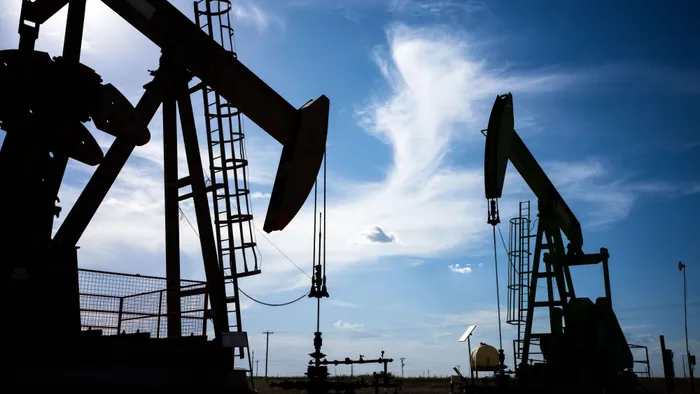
The World Bank said that for many African countries that remain heavily dependent on imported fuel and fertilizers, rising costs could place further strain on government budgets, businesses and households already grappling with elevated living costs.
Image: File / AFP
Sub-Saharan Africa's economic growth is expected to slow in 2026 as the fallout from the escalating conflict in the Middle East ripples through global energy, food and financial markets.
This is according to the latest Global Economic Prospects report released by the World Bank Group on Thursday.
The report warns that the conflict has pushed global growth to its lowest level since the COVID-19 pandemic, with rising oil prices, higher inflation and increased borrowing costs creating fresh challenges for developing economies, including many across Africa.
Global growth is forecast to slow to 2.5% in 2026 from 2.9% in 2025, while growth in Sub-Saharan Africa is expected to edge down to 4.0% this year.
This is slightly below earlier projections of 4.1% in April and 4.3% in January, However, the region is forecast to recover modestly to 4.4% in 2027.
Although Africa is not directly involved in the conflict, the World Bank said the continent will feel the impact through higher import costs, particularly for fuel and agricultural inputs.
The closure of the Strait of Hormuz has severely disrupted energy markets, with Brent crude oil prices projected to average $94 per barrel in 2026, a 36% increase from 2025 levels.
The report notes that fertilizer prices are also expected to rise significantly this year, creating additional pressure on food production and food prices across developing economies.
“Sub-Saharan Africa’s growth is also slowing, with the biggest pressures coming through inflation, including high food prices due to the fertilizer supply shortages and price hikes,” the report states.
This comes as South Africa’s economy delivered a stronger-than-expected performance in the first quarter of 2026, expanding by 0.5% and marking a sixth consecutive quarter of economic expansion, but not enough to make a dent on the high unemployment rate.
Although economists are optimistic that GDP growth of around 1.3% looks attainable in 2026, the World Bank revised downwards by 0.4 percentage points South Africa's 2026 forecast to 1.0% from a previous projection of 1.4% in January.
The World Bank said that for many African countries that remain heavily dependent on imported fuel and fertilizers, rising costs could place further strain on government budgets, businesses and households already grappling with elevated living costs.
Global inflation is expected to rise to 4.0% in 2026, up from 3.3% in 2025, as energy and food prices continue to climb. The World Bank cautioned that if energy supply disruptions worsen and trigger broader financial stress, global growth could slump to just 1.3% this year while inflation rises to 4.4%.
The deteriorating global outlook comes at a time when many African governments are struggling with rising debt burdens and limited fiscal space.
According to the report, aggregate government debt across developing economies has increased sharply over the past decade, climbing from less than 40% of GDP in 2010 to more than 70% today. Higher debt levels have made countries more vulnerable to economic shocks while increasing borrowing costs.
The World Bank's analysis found that countries with elevated debt levels face disproportionately higher financing costs when they take on additional debt, reducing resources available for investment in infrastructure, healthcare and education.
World Bank Group President Ajay Banga said developing economies face a difficult balancing act as they respond to the latest crisis.
“Developing countries have faced a series of challenges over the last decade,” said Banga.
“The impact differs by country, but the basic test is the same: protect people and preserve stability today, without giving up on growth and jobs tomorrow.”
Banga said the World Bank Group stands ready to support affected countries through liquidity support, financing, guarantees and private-sector solutions.
In response to the conflict, the institution has made up to $50 billion to $60bn immediately available through existing instruments, including $25bn in pre-arranged financing. Should the crisis persist, support could be expanded to between $80bn and $100bn over the next 15 months.
The World Bank's deputy chief economist and director of the Prospects Group, Ayhan Kose, said the crisis should also serve as a catalyst for reforms.
“The conflict has taken a toll on global activity, but every crisis also brings an opportunity,” said Kose.
“This moment should be used to strengthen policy frameworks, invest in infrastructure, accelerate business-enabling reforms, and mobilize private capital to support job creation at scale.”
BUSINESS REPORT