

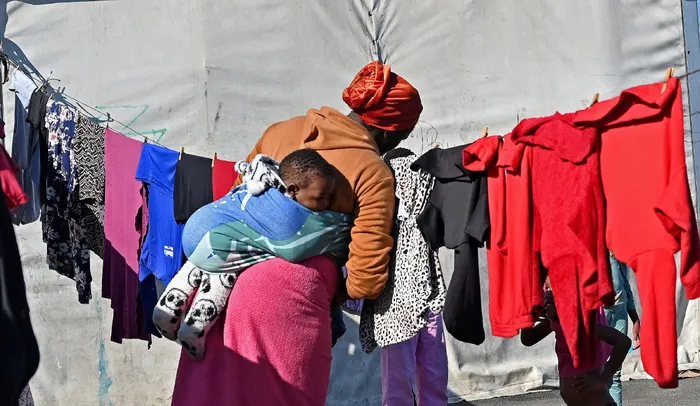
Foreign nationals who reside at Paint City refugee camp in Bellville say they fear for the lives of their children the most as the June 30 deadline by anti-immigrant vigilante groups loom.
Image: BHEKI RADEBE/ ANA Studio
“We are so fearful for our safety and our lives, but most of all, the lives of our children.”
African immigrants across the country are living in fear after vigilante groups March and March and Operation Dudula warned them to leave South Africa if they are not here legally.
At places in KwaZulu-Natal, Gauteng, and the Eastern Cape, immigrants and refugees are huddled together in community halls, police stations, and tents seeking protection from the vigilantes who have given them until 30 June to leave the country.
At the Paint City Refugee Camp in Bellville, more than 500 people, including about 100 families, say they are living with growing fear ahead of the planned protests on 30 June.
Behind the camp’s gates, mothers watch their children closely, residents avoid moving too far from their shelters, and men have taken up positions at the entrance, standing guard as tensions continue to build.
But amid the fear, children still run and play inside the camp, seemingly unaware of the danger their parents believe is closing in around them. For many of them, South Africa is the only home they know. Residents said that is what makes the situation even more heartbreaking, is that their children are unaware of the dangers.
One documented resident, who has lived in South Africa for the past 18 years, said the situation had reopened trauma he thought he had escaped when he fled the Democratic Republic of Congo.
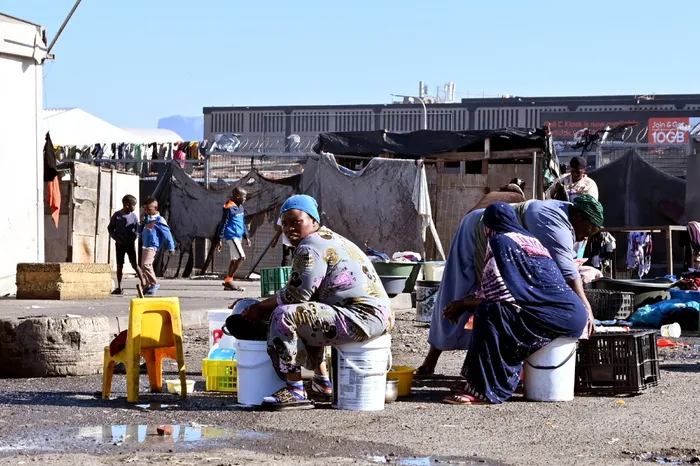
Foreign nationals who reside at Paint city refugee camp in Bellville say they are fearful of the upcoming June 30 deadline issues by anti-immigrant groups that calls for all illegal immigrant to leave South Africa.
Image: BHEKI RADEBE/ ANA Studio
He said he left his home country after his mother and father were killed for speaking out against government wrongdoing.
“Now it’s like everything is happening again, just this time it’s my turn, even though I didn’t do anything,” he said.
“How can we steal citizens’ jobs if we are living the way we are living? Most of us make extra money by selling sweets and chips on the side of the road, or we help where we can if people ask us. That’s not jobs.”
He said many residents had spent years trying to rebuild their lives in South Africa, only to be made to feel as though they no longer belonged.
Inside the camp, there is a visible quietness. Residents who would normally be seen moving around, speaking to neighbours or going about small daily routines, have retreated indoors.
Jamu Abdulli Ramathaan, spokesperson for Paint City Refugee Camp, said the fear among residents was real and growing.
“This is what has led us to where we are today. If there was no fear, or no tangible fear, we would not be here, living in this kind of situation,” he said.
Ramathaan said residents felt abandoned and unprotected, especially as threats against foreign nationals continued to spread.
“Fear is always there. We will always continue to fear because we are not protected,” he said.
He said the language used against foreign nationals had created a dangerous environment where people were being blamed for the country’s deeper social and economic problems.
Ramathaan said sending foreign nationals home, chasing them away or killing them would not change South Africa’s poverty, unemployment or economic crisis.
He said poor South Africans and poor foreign nationals were being turned against each other, while the real causes of poverty remained unaddressed.
“Foreigners are not the reason South Africa is poor. Killing foreigners or sending them away will not change the state of South Africa’s poverty, and it will not fix the economy,” Ramathaan said.
He said many of the people living at Paint City were not competing for formal jobs, but were trying to survive through informal means.
“People here are selling small things, helping where they can and doing what they can just to survive,” he said.
He said many residents came from countries where returning was not safe, including Burundi, Congo and Rwanda.
“If you check the situation in those countries, especially the political arrests and the instability, you will see that people can be killed at any time. So people are left in limbo. They do not know what to do,” he said.
Ramathaan said no Paint City residents had decided to be repatriated. “Repatriation is always voluntary,” he said.
Resident Yeye Omari said many people in the camp felt trapped between danger in the countries they fled and growing fear in South Africa.
“To go back home means death for some of us, staying here is living in fear of being killed, that’s our reality,” Omari said.
Omari said if South Africa could no longer accommodate foreign nationals, the government should fix its borders instead of allowing all foreign nationals, including those with documents, to become targets.
He said documented residents were also suffering and living in constant fear because, at the moment, every foreign national felt like a target.
Omari said residents believed what was happening was xenophobia, because people were being judged and threatened simply because they were foreign.
“It is not only undocumented people who are afraid. Even those of us with documents are living in fear now,” he said.
Imam Hussan Hasen, who also lives at Paint City, said he wanted to correct what he described as the rumour that foreign nationals do not pay tax or contribute to the country.
“For as long as I have been in South Africa, I paid tax to SARS. UIF got deducted from my pay. The only difference is that I would never get a tax return,” Hasen said.
He said it was painful that foreign nationals were made to feel like outsiders after years of building lives in South Africa.
“It’s really sad that this always happens close to elections, where we must fear for our lives as the government attempts to ‘clean’ the country. But for years before, we considered South Africa our home. Now we are being chased away,” he said.
For mothers at the camp, the fear has become part of daily life.
One mother stood near the camp with clear fear in her eyes as she explained how her daughter came home from school every day with complaints of threats.
“When we see our children come through the gates from school, we just thank God for their safety because even they get threats,” she said.
“The citizens tell us to hamba and say we are going to see what is going to happen on 30 June.”
She said the children did not fully understand the danger adults believed they were facing.
“They just know South Africa as home. They play, they run around, they go to school, but they do not know what people are saying about them outside,” she said.
Outside Paint City’s gates, men stood guard. When asked why, they said residents had been threatened almost daily since talk of the 30 June action intensified.
They said passers-by had warned them that they would be shot when 30 June arrived.
Ramathaan said the men were not there to fight, but to watch over the camp and protect the children and families inside.
He said some residents only leave the camp when they need to buy bread or basic items, and even then, they do not go far.
“People are inside. Many people just stay inside. Some people do not even want to show up outside,” he said.
“Sometimes they have to go to the shop to buy bread, and that is what most people are doing. But they do not move far. They only go to the mall, get bread or what they need, and come back.”
Ramathaan said residents wanted peace and safety, not confrontation.
He appealed to those making threats to remember that no person was immune from hardship or displacement.
“They have to be human. They have to think as human beings because nobody is permanent on this earth. Problems and human beings always follow each other,” he said.
“South Africa is what it is today, but tomorrow South Africans might get into trouble and they may need the hands of others. They may need the help of others.”
He said the help people needed in times of crisis was not violence or rejection, but compassion.
“That help should not be about fighting, but about welcoming people and helping them calm down their stress and everything they are facing,” he said.
There is no single final national total yet, but the most recent reported numbers suggest well over 12,000 people have already left or been processed for return/deportation ahead of the 30 June anti-immigration protests.
For now, Paint City waits anxiously. Behind the gates, residents say they are not preparing for a protest. They are preparing for the unknown.