

Foreign nationals in Overstrand
Image: Overstrand Municipality
The government's position remains clear: foreign nationals who are in South Africa illegally are required to leave the country voluntarily or be repatriated through the appropriate legal processes.
That was among the key messages to emerge from the latest briefing of the Overstrand Municipality's Incident Command Centre (ICC), which continues to coordinate the response to tensions involving foreign nationals in Kleinmond, Gansbaai and Stanford.
The briefing comes as the Western Cape Government has condemned violence, intimidation and lawlessness directed at foreign nationals, while law enforcement agencies prepare for possible further demonstrations and community mobilisations in the coming weeks.
Authorities revealed that approximately 90% of the foreign nationals currently being accommodated in temporary facilities in Gansbaai, Stanford and Kleinmond are undocumented.
Officials warned that a difficult month may lie ahead as some community groups continue to call for the deportation of undocumented foreign nationals and have reportedly issued a deadline of 30 June for them to leave the country.
Law enforcement agencies have already been alerted to possible community mobilisations in Zwelihle, which could begin as early as this week. Hermanus SAPS station commander Colonel Gustav Tamboer has been engaging organisers regarding proposed routes for marches and timeframes in an effort to prevent disruptions and maintain public order.
Authorities are also preparing for a planned march in Pearly Beach this Saturday, while Operation Dudula has indicated that it intends holding marches on 17 and 18 June.
Authorities have also activated a comprehensive NATJOINTS operational plan in response to the unrest. The operation brings together SAPS, the State Security Agency, Metro Police Departments, Traffic Law Enforcement, the Department of Home Affairs, Correctional Services, the South African National Defence Force and other key government stakeholders.
Western Cape MEC of Police Oversight and Community Safety Anroux Marais welcomed the coordinated law enforcement response, saying it would assist efforts to restore and maintain order in affected communities while ensuring those responsible for criminal acts are brought to justice.
The developments follow recent incidents in Mossel Bay, Kleinmond, Gansbaai and Stanford that resulted in the displacement of hundreds of foreign nationals and prompted the activation of emergency response structures.
The matter was discussed during an extended Western Cape Cabinet meeting this week, where Premier Alan Winde and provincial leaders received a briefing from senior SAPS officials.
"The Western Cape Government Cabinet condemns, in the strongest possible terms, all acts of violence, intimidation or lawlessness against foreign nationals," Winde said.
While authorities believe the situation has stabilised, the Premier called on SAPS to improve intelligence gathering and confirmed that mediators had been deployed to affected communities.
The most serious violence occurred in KwaNonqaba, Mossel Bay, where around 55 shacks were torched.
Western Cape police spokesperson Brigadier Novela Potelwa said police, assisted by public order officers, fire services and disaster management teams, responded to the unrest and helped restore calm.
The violence left three people dead, including two Mozambican nationals aged 27 and 43, whose bodies were discovered with assault-related injuries. A separate murder investigation was launched after an 18-year-old South African man was stabbed to death.
Potelwa said police investigations remain ongoing and five arrests have been made on charges relating to public violence and possession of presumed stolen property.
She also urged residents and community leaders not to spread misinformation.
"A further plea is made to community members and leaders to refrain from disseminating unverified information as that causes unnecessary panic and anxiety," Potelwa said.
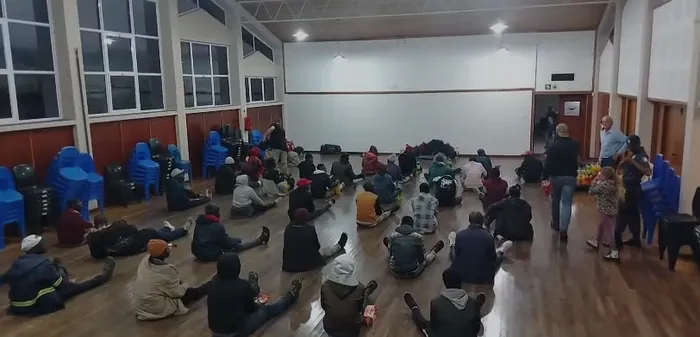
As part of the humanitarian response, municipal facilities have been opened to provide temporary shelter to displaced foreign nationals who fear returning home.
Municipal Manager Dr Dean O'Neill said local government had a responsibility to protect vulnerable people during humanitarian crises, despite public order matters falling outside its core mandate.
Emergency Medical Services have also deployed mobile clinics to provide chronic medication to displaced individuals who fled without their belongings. Among those currently housed in the facilities is a woman from Kleinmond who gave birth after being transported to hospital earlier this week.
Officials said language barriers continue to hamper efforts to communicate available options to undocumented foreign nationals.
The majority of those currently seeking refuge are Malawian and Mozambican nationals. Authorities, however, fear that any further unrest could trigger a "second wave" affecting other foreign communities, including Zimbabwean, Bangladeshi and Somali nationals.
Representatives from the Malawian Embassy have visited the Overstrand to assess the needs of their citizens, while local authorities expressed concern about the limited involvement of some foreign governments in assisting with repatriation efforts.
The process remains costly, particularly for undocumented individuals who require escorted transport to border posts, while repatriations to countries such as Malawi involve significant logistical challenges.
The Department of Home Affairs has meanwhile deployed immigration officials to verify the documentation status of displaced foreign nationals.
Speaking at the ICC briefing, Deputy Assistant Commissioner for Operations at the Border Management Authority, Stephen van Neel, said the current situation was being used by various groups to advance political agendas ahead of the November elections.
Van Neel stressed that non-compliance with immigration laws could not be ignored and noted that South Africa has only around 600 immigration officers nationwide, making cooperation between government departments and law enforcement agencies essential.
Dr O'Neill also reminded employers that it is illegal to knowingly employ undocumented foreign nationals.
He pointed to provisions in the Immigration Act which require employers to verify the legal status of workers and warned that those found employing undocumented foreign nationals could face fines or imprisonment.
This is not the first time concerns over xenophobia and anti-foreigner sentiment in South Africa have prompted foreign nationals to seek assistance from their home countries. Earlier this year, Ghana facilitated the return of hundreds of its citizens from South Africa, while more than 800 Ghanaians reportedly registered for assistance amid concerns over their safety.
Nigeria also announced the voluntary evacuation of at least 130 Nigerians who requested to return home due to safety fears and growing unease over anti-foreigner tensions in parts of the country.
Despite growing frustrations around immigration management and border security, Winde stressed that violence could never be justified.
"These concerns can never justify violence. The rule of law must prevail and be upheld at all times," he said.